
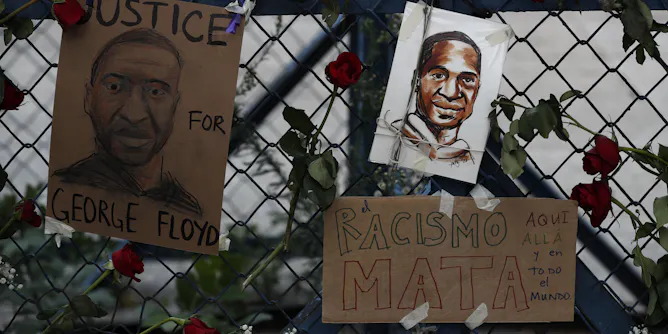
Nationalist myth has associated ‘true Mexicanness’ with being ‘meztizo’ — a racial and cultural mix of Indigenous and Spaniard, even while the state enacted policies to assimilate Indigenous Peoples.
Articles on Anti-Black racism
Displaying 61 - 80 of 98 articles

We need to interrogate how evidence might be used to do more than describe a conspiracy; it might work to maintain a certain status quo — in this case, anti-Black racism.

Accountability measures matter for addressing the urgent problem of anti-Black racism. A new Centre of Excellence for Black Student Achievement at the Toronto District School Board is taking action.

Myths of Canada’s moral superiority in contrast to the United States can be a barrier to acknowledging and addressing racism in Canada.

White denialism of racism provokes a narrative of ‘us versus them.’ Self-reflection and listening are among the ways to be accountable for interrupting and eradicating racism.

To tackle the racial stereotyping rife within football commentary, robust education – and uncomfortable conversation – is critical

The recent attack on a Black teenager in an Edmonton school demonstrates that much more needs to be done to address racism in public institutions.

It has been an uphill battle to make the case for Black studies courses and programs in Canadian universities.

Transcript of Don’t Call Me Resilient, Episode 5: Black health matters

When COVID-19 first appeared, some called it the great equalizer. But the facts quickly revealed a grim reality: COVID-19 disproportionately impacts racialized communities.

While many institutions pledged their support for anti-racism work this summer, a health researcher says these ideas need to go further to address the long-term health impacts of internalized racism.

Given this evidence of historical anti-racist work at universities, administrators can no longer claim to lack the knowledge of what needs to be done.
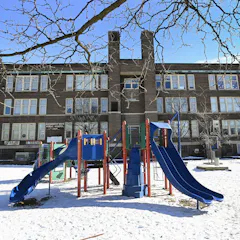
COVID-19 has exposed how systemic racism affects the lives of many racialized students in Canada. But what are some possible solutions?

Transcript of Don’t Call Me Resilient, Episode 3.

Carl James and Kulsoom Anwer discuss the injustices and inequalities in the Canadian education system.

Although school boards have yet to find a systemic way to combat anti-Black racism, educators are in a unique position to correct these injustices.
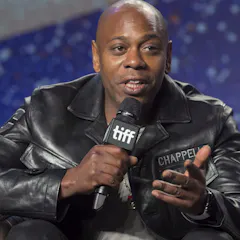
In this episode of Don’t Call Me Resilient, host Vinita Srivastava and scholar Cheryl Thompson dive into the meaning of the n-word and the 150 years of racism embedded in it.

Joe Biden has said he wants to create a cabinet that “looks like America.” But getting racialized people into powerful positions should be a means to tackle structural inequalities, not a goal in and of itself.

The annual Dec. 5 tradition sees performers don blackface and afro wigs. But a growing number of Dutch citizens believe it’s time to wave goodbye to Black Pete.

It’s long been known that Black patrons of bars and restaurants tend to get worse service than white customers. What’s not been well understood is precisely why.
Top contributors
-

Assistant Professor, Anthropology, University of Manitoba
-
Assistant Professor, Teaching Stream, Black Health Lead, Dalla Lana School of Public Health, University of Toronto
-
Researcher in Black education, policy, and community development, University of Toronto
-
Professor of History, McGill University
-
Associate Vice-President, Equity, Diversity, and Anti-Racism; Assistant Professor of History, University of Waterloo
-
Professor, Department of Community Health Sciences, University of Calgary
-
Assistant Professor of Sociology and Criminology/Director of the Black Studies Institute, University of Windsor
-
Dr. Coen-Sanchez, L’Université d’Ottawa/University of Ottawa
-
Assistant Professor of Education, McGill University
-
Professor, Departments of English Langauge and Literature & Communication Arts, University of Waterloo
-
Associate Professor, Department of English and Interim Director, Dimensions Program, Toronto Metropolitan University
-
Associate Professor, Department of Sociology and Criminology, University of Windsor
-
Associate professor, Graduate Program Director, School of Social Work, Toronto Metropolitan University
-
Professor, Jean Augustine Chair in Education, Community & Diaspora, York University, Canada
-
Vice President of Early Education and Workforce Development, Texas A&M University-Commerce