

Counting Black representation is important. Understanding the diversity within Black Canada is the next step.
Articles on Black Canadians
Displaying 1 - 20 of 39 articles

Through archival research and in-depth interviews, a new report documents the presence, backgrounds, motivations and experiences of Black Canadians in politics.
In this bonus episode, you’ll meet some of the producers who help make this podcast to revisit some of our favourite episodes from past seasons.

Beefs often target Drake’s race, constructing him as a Canadian who is not Black enough to claim an authentic connection to African-American hip hop culture.

Canada was never designed to be a space for unequivocal diversity, equity or inclusion. Rather, DEI initiatives are based on policies that maintain an unequal status quo.

Mentorship programs serving Black youth are an important part of addressing anti-Black racism in Canada.
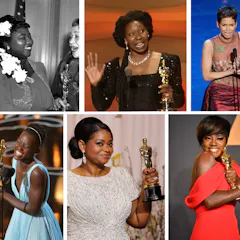
It’s been nine years since #OscarsSoWhite called out a lack of diversity at the Oscars. Has anything changed? Prof. Naila Keleta-Mae and actress Mariah Inger unpack the progress.

Anti-Black racism has health, social and economic consequences for Black populations in Canada. Partnering with Black communities is a crucial component in effective efforts to mitigate inequities.
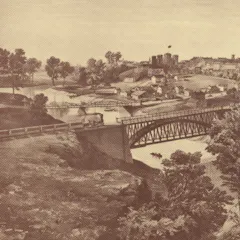
The Black Londoners Project approaches Black history geographically by supplementing narratives of 16 Black individuals with archival evidence about their lives.

While “Black Canada” is a useful blanket term and important organizing identity, a closer look reveals a detailed tapestry of communities that also deserves visibility.

Young Black men are being denied employment for multifaceted reasons, and when they do find work, are often trapped in low-paying jobs.
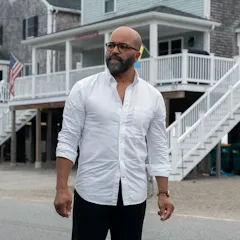
The release of ‘American Fiction’ presents an opportunity to talk about race, power and white supremacy: What version of Blackness is acceptable or saleable within American culture?
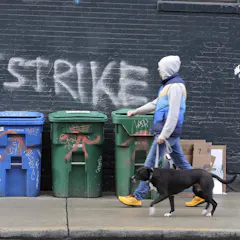
A major factor driving our housing crisis is a shift toward corporate-owned buildings. Today’s guest, Prof. Nemoy Lewis, explains how we got here.
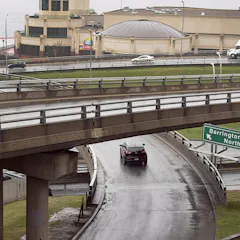
African Nova Scotians have historically suffered the negative consequences of urban redevelopment. New projects in Halifax must involve genuine engagement with racialized communities.
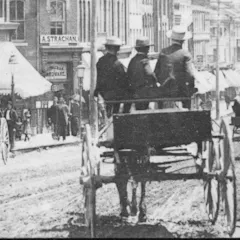
A collaborative curatorial project is cherishing every little relational trace of Black lives found in archives in a city long defined by histories of Canadian whiteness.
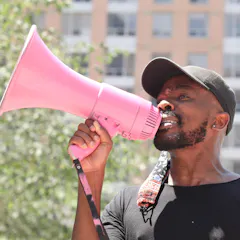
As institutions continue to push diversity and cluster hires, they can reinforce the negativity of tokenism.

Prime Minister Justin Trudeau’s apology to Black soldiers who served in the First World War was a good first step, but real action is needed to address racism in the Canadian Armed Forces.
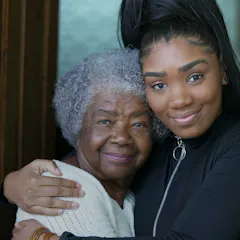
As a researcher focussed on African, Afro-Caribbean and Black families’ schooling experiences, I appeal to school staff to understand the importance of the school-family-community partnership.

While policy organizations publicly claim that they want input from racialized and other marginalized communities, many fail to listen to, accept or integrate what those communities have to say.

Black residents of Shelburne, N.S., spent decades living near a dump, worrying about its possible connection to elevated cancer rates. A new study will investigate the dump’s long-term consequences.
Top contributors
-

Assistant Professor, Teaching Stream, Black Health Lead, Dalla Lana School of Public Health, University of Toronto
-
Canada Research Chair, Professor in Performance, Toronto Metropolitan University
-
Associate Vice-President, Equity, Diversity, and Anti-Racism; Assistant Professor of History, University of Waterloo
-
Professor, Department of Community Health Sciences, University of Calgary
-
Researcher in Black education, policy, and community development, University of Toronto
-
Associate Professor, Faculty of Humanities, McMaster University
-
Postdoctoral Fellow, Faculty of Humanities, McMaster University
-
Academic Teaching Staff Assistant Lecturer, Faculty of Education, University of Alberta
-
Professor in Women and Gender Studies-UTM Campus, University of Toronto
-
Assistant Professor, Anthropology, University of Manitoba
-
Founder of the DISE Collective & Associate Professor, Global Development & Political Economy, University of Toronto
-
PhD Candidate, Faculty of Education and Research Assistant, Western University
-
PhD Candidate, English, and Research Assistant, Western University
-
Professor of Black Studies, Dalhousie University
-
Assistant Professor, Urban and Regional Planning, Toronto Metropolitan University