
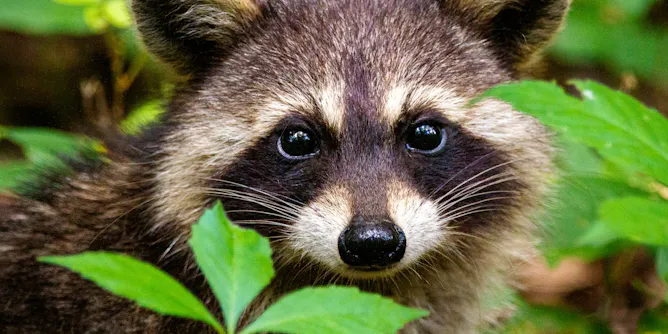
Researchers have discovered raccoons to be intrinsically motivated to solve multiple puzzles, even without a food reward.
Articles on Animal intelligence
Displaying 1 - 20 of 54 articles
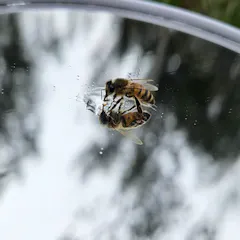
Humans and bees can both work with mathematics. Could aliens do the same?
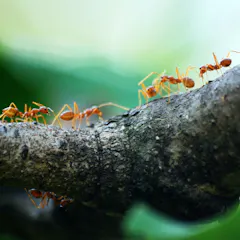
Ants may be tiny – but by working together they build complex societies and solve many problems. They might even teach humans a thing or two?
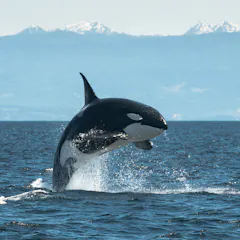
For the first time, orcas have been seen making and using tools out of seaweed. The reason? Most likely as a form of social grooming.
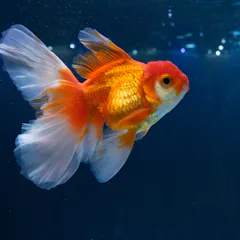
Why do researchers care if a bee can learn to recognise a human face? When we push animals outside familiar territory, we can learn a lot about intelligence.
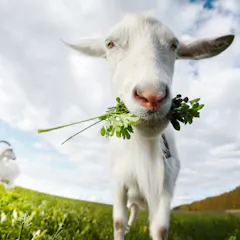
Goats have outperformed sheep and alpacas in a series of cognitive tests, suggesting they’re the sharpest minds in the barnyard.

Human language is not as unique as we think.
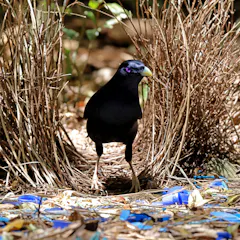
Without being able to get into the heads of animals, it’s hard to say for sure. But instances of pig painters, whale crooners and bird sculptors certainly make it seem plausible.
A better brain might help an animal find more mates, have more sex, and eventually have more babies.
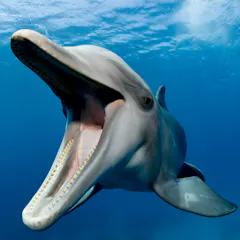
Many animals show signs of high intelligence, including strong memory, self-awareness and communication skills.

Did you know you have a ‘mental number line’, from smallest to largest? Turns out, so do bees.
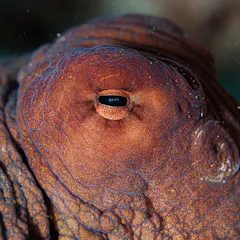
Scientists thought fish might simply be freeloading off the hard work of a hunting octopus. Now, it looks like it’s a true team effort.

Humans aren’t the only animals that have names for each other − and studying animals that use names can teach researchers more about how human names evolved.
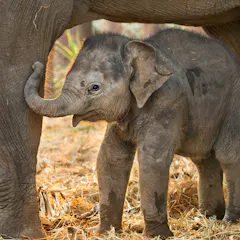
Recent reports of burials of elephant calves are intriguing but it’s impossible to confirm that this was intentional.
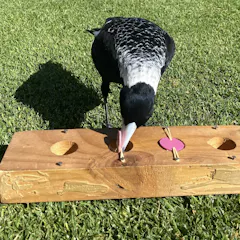
Magpies are expert problem-solvers – but just how good they are seems to depend on the size of the social group they grow up in.

Researchers have made a fascinating observation: a polar bear used a diving hunting technique, never before reported, to capture large moulting snow geese.

Understanding how animals think, learn and interact with one another can inform the science of ecology, as predator and prey shape their world.
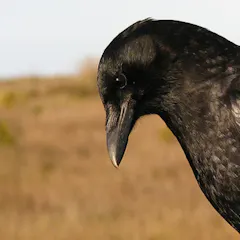
Scientists pour over the existing literature on corvids’ smarts to debunk some myths, and uphold others.
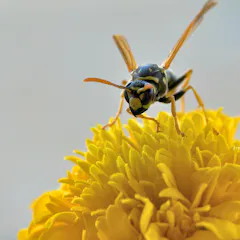
Have we overlooked the intelligence and value of wasps?
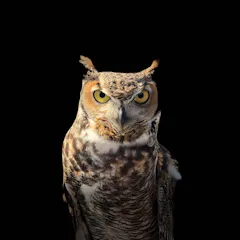
From jellyfish to genius, the amazing diversity of animal minds around us evolved through five major changes in the computational capacity of brains.
Top contributors
-

Research Fellow, School of Biological Sciences, Monash University
-
Associate Professor, Department of Physiology, Monash University
-
Emeritus Professor in Animal Behaviour, University of New England
-
Professor of Quantum Physics and Australian Research Council Future Fellow, RMIT University
-
Docteur en biologie spécialisée en comportement animal, University of Zurich
-
Associate Professor of Neuroscience and Behavioural Analysis, University of Surrey
-
Principal Lecturer in Wildlife Conservation, Nottingham Trent University
-
PhD student in Biology, University of Rochester
-
Lecturer in Animal Science, Newcastle University
-
Senior Lecturer, Centre for Behaviour and Evolution, Newcastle University
-
Postdoctoral Researcher, Universität Wien
-
Wellcome Trust Research Fellow in Philosophy, University of Oxford
-
Researcher in Cognitive Zoology, Lund University
-
Professor of Cognitive Neuroscience, Georgia State University
-
Senior Lecturer in Philosophy and Education; Curriculum Director, UQ Critical Thinking Project, The University of Queensland