
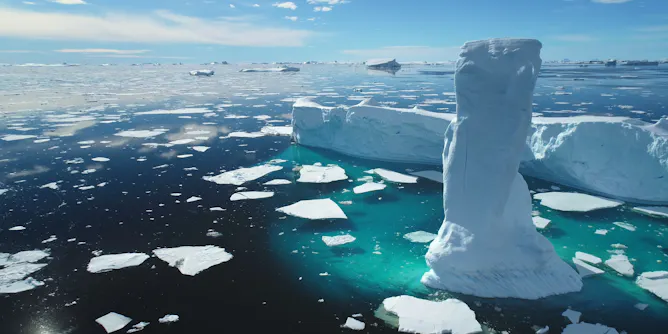
New research shows melting ice is causing the Atlantic Meridional Overturning Circulation (AMOC) to slow down, with widespread consequences for the world’s climate and ecosystems.
Articles on Ocean circulation
Displaying all articles
If the ocean circulation, known as AMOC, shuts down, it would be a climate disaster, particularly for Europe and North America. New research shows why that might not happen as soon as some fear.

Deep-sea sediments show how the changing orbits of Earth and Mars are linked to past global warming and the speeding up of deep-ocean eddies.
Scientists now have a better understanding of the risks ahead and a new early warning signal to watch for.
Freshening seawater around Antarctica is disrupting a global ocean conveyor which regulates the climate.
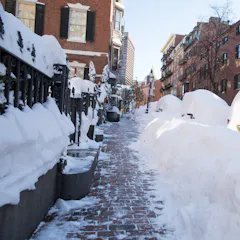
Winters are getting warmer, yet Bostonians were digging out from nearly 2 feet of snow from a historic blizzard in late January. Why is the Northeast seeing more big snowstorms like this?

Ida exploded from a weak hurricane to a powerful Category 4 storm in less than 24 hours, thanks to heat from an ocean eddy. An oceanographer explains its rapid intensification.

Greenland’s conditions were once similar to those of a greenhouse. Volcanoes swelled the land, constricted seaways and gigatonnes of greenhouse gases were released into the atmosphere.

Climate change is strengthening the division between the ocean surface and the abyss.
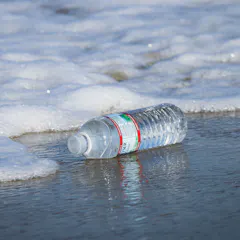
Each bit of plastic takes a unique journey once it reaches the ocean. We’re trying to spot the patterns.
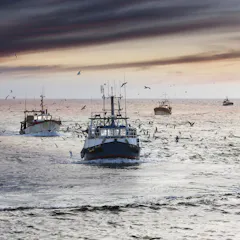
The Atlantic Ocean is still growing physically, but humans are over-harvesting its rich fisheries. The most famous one – North Atlantic cod – has become a textbook example of harmful overfishing.
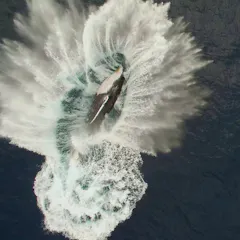
When humpback whales shift their distribution and behaviour, it can lead to unexpected human encounters and new challenges.
Tiny chemical clues in the ocean reveal how its role as a carbon store is changing.
Fish are a key food source for millions of people worldwide. But a recent study finds long-term warming over the next 200 years could starve tiny plankton, with impacts that would ripple up food chains.
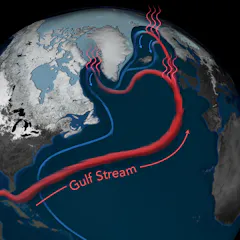
How we showed the Atlantic circulation system is its weakest for 1,600 years.

The new sub allows scientists to access some of the most remote and hazardous environments in the ocean.
Top contributors
-

Professor, National Oceanography Centre, University of Southampton
-
Senior scientist, Geological Survey of Denmark and Greenland
-
Professor of Geophysics, University of Sydney
-
Associate Director, Climate System Research Center and Associate Professor of Climatology, UMass Amherst
-
Professor of Physics, Utrecht University
-
Postdoctoral Scholar in Earth Science, University of California, Santa Barbara
-
Associate lecturer, Sorbonne Université
-
Maître de conférences, économiste, laboratoire Amure (UBO, Ifremer, CNRS), Université de Bretagne occidentale
-
Climate Model Specialist, Utrecht University
-
Honorary Associate Professor, School of Earth Sciences, University of Bristol; British Antarctic Survey
-
Research Fellow in Marine Science and Manager Whales & Climate Program, Griffith University
-
Postdoctoral Researcher in Climate Physics, Utrecht University
-
Geological Survey of Denmark and Greenland
-
Professor of Oceanography, University of Miami
-
Deputy Science Leader, Polar Oceans Team, British Antarctic Survey