
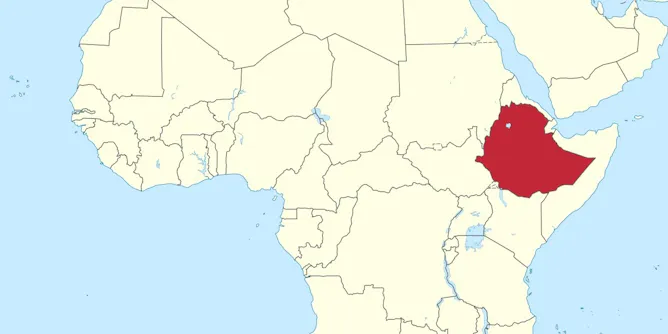
Political groups use social media ‘maptivism’ to spread exaggerated regional maps to stake a claim to territory.
Articles on Amhara
Displaying 1 - 20 of 26 articles
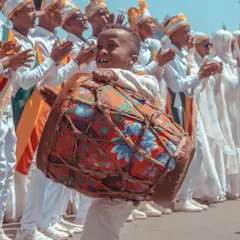
A culture of solving political differences with conflict has led to persistent disagreements about the Ethiopian state.

Global media coverage tends to focus on just one of Ethiopia’s conflicts.
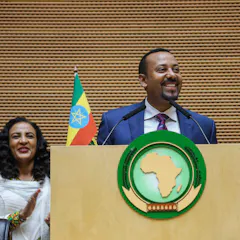
A national dialogue is usually convened during moments of political crisis or transition.
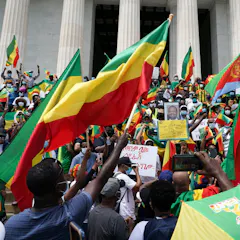
Ethiopia tried to transit to democracy in 1991 and 2018. Both attempts were unsuccessful.
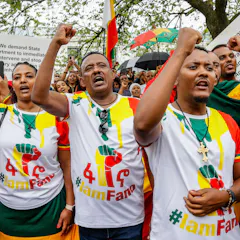
The Fano insurgency is taking place in a territory three times the size of Tigray, stretching the army’s resources.
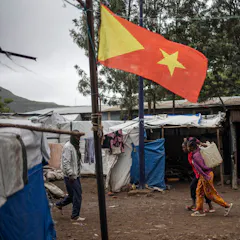
The 2020-2022 war and its lingering effects have thrown the Tigray region into chaos.
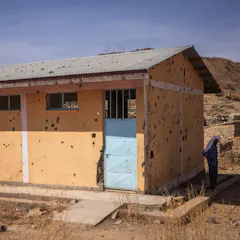
Leaving millions of children out of school has devastating consequences.

The possibilities for a large presence of al-Shabaab fighters in Ethiopia are limited.
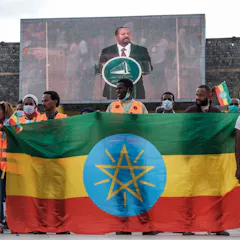
After more than 30 years of federalism, ethnic conflict in Ethiopia hasn’t been resolved – but neither has the country disintegrated.

The rhetoric that presents the Amhara people as a national enemy has gone on, unchallenged, for far too long.

Abiy Ahmed’s use of the military to address a critical challenge is likely to fail.
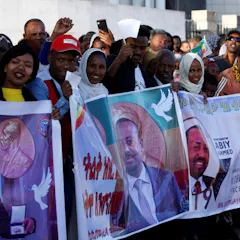
Governments coming to power riding a wave of youth protests can employ authoritarian tactics to silence dissent from the same movements.
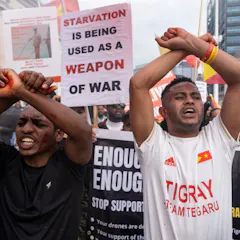
Leaders at the centre of the Ethio-Tigray war don’t believe in equal partnership. In their political cultures, winners take all.
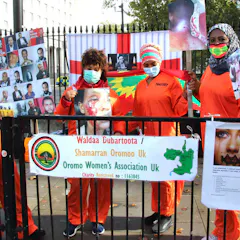
Ethiopia’s largest region is pushing for self-determination - it hasn’t gone down well with Abiy Ahmed’s vision of a centralised state.
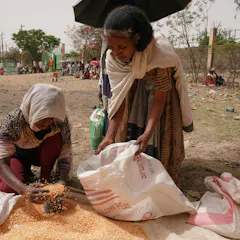
The origins of Ethiopia’s food crisis can be traced to a bitter feud between Eritrean and Tigrayan liberation fighters.

Mental health problems are major indirect consequences of armed conflicts and can have short-term and long-term effects on people.

Instead of fanning the flames, the West needs to be even-handed in bringing the warring sides to the table.

There needs to be greater clarity on the nature of the crisis for an informed and meaningful intervention.
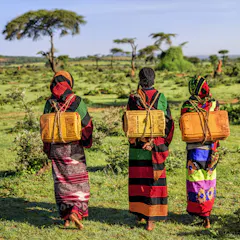
Over 60% of girls in Ethiopia are married by the age of 18. Many don’t have support in negotiating with their husbands and families to take control of their own fertility.
Top contributors
-

Senior Lecturer of Political Science, Georgia Gwinnett College
-
Visiting Lecturer, University of Roehampton
-
Professor of Sociology and Global and Africana Studies, University of Tennessee
-
Lecturer and Reseacher, Political Science, Debre Markos University,
-
Doctoral Researcher, University of Helsinki
-
Lecturer, Griffith University
-
Research Professor, Political Science, Chr. Michelsen Institute
-
Senior Fellow, World Peace Foundation, Fletcher School of Law and Diplomacy at Tufts, Tufts University
-
Outstanding Future Researcher, Menzies School of Health Research
-
Professor of International Relations, Norwegian University of Life Sciences
-
Associate Professor, School of Education, Deakin University
-
Assistant Professor of Political Science and Strategic Studies , Mekelle University
-
Lecturer in Comparative Politics, Queen's University Belfast
-
Assistant Professor, Political Science, University of Gondar
-
Researcher in Political Sciences and International Studies, Debark University