

A culture of solving political differences with conflict has led to persistent disagreements about the Ethiopian state.
Articles on Oromia
Displaying all articles

The Oromo place great emphasis on relationships, mutual care and responsibility towards others.
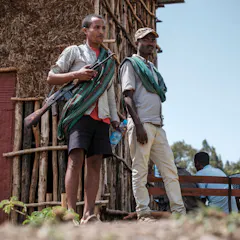
There is a risk of the upcoming election deepening existing regional and political fault lines instead of bridging them.
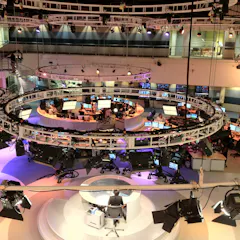
Global media coverage tends to focus on just one of Ethiopia’s conflicts.
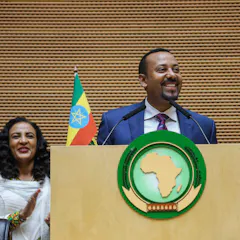
A national dialogue is usually convened during moments of political crisis or transition.
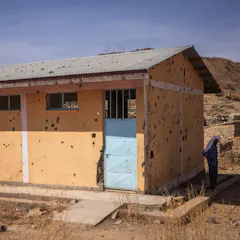
Leaving millions of children out of school has devastating consequences.
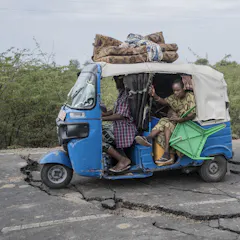
Volcanoes and earthquakes are both natural phenomena driven by the dynamic processes that shape Earth’s interior and surface.
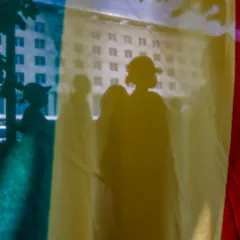
The peace agreement was short-lived largely due to the absence of open and genuine commitments by both sides.
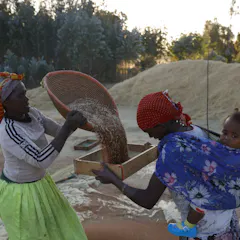
Oromia is a cultural, economic and political powerhouse. It significantly shapes Ethiopia’s identity and trajectory.

The rhetoric that presents the Amhara people as a national enemy has gone on, unchallenged, for far too long.
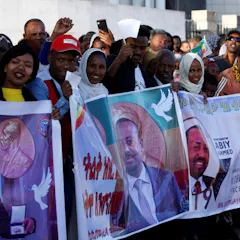
Governments coming to power riding a wave of youth protests can employ authoritarian tactics to silence dissent from the same movements.
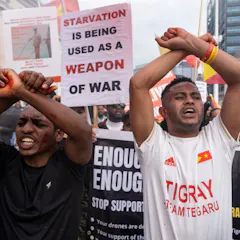
Leaders at the centre of the Ethio-Tigray war don’t believe in equal partnership. In their political cultures, winners take all.
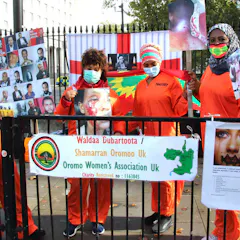
Ethiopia’s largest region is pushing for self-determination - it hasn’t gone down well with Abiy Ahmed’s vision of a centralised state.

Instead of fanning the flames, the West needs to be even-handed in bringing the warring sides to the table.

Ethiopian history shows that the demands of its young people can’t go unaddressed for long.
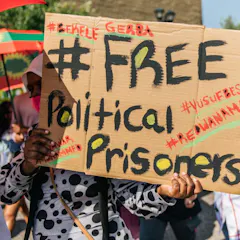
There needs to be greater clarity on the nature of the crisis for an informed and meaningful intervention.
Top contributors
-

Researcher in Political Sciences and International Studies, Debark University
-
Professor of Sociology and Global and Africana Studies, University of Tennessee
-
Lecturer and Reseacher, Political Science, Debre Markos University,
-
Visiting Lecturer, University of Roehampton
-
Doctoral Researcher, University of Helsinki
-
Lecturer, University of the Witwatersrand
-
Fellow, Centre for Federalism and Governance Studies, Addis Ababa University
-
Director, Centre for Human Rights Education, Curtin University
-
Fondation Wiener-Anspach Postdoctoral Fellow, Department of Earth Sciences, University of Oxford
-
Associate Professor, School of Education, Deakin University
-
Lecturer in Comparative Politics, Queen's University Belfast
-
Associate Professor of Journalism and Communication, University of Agder
-
PhD candidate, University of British Columbia
-
Assistant professor in Media and Communication Studies, Bahir Dar University
-
Associate Professor of Sociology and Senior Researcher, The Nordic Africa Institute