
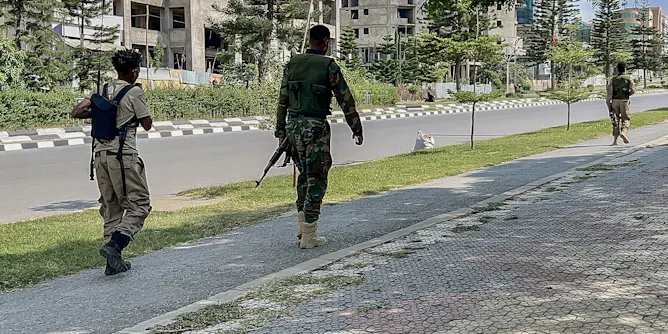
An offensive in the Tigray region followed months of aerial strikes by the Ethiopian government. The situation could spark a wider regional conflict.
Articles on Tigray war
Displaying 1 - 20 of 43 articles
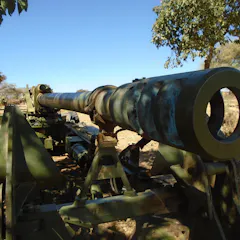
Pretoria stopped one phase of one war. Its incomplete implementation left unresolved disputes that are now colliding.
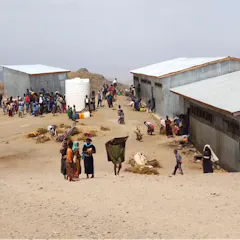
Recent confrontations in Tigray are a sign that the 2022 peace process has seriously derailed.
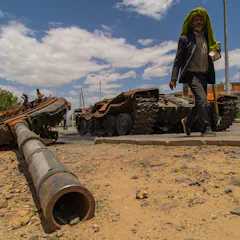
An incomplete peace agreement has become a useful political tool to the Ethiopian government, the TPLF and Eritrea.
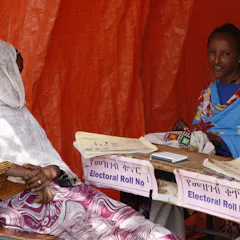
The upcoming elections are arguably among the least politically competitive Ethiopia has experienced since the introduction of multiparty elections in the 1990s.
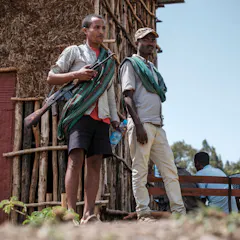
There is a risk of the upcoming election deepening existing regional and political fault lines instead of bridging them.
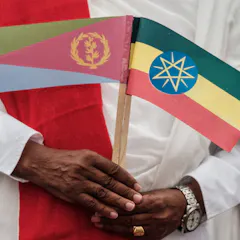
Despite the peace agreement in 2018 between the countries, critical fault lines persist.

The violence in Tigray was structured, targeted and sustained.

A new typology helps explain why perpetrators target reproduction and why international law has been so slow to hold them accountable.
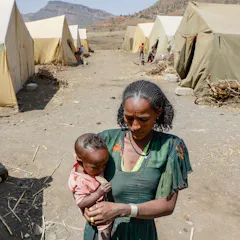
Famine was weaponised as part of a broader campaign of destruction in Ethiopia’s Tigray region.

Symbolic attempts at national unity in Ethiopia managed to achieve only short-lived national pride.
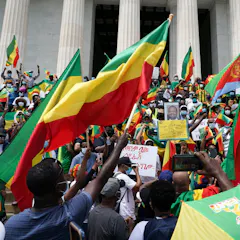
Ethiopia tried to transit to democracy in 1991 and 2018. Both attempts were unsuccessful.
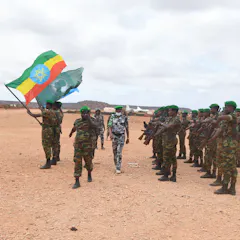
Addis Ababa’s willingness to work with regional rivals in the Middle East shows its practical approach to foreign relations.
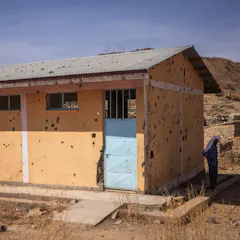
Leaving millions of children out of school has devastating consequences.

The possibilities for a large presence of al-Shabaab fighters in Ethiopia are limited.

Armed conflicts affect the entire spectrum of healthcare, from prevention to treatment.

Tehran is supplying weapons to the Sudanese Armed Forces as they fight a paramilitary group for control of the nation.
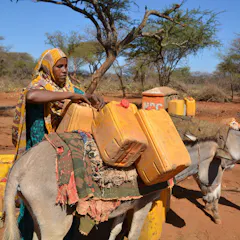
Donkeys provide vital support to women but their lives are often cut short.
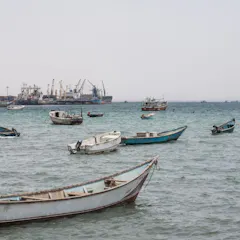
If the international reactions are anything to go by, Ethiopia’s Red Sea port deal is easier said than done.

The rhetoric that presents the Amhara people as a national enemy has gone on, unchallenged, for far too long.
Top contributors
-

Senior Fellow, World Peace Foundation, Fletcher School of Law and Diplomacy at Tufts, Tufts University
-
Lecturer in Environment and Development, University of Manchester
-
Visiting Lecturer, University of Roehampton
-
Professor Emeritus in Global Health & Humanitarian Affairs, University of Manchester
-
Ph.D. Fellow, Center for Constitutional Democracy, Indiana University
-
Senior Lecturer of Political Science, Georgia Gwinnett College
-
Researcher, Ghent University; Oregon State University
-
Professor of Sociology and Global and Africana Studies, University of Tennessee
-
Associate Professor of Politics and International Relations, Florida International University
-
Global Scientist, Center for International Forestry Research – World Agroforestry (CIFOR-ICRAF)
-
Honorary Research Associate, Zoological Society of London
-
Research Professor, Political Science, Chr. Michelsen Institute
-
Associate professor, International Development, Roskilde University
-
Research and Policy Director at the Conflict and Environment Observatory, and Visiting Research Fellow, Dept of Geography, King's College London
-
Climate Scientist and Assistant Professor of Earth and Environmental Systems, Georgia State University