

Long after people with dementia have forgotten the names of their loved ones, they can still recall songs they learned in their teenage years.
Articles on Alzheimer's disease
Displaying 341 - 360 of 448 articles

If you care for or know someone with dementia, they’ve probably asked you “what are we doing today?” “who are you?” or “when are we going home?”

Dozens of factors are at play.

Blood has some disadvantages for diagnosis as it is separated from the brain by what is called the “blood brain barrier”. This makes it difficult to establish that a signal is actually coming from the brain.

News reports this week hailing a breakthrough in Alzheimer’s research, saying a vaccine for the disease is a few years away, have raised hopes for many. But let’s take a step back from the headlines.
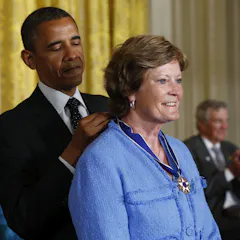
Alzheimer’s disease is one of the most feared illnesses of people 60 and up. A rare type of Alzheimer’s, called early-onset, can occur in people even younger. How can you tell if you are at risk?

Dementia is the third leading cause of death in Australia. As the population ages, the number of people with dementia is expected to rise, as is the number of deaths from dementia.

The Alzheimer’s Society is concerned that people with dementia aren’t getting diagnosed soon enough. But there are pros and cons to an early diagnosis.

A new project is incorporating technology into textiles to help people with late-stage dementia.
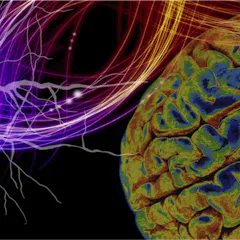
Researchers are trying to fill in the blanks between genetic blueprints and psychiatric disorder by studying changes in the brain.

Dementia headlines are often misleading, but it’s not only journalists who are to blame.

While cooking food in aluminium pots isn’t a bad thing, doing so in foil is problematic. Over-exposure to aluminium may pose serious threats to human health.
Using light to manipulate cells is leading to some startling findings.

Once the stuff of tweeting birds and rolling cartoon eyes, bumps on the head are now linked to dementia. Will Smith’s latest movie tells how sports authorities tried to cover it up.

For the first time, researchers have shown that feeding vervet monkeys a toxin produced by blue-green algae resulted in protein deposits in the brain, consistent with those seen in human Alzheimer’s.
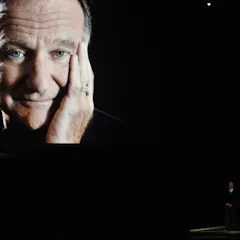
Everyone has heard of Alzheimer’s, but little-known DLB affects millions worldwide.
As we mark World Alzheimer’s Day, research shows that tackling non-communicable diseases such as diabetes and hypertension could reduce the caseload.

How old you are depends not so much when you were born but how your clock is ticking.
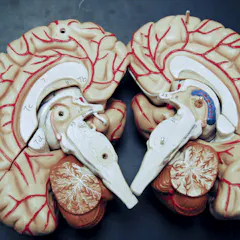
New research has identified a known neurodegenerative disease as being caused by prions. And it has again raised the possibility that these proteins are infectious.

For a growing number of artists, academics, researchers and scientists, dance represents a promising new frontier of exploration. The annual DANscienCE festival shines a spotlight on their findings.
Top contributors
-

PhD Candidate, Neuroscience, University of Sheffield
-
Research Fellow in Neuroimmunology, UCL
-
Professor of Biological Psychology, Loughborough University
-
Professor of Chemistry and Senior Scientist of the Krembil Research Institute, University Health Network, University of Toronto
-
Head of Clinical Services, Dementia Support Australia, & Associate Professor of Psychiatry, Monash University
-
Professor Emeritus of Molecular Neurobiology at the University of Manchester and a Visiting Professorial Fellow, University of Oxford
-
Associate Professor, Turner Institute for Brain and Mental Health, Monash University
-
Professor of Neurology and Neuroscience, University of Florida
-
Host, The Conversation Weekly Podcast, The Conversation
-
Professor of Neurology, UCL
-
Post grad student at University of Edinburgh, University of Edinburgh
-
Associate Professor in Cellular Neuroscience, University of Reading
-
Professor of Psychology in Epidemiology, UCL
-
Étudiant au doctorat en psychologie, Université du Québec à Montréal (UQAM)
-
Affiliate Professor, Department of Family Medicine, McGill University