

By letting machines recommend movies and decide whom to hire, humans are losing their unpredictable nature – and possibly the ability to make everyday judgments, as well.
Articles on Algorithmic bias
Displaying 61 - 80 of 83 articles

If the historical data used to train an AI system disadvantages certain minority groups, the system can be swayed to follow these patterns in its own decision-making process.
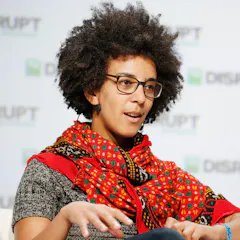
The departure of AI ethics researcher Timnit Gebru from Google highlights attempts to make algorithmic decision-making accountable.

The COVID-19 pandemic has led to calls for the collection of race-based data. But the risks of algorithmic discrimination must be addressed.
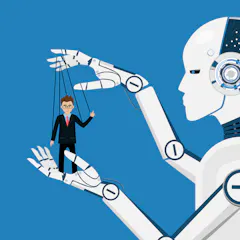
Handing management to algorithms creates ‘black-box bosses" whose decision-making is hard to understand or question.

Problems in the underlying data mean we can’t leave algorithms to decide things on their own.

Scientists are arguing over how YouTube might help turn people into extremists.
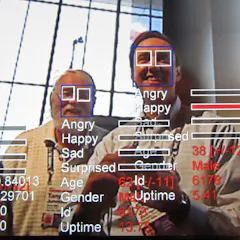
A report calls for banning the use of emotion recognition technology. An AI and computer vision researcher explains the potential and why there’s growing concern.
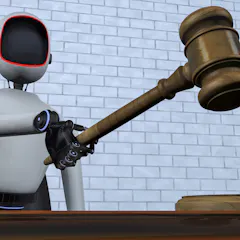
A machine learning expert predicts a new balance between human and machine intelligence is on the horizon. For that to be good news, researchers need to figure out how to design algorithms that are fair.
An AI trained to look at heart scans was able to successfully predict risk of death. But one expert cautions we still need to be careful about designing – and using – AI for medical diagnosis.

The fundamental problem with AI is it is often riddled with society’s existing biases and prejudices.

Technology firms should use more design fiction to explore and avoid potential negative consequences, such as AI bias.
Artificial intelligence is predicted to contribute some US$15.7 trillion to the global economy by 2030. A new report looks at issues specific to New Zealand.
Social biases in digital tech create racist face recognition software and sexist hiring tools, but more data collection isn’t the answer.

From the law to the media we’re becoming artificial humans, mere tools of the machines.
When algorithms are at work, there should be a human safety net to prevent harming people. Artificial intelligence systems can be taught to ask for help.
An ethicist on why fixing algorithms may not be the best response to algorithmic bias.
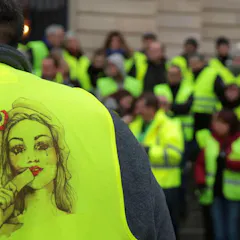
What do the Carlos Ghosn scandal, the rising power of algorithms and the “gilets jaunes” have in common? The need to extend the spatial and temporal definitions of responsibility.

Some AI technologies aren’t advanced enough to provide useful insights, but simpler tools can yield new opportunities to explore the humanities.
Expecting algorithms to perform perfectly might be asking too much of ourselves.
Top contributors
-

Professor of Information Systems, Michigan State University
-
Professor of Information Science, University of Washington
-
Professor of Informatics and Computer Science, Indiana University
-
Professor of English, Macalester College
-
Senior lecturer in Law, Brunel University of London
-
Assistant Professor of Communication, University of Arizona
-
Adjunct Associate Professor, School of Social Sciences, Linguistics, The University of Western Australia
-
Postdoctoral Researcher in Data Science, University of Oxford
-
Kyle Webster has just completed an internship in the Office of the Prime Minister’s Chief Science Advisor, focussing on Artificial Intelligence. , University of Auckland, Waipapa Taumata Rau
-
Senior Lecturer in Philosophy, University of the Witwatersrand
-
Associate Professor of Industrial & Manufacturing Engineering and Computer Science & Engineering, Penn State
-
Senior Research Fellow, Applied Ethics Center, UMass Boston
-
Ph.D. Student in Linguistics & Germanic, Slavic, Asian and African Languages, Michigan State University
-
Professor, Real Estate, Université du Québec à Montréal (UQAM)
-
Professor of Information Technology and Organisation, University of Sydney