

The new bill puts the onus on tech platforms to protect Australians from harmful content and design features.
Articles on Algorithmic harm
Displaying 1 - 20 of 26 articles

It might seem quaint now but for many Facebook users, the introduction of this content algorithm felt like a violation of their privacy and trust.

Colorado watered down its AI legislation but may still face litigation from the Department of Justice.

Danger arises when law enforcement believes that AI models are retrieving certainties rather than generating likelihoods.

Louis Theroux (perhaps unintentionally) shows us that a traditional TV documentarian like him no longer holds the power.

Political content on social media finds you even if you’re not looking for it, and it tends to do so through a sensationalized and emotionally charged lens.
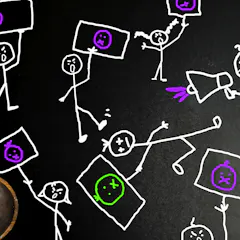
A new tool lets researchers get a handle on how social media algorithms affect emotions and polarization.

Some of the marginalized groups most likely to be harmed by AI are also most wary of it. A new study’s findings raise questions about equity and consent in technology design.

With a potential ban of state regulation of AI soundly defeated, states are continuing to take the lead on protecting people from the technology’s potential harms – for now.

Health insurance companies use AI to decide which health care treatment to cover. State laws and federal agencies are now moving toward regulating these algorithms.

Boosted by algorithms, many influencers are framing suffering as fitness, and failing young men in the process.

Google’s search engine fields 6.3 million queries every second. But the results it dishes up are far from perfect.
The damage AI algorithms cause is not easily remedied. Breaking algorithmic harms into four categories results in pieces that better align with the law and points the way to better regulation.

Framing dissent and poverty as a menace to public order can threaten fundamental rights, particularly when it’s used to justify the deployment of predictive technology.

People are better able to see and correct biases in algorithms’ decisions than in their own decisions, even when algorithms are trained on their decisions.

The age of AI warfare has arrived – and it’s not looking good.

Bias in AI has been getting a lot of attention lately, but it’s just one aspect of the larger – and thornier – problem of fairness in AI.

The explosion of generative AI tools like ChatGPT and fears about where the technology might be headed distract from the many ways AI affects people every day – for better and worse.

The plaintiffs claims features such as ‘infinite scroll’ leave users less likely to be able to exercise self-control.
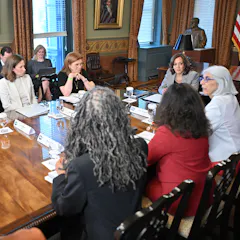
If safety is the heart of the Biden administration’s executive order on AI, then civil rights is its soul.
Top contributors
-

Professor of Information Systems, Michigan State University
-
Lecturer in Law, Adelaide University
-
Assistant Professor of Computer Science, Johns Hopkins University
-
Assistant Professor of Practice, University of Denver
-
Principal Research Consultant in Strategic Foresight, CSIRO
-
Professor of Health Economics, University of Washington
-
Senior Research Fellow, Human-AI Decision Making, The University of Queensland
-
Taylor Reveley Research Professor and Professor of Law, Director, Digital Democracy Lab, William & Mary
-
University Professor of Electrical and Computer Engineering, Iowa State University
-
Professor of Economic Law and Co-Director of the Centre for Global Law and Innovation, University of Bristol
-
Assistant Professor of Data Science, University of Virginia
-
Researcher, Swedish University of Agricultural Sciences and Honorary Research Fellow, University of Manchester
-
Assistant Professor of Computer Science, University of Virginia
-
Professor of Marketing and Everett W. Lord Distinguished Faculty Scholar, Boston University
-
PhD Candidate, International Studies, RMIT University