

Police efforts to sort through online child sexual exploitation material are being hampered by the rise in AI-generated imagery. Here’s how they’re working to combat the problem.
Articles on AI ethics
Displaying 41 - 60 of 70 articles

Simon Kolstoe argues that while AI can greatly assist in ethics reviews, it cannot make an ethical decision.

Tools such as ChatGPT dominate the conversation around AI in schools. But with teachers looking to meet Indigenous content requirements, using generative AI could do more harm than good.

A study in which students brainstormed all the uses of a paper clip shows that AI can both enhance and harm the creative process.

It may seem extreme, but there’s a reason the law allows it.
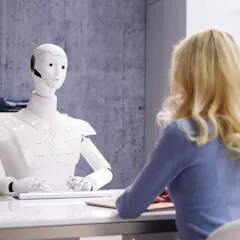
Companies and hiring agencies are increasingly resorting to AI-enabled tools in recruitment. How they’re used can significantly impact an individual’s perception of the organisation.

As far back as the dawn of the internet, scholars have discussed how AI might serve to replace (or supplement) human relationships.

The public release of the chatbot has led to a global conversation about the risks and benefits of AI – a conversation few people were having just a few years ago.

Understanding how deepfakes can be used as a tool for misogyny is an important first step in considering the harms they will likely cause, including through school cyberbullying.

We tested how ChatGPT stacks up against professional advice columnists – with some intriguing results.

It has been an epic backstabbing scene worthy of the HBO drama Succession.

In the absence of comprehensive AI regulation from Congress, the executive branch is building on its previous efforts to address AI harms.

President Joe Biden has issued an executive order to regulate AI. The directives could help avoid AI doom – but they miss some key points.

AI poses a variety of ethical conundrums, but the NASA teams working on Mars rovers exemplify an ethic of care and human-robot teamwork that could act as a blueprint for AI’s future.

It’s hard to remember life before Google, when the closest thing to it was your local librarian. Soon the search engine will be offering AI-based summaries in its search results.

In a preprint study, researchers estimate training the model behind ChatGPT would have required somewhere between 210,000 and 700,000 litres of water.

Large language models are becoming increasingly capable of imitating human-like responses, creating opportunities to test social science theories on a larger scale and with much greater speed.

If you drop advanced AI into a dumb organisation, it won’t make it smart. It will just help the organisation do dumb stuff more efficiently (in other words, quicker).

Strengthening democratic values in the face of AI will require coordinated international efforts between industry, government and non-governmental organizations.

Brain scans have been used to interpret thoughts, but how far can this technology go?
Top contributors
-

Professor of Philosophy and Director of Applied Ethics Center, UMass Boston
-
Professor of AI, Research Group Leader, UNSW
-
Adjunct professor, Carleton University
-
Senior Lecturer, School of Engineering, Australian National University
-
Senior Lecturer in Digital Ethics; Deputy Director, Centre for AI and Digital Ethics, The University of Melbourne
-
Professor of Information Sciences & Director, Social Change Enabling Impact Platform, RMIT University
-
Professor of Creative Pedagogies, Edinburgh Napier University
-
Senior research fellow, RMIT University
-
Associate Professor, Faculty of Law & Justice; Lead, UNSW Public Interest Law & Tech Initiative, UNSW
-
Distinguished Professor of Media and Communications; Director, ARC Centre of Excellence for Automated Decision-Making and Society, RMIT University
-
Associate Professor of Sociology, Princeton University
-
Senior Lecturer in Law and Emerging Technologies, Western Sydney University
-
Professor Emerita of Linguistics, American University
-
Senior Lecturer, Management, University of Tasmania
-
Research Fellow, Centre for Urban Research, RMIT University