

As artificial intelligence is incorporated into more newsrooms, journalists must ensure they use AI with transparency so that it does not undermine their credibility.
Articles on AI ethics
Displaying 21 - 40 of 70 articles

AI that anticipates where crimes are likely to occur and who might commit them has a troubling track record. Democratic accountability could shine a light on the technology and how it’s used.
Aligning AIs with people’s goals and values is tricky. A new technique quantifies how far off human and machine are from each other.
What we want from AI systems depends on the kind of relationships they are trying to simulate.

To make sure search engines serve us well, it’s helpful to imagine these tools having different roles – whether it’s a “librarian” or a “teacher”.

AI is transforming how lawyers work, but legal education is lagging behind.
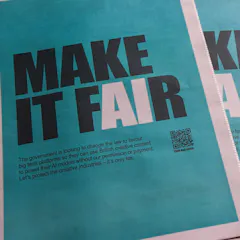
Recent protests have called on the UK government to support artists and enforce copyright laws through a fair and responsible AI approach.
As tech deregulation accelerates, biased, offensive and unsafe AI behaviour is set to surge.

Other big tech companies such as Meta and OpenAI have also recently allowed for more military uses of AI. So why is this happening now?

AI systems reflect human values. However, the human values embedded in AI are skewed to the utilitarian and away from the greater good.

AI systems that can autonomously make decisions on our behalf will be a huge time saver – but we must deploy them with care.

AI systems can appear to be black boxes – often, even experts don’t know how systems reach their conclusions. The nascent field of “explainable AI” aims to address this problem.

Clear guidelines for communicators’ use of generative AI, will help avoid an explosion of misleading information, the erosion of public trust and the misuse of personal data on an unprecedented scale.

Where are the limits to using AI honestly and transparently? 3 philosophies can help the debate: deontological ethics, consequentialism and virtue ethics.
Research on artificial intelligence in marketing overwhelmingly neglects its potential negative consequences, a new study finds.

AI risks reinforcing the existing biases and inequalities, including those based on gender, race, sexual orientation and visible and invisible disabilities.

As AI ‘companions’ permeate our most intimate spheres, we risk diminishing our own human essence by falsely attributing human qualities to them.

Autonomous AI is still designed by people − so who or what is really responsible for its actions? For centuries, theologians have posed similar questions about mankind and God.
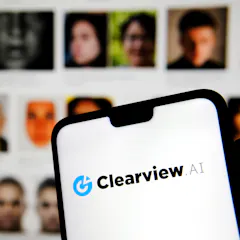
The decision underscores the importance of strengthening privacy laws and enforcement powers of regulators.

Human Rights Watch has sounded the alarm over Australian children’s images found in a huge data set used to train AI models. It could be a breach of our privacy law.
Top contributors
-

Professor of Philosophy and Director of Applied Ethics Center, UMass Boston
-
Professor of AI, Research Group Leader, UNSW
-
Adjunct professor, Carleton University
-
Senior Lecturer, School of Engineering, Australian National University
-
Senior Lecturer in Digital Ethics; Deputy Director, Centre for AI and Digital Ethics, The University of Melbourne
-
Professor of Information Sciences & Director, Social Change Enabling Impact Platform, RMIT University
-
Professor of Creative Pedagogies, Edinburgh Napier University
-
Senior research fellow, RMIT University
-
Associate Professor, Faculty of Law & Justice; Lead, UNSW Public Interest Law & Tech Initiative, UNSW
-
Distinguished Professor of Media and Communications; Director, ARC Centre of Excellence for Automated Decision-Making and Society, RMIT University
-
Associate Professor of Sociology, Princeton University
-
Senior Lecturer in Law and Emerging Technologies, Western Sydney University
-
Professor Emerita of Linguistics, American University
-
Senior Lecturer, Management, University of Tasmania
-
Research Fellow, Centre for Urban Research, RMIT University