
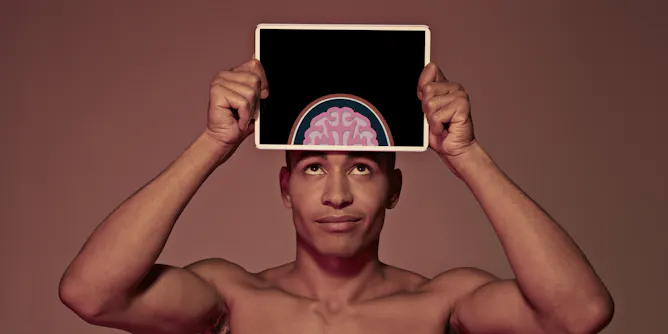
Chatbots can facilitate ‘cognitive offloading,’ or taking shortcuts when learning. But emerging research on AI and cognitive science shows that learning is like a workout.
Articles on AI and education (Spencer)
Displaying 21 - 33 of 33 articles

Survey shows students rapidly picked up chatbots, but perhaps surprisingly, they more often used it to augment their learning, rather than hand work off.

As AI automates technical work, students and educators need to emphasize social skills and a high degree of self-awareness.

Even before generative AI went mainstream, fewer people were reading books.
Leading thinkers in the field are seeking a more nuanced understanding of how best to use AI to shape the future of education.

Generative AI is in the workplace already, so students should learn how to use it. But an early experiment shows generative AI is different than learning previous business apps.

Whether students and faculty are actively using AI or not, it is having significant interpersonal, emotional effects on learning and trust in the classroom.

Three recent developments in AI – in video games, wearable technology and education – suggest that building something like Stephenson’s Young Lady’s Illustrated Primer is possible.
President Trump’s executive order calling for AI literacy highlights its importance. The order also underscores its amorphous nature. Here’s how to develop and measure effective AI literacy programs.

During the Industrial Revolution, craftsmanship retreated to the margins. As AI becomes widely adopted, will the same happen to original thinking?

If AI allows students to automate routine cognitive tasks, it doesn’t mean they’re thinking less. It means their thinking is changing.

This hospitality course bridges the gap between theoretical knowledge and real-world skills.
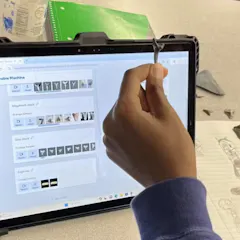
Lesson plans incorporating shark fossil teeth help prepare kids to live and work in an AI world.
Top contributors
-

Professor of English, Kennesaw State University
-
Clinical Assistant Professor of Computer Science Education and Educational Technology, Arizona State University
-
Professor of Biology, University of Richmond
-
Junior Research Fellow, Applied Ethics Center, UMass Boston
-
Professor of Philosophy and Director of Applied Ethics Center, UMass Boston
-
Professor of Economics and Management, Albion College
-
Associate Profess of Special Education, University of Iowa
-
Assistant Professor in Instructional Technology, Kennesaw State University
-
Associate Professor of Educational Technology, University of Florida
-
Associate Professor of Hospitality and Technology Innovation, University of Wisconsin-Stout Polytechnic
-
Clinical Professor of International Business, University of South Carolina
-
Research Associate at the School of Social Sciences and Technology, Technical University of Munich
-
Assistant Professor of Political Science, Purdue University
-
Post Doctoral Researcher in Educational Sciences, Technical University of Munich
-
Associate Professor of Learning Sciences & Human Development, University of Washington