

A pilot study analyzing college students’ writing with AI shows an interactive process, from brainstorming to editing the output produced by chatbots.
Articles on AI and education
Displaying 1 - 20 of 30 articles

Some new findings show that AI has certain benefits, such as reducing barriers for students with learning disabilities. But overall, more evidence is needed to understand how AI influences learning.
How can business schools best navigate the AI era? Does GenAI in higher education constitute a level playing field where educational inequality and diverse learning needs are concerned?

How do instructors get students to trust their own thinking and be better than robots?
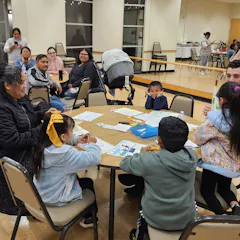
Researchers use text and image generators to design culturally relevant educational content for young children.
Colleges and universities are taking on different approaches to how their students are using AI – but with a shared recognition that they cannot prevent it altogether.
Automating knowledge production and teaching weakens the ecosystem of students and scholars that sustains universities, raising existential questions about their mission.

As AI spreads in special education, the question remains: Can these tools uphold the individualized, legally protected services students with disabilities need?
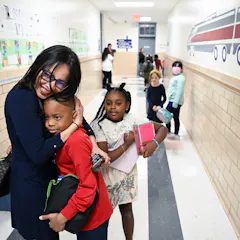
The current landscape of AI use in K-12 schools is highly varied because there’s little specific policy guidance from the state and federal levels.

AI tutors are often held up as an ideal, but prioritizing individualized teaching can detract from the benefits of learning in social environments.

Doing the mental work of connecting the dots across multiple web queries appears to help people understand the material better compared to an AI summary.
A sociologist who researches AI’s impact on work and education argues there are ethical dimensions to generative AI that institutions are not considering.

Under-resourced schools are less likely to support teachers in implementing AI technology to best serve learning.

Instead of banning AI and ChatGPT, students in the law sector should be taught to use them responsibly.
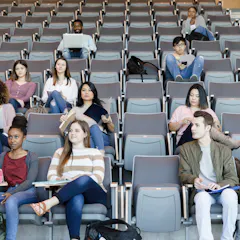
Students – and all manner of professionals – are tempted to outsource their thinking to AI, which threatens to undermine learning and credibility. A philosophy professor offers a solution.
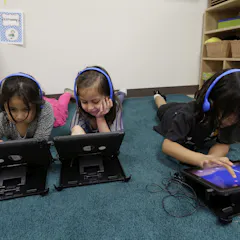
A meta-analysis of AI chatbots’ impact on student learning finds benefits when used properly, but risks of diminishing student motivation and confidence.

Common chatbots produce generic lesson plans that are unlikely to improve learning, a study finds. It shows how teachers should be critical users – not rapid adopters − of generative AI.

Higher education’s embrace of AI reveals deeper trends in institutional priorities − and what’s at risk.

It can take years to collect evidence that shows effective uses of new technologies in schools. Unfortunately, early guesses sometimes go seriously wrong.
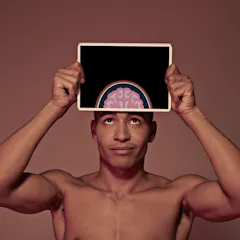
Chatbots can facilitate ‘cognitive offloading,’ or taking shortcuts when learning. But emerging research on AI and cognitive science shows that learning is like a workout.
Top contributors
-

Senior Lecturer of Education, UMass Amherst
-
Associate Clinical Professor of Educational Administration and Leadership, Drexel University
-
Associate Professor of Educational Psychology, University of Alabama
-
Professor of English, University of Victoria
-
Postdoctoral researcher, University of California, Los Angeles
-
Professor of Education, American University
-
Professor of Learning Technology, UMass Amherst
-
Professor of Digital Media, Massachusetts Institute of Technology (MIT)
-
Director of Policy Research at the Institute for Cyber Law, Policy, and Security, University of Pittsburgh
-
Associate Professor of Learning Sciences & Human Development, University of Washington
-
Professor of Literacies and Digital Cultures, Australian Catholic University
-
Associate Professor of Political Science, Brock University
-
Clinical Assistant Professor of Computer Science Education and Educational Technology, Arizona State University
-
Associate Profess of Special Education, University of Iowa
-
Associate Professor of Cognitive Psychology, Boise State University