
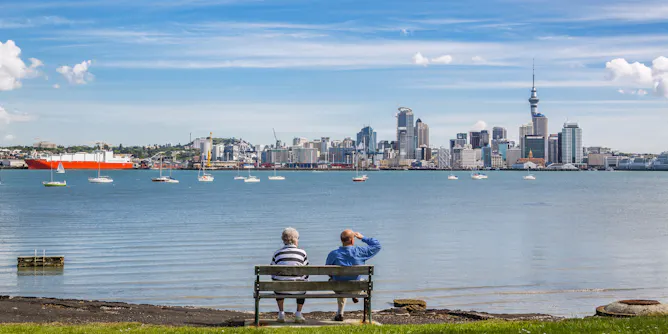
Most older New Zealanders live in private homes. As the population ages, making streets, transport and public spaces work for them will become crucial.
Articles on ageing in place
Displaying all articles
Most Australians want to age at home, where they can remain connected to their communities and neighbourhoods. But what happens if you’re renting?

An ageing population is caught in a perfect storm of rising house prices and rents, falling home ownership rates, mortgage debt carried into retirement, insecure rentals and a lack of social housing.
A study of 85 policies at all levels of government shows the focus in Australia is on residential care homes. Most older people are not in care, but their need for age-friendly cities is overlooked.
We have the technology to make it easier for older Australians to pursue active ageing in their own communities. The smart city just needs their input to make it work for them.
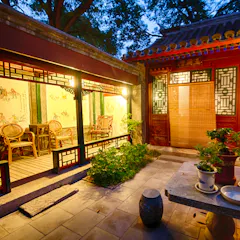
Many older women are in desperate need of affordable housing where they can age in place securely, with dignity and as part of a community. The siheyuan model offers ways to meet these needs.
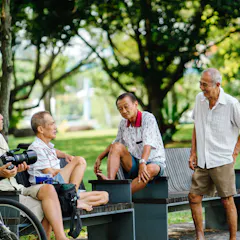
Integrated care is the way forward in Asian societies — this is the best solution for maintaining a high quality of life among older adults.

Instead of isolating and excluding older Australians, communities that are designed to embrace the growing numbers of Australians over 65 will have all kinds of benefits for Australia.
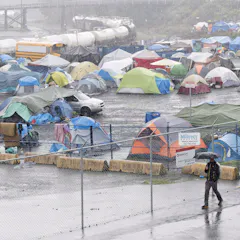
The number of seniors experiencing homelessness in Vancouver has increased in recent years, according to the city’s Homeless Count.
Top contributors
-

Senior Lecturer, School of Design and the Built Environment, Curtin University
-
Associate Professor, Melbourne Medical School, The University of Melbourne; Alan Turing Institute
-
Professor and Director, Australian School of Architecture and Design, UNSW
-
Senior Research Fellow, City Futures Research Centre, UNSW Sydney, UNSW
-
College Of Social Work, University of Utah
-
Professor of Housing & Social Policy, HHAUS Housing, Homelessness & Urban Studies, Swinburne University of Technology
-
Senior Research Fellow, Centre for Social Impact, The University of Western Australia
-
Senior Research Fellow, Housing, Homelessness & Urban Studies (HHAUS) research group, Swinburne University of Technology
-
Professor Interaction Design and Director, Future Self and Design Living Lab, Swinburne University of Technology
-
Adjunct Professor of Architecture and Urban Design, Queensland University of Technology
-
Professor of Healthy Ageing, Australian Catholic University
-
Sessional Academic, UNSW
-
John Curtin Distinguished Professor, Curtin University
-
Executive Director of the Centre for Ageing Research & Education, Duke-NUS Medical School, National University of Singapore
-
PhD candidate, XYX Lab, Monash Uni and Lecturer, School of Architecture, UTS, Monash University