
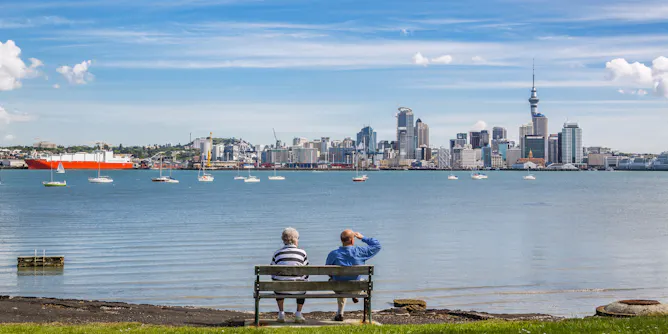
Most older New Zealanders live in private homes. As the population ages, making streets, transport and public spaces work for them will become crucial.
Articles on Active ageing
Displaying all articles

Elite athletes share with the rest of us a common underlying physiology and the capacity to adapt significantly to training. It’s never too late to start.
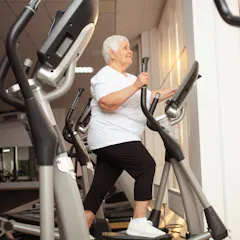
Sarcopenic obesity can creep up on us gradually over time. People might not appear frail or thin, but may have in fact already lost quite a lot of muscle through lack of use.
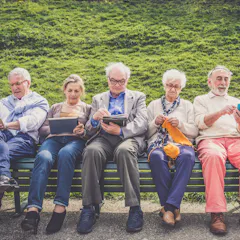
Lifelong learning isn’t just about being employable, it’s about a healthy brain and overall quality of life.
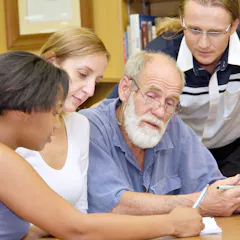
Being age-friendly is not just a matter of responding to the needs of Australia’s ageing population. It will benefit all students and the university as a whole.
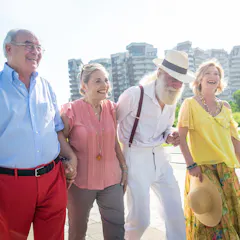
We have the technology to make it easier for older Australians to pursue active ageing in their own communities. The smart city just needs their input to make it work for them.
Millions of older Australians live in houses that don’t safely meet their needs, but they’re not ready for a nursing home. Lack of suitable housing and the moving costs leave them with nowhere to go.
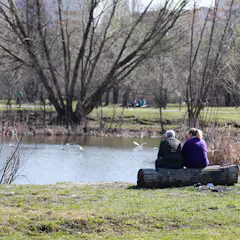
Several key aspects of public open space can encourage older people to get out and about. And badly designed and maintained facilities have the opposite effect and can harm their wellbeing.
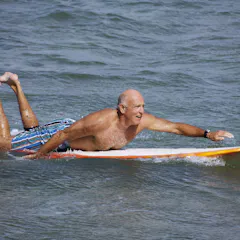
Growing old gracefully with a spring in your step.

Japan’s ageing population is at the point that Australia is forecast to reach in 2056. The Japanese have had to develop new models of aged care in the community and we can learn a lot from them.

Our expert explains how our bodies’ many complex systems deteriorate, leading to an increased risk of falling.
Despite being called a “grand challenge” alongside climate change and terrorism, the fact of an ageing society isn’t new; it has been proceeding quietly across all developed countries for 174 years: data…
Top contributors
-

Senior Lecturer, Department of Tourism, Sport & Society, Lincoln University, New Zealand
-
Associate Professor in Sport Leadership & Management, Auckland University of Technology
-
Associate Professor in Physical Activity & Health, Durham University
-
Professor of Healthy Ageing, Australian Catholic University
-
Economist and Sessional Academic, RMIT University
-
Professor of Urban Planning, Deputy Dean, Sustainability and Urban Planning, RMIT University
-
Researcher, College of Business, RMIT University
-
Research Fellow, Creative Industries Faculty, Queensland University of Technology
-
Associate Professor of Social Work, RMIT University
-
Professor of International Planning, Centre for Urban Research, RMIT University
-
Manager, Industry Linkage, RMIT University
-
Professor of Social Policy and Social Gerontology, University of Sheffield
-
Professor in Ageing and Health, Glasgow Caledonian University
-
Professor Interaction Design and Director, Future Self and Design Living Lab, Swinburne University of Technology
-
Adjunct Senior Research Fellow in Education, Griffith University