
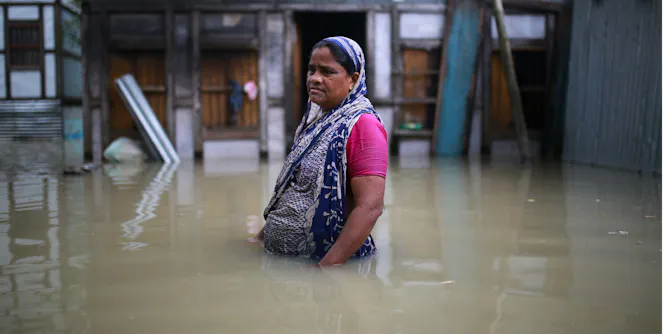
From melting glaciers to mounting storms, the impacts of climate change are global – but they’re not equally shared.
Articles on Adaptation
Displaying 121 - 140 of 224 articles
The author’s 9-year-old son will likely face about four times as many extreme events in his lifetime as older adults today. An international report explains the impacts already being felt.
As the impacts and costs of climate change increase over time, New Zealand’s financial systems could become less stable and the government less able to support those affected.
An author of the report explains the damaging effects climate change is already having and why adaptation is essential.
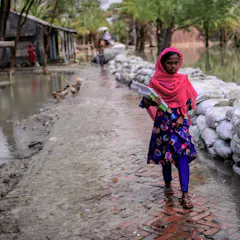
The damage from storms, droughts and sea level rise is in the news almost daily. Some money is flowing to help poor countries, but what isn’t clear is how much impact the funds are having.
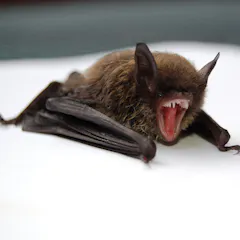
Research has revealed how earless moths manage to avoid bat attacks - by evolving sophisticated acoustic tricks.
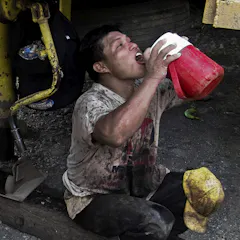
The risk from heat waves is about more than intensity – being able to cool off is essential, and that’s hard to find in many low-income areas of the world.
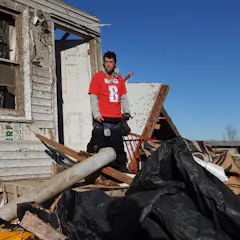
The most affordable homes face the highest risks from disasters for three key reasons.
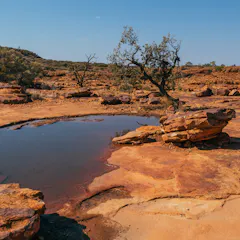
As climate change worsens, their findings highlight the importance of conserving natural river flows to enable freshwater species to respond and adapt.
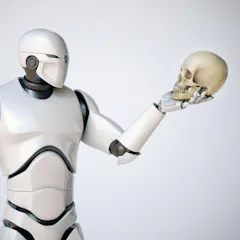
Science fiction is full of computer programmes and androids who fall afoul of the plots of some of Shakespeare’s most brutal tragedies.
The financial outcome of COP26 is a glass half full, but it’s not far from a failure.
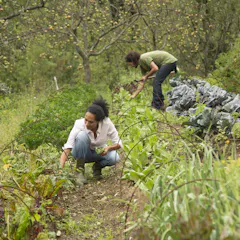
Permaculture – a mashup of ‘permanent’ and ‘culture’ – is a way of doing agriculture that’s inspired by the resilience and biodiversity of healthy natural ecosystems.
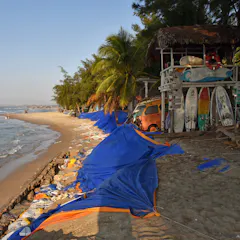
A report found the amount of funding needed to adapt to climate change exceeds what has so far been delivered by 80%.
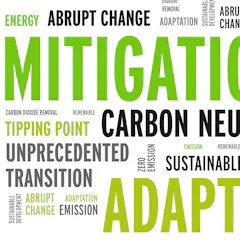
The language around climate change can feel overwhelming. A psychology and public policy expert breaks it down in plain English.
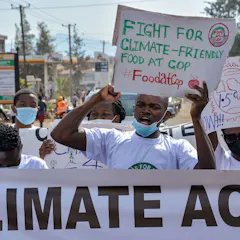
Five aspects need attention if African governments are to be able to mitigate, adapt to and manage climate change in the coming critical decade.
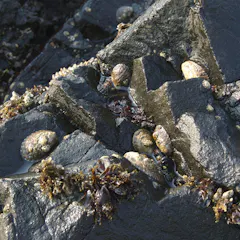
The Blob, a long-lasting mass of warm water, sat off the Pacific coast of North America for years, bringing new species to formerly cold waters. What allows some to survive while others fade away?
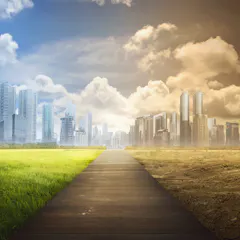
Climate change predictions often use the year 2100 as an end-point. But it’s important to consider what will happen beyond that, at least up to the year 2500.
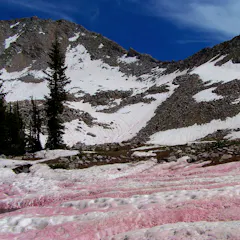
How do organisms survive extreme conditions – and how can their adaptations help us develop better technology?
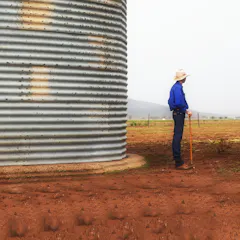
New ABARES research examines the climate change challenge facing Australian farmers

Globally, the temperature changed by half a degree Celsius, but it dramatically altered the likelihood of extreme local weather.
Top contributors
-

Senior Lecturer in American Literature and Film, Loughborough University
-
Professorial Research Fellow, Victoria University
-
Professor of Biogeography and Spatial Ecology, UMass Amherst
-
Assistant Professor, Disaster Research Center, University of Delaware
-
Assistant Professor of Ecology and Evolution, Georgia Institute of Technology
-
ICLEI Professor of Practice - Local Government Climate Resilience, La Trobe University
-
Principal Research Scientist, University of British Columbia
-
Research professor, RMIT University
-
Casual Academic, School of Humanities and Communication Arts, Western Sydney University
-
Associate Professor of Environmental Science and Policy, University of Miami
-
Professor in Conservation Science, School of the Environment, The University of Queensland
-
Researcher in Climate and Inequality, University of the Witwatersrand
-
Pro Vice-Chancellor, Climate, Sustainability and Inequality and Director, Southern Centre for Inequality Studies, University of the Witwatersrand
-
Principal Research Fellow, Institute for Risk and Disaster Reduction, UCL
-
Dean's Professor of English and Professor of Theatre, USC Dornsife College of Letters, Arts and Sciences