
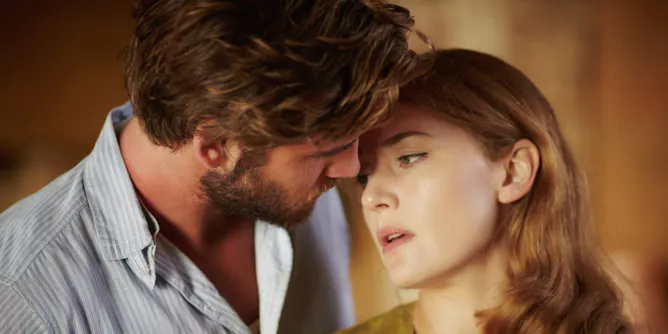
With the success of films like The Dressmaker, book adaptations are giving a much needed boost to the Australian box office. So why are there so few? And why isn’t adaption a compulsory part of screen studies?
Articles on Adaptation
Displaying 181 - 200 of 224 articles
How did survivors of the Permo-Triassic Mass Extinction adapt to their new, harsh environment? And why is that knowledge so important for modern species?
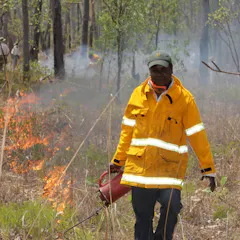
Every year homes are lost in bushfires. But what if we build our houses to withstand fire?
Cuts to CSIRO climate jobs will see a reduction in effort on monitoring and measuring climate change, and an increase in efforts to do something about it. That’s the most politically-sensible option.
We’re going to have to adapt to climate change, but some of the options on the table could do more harm than good if they destroy the ecosystems that protect us.
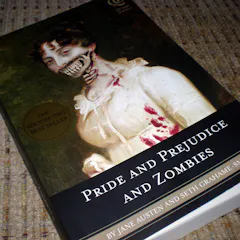
England’s green and pleasant land will be beset by a plague of the living dead, corpses will dig their way out of graves … Jane Austen horror is now a distinctive subgenre of Austen adaptations.

A new novel starring Lisbeth Salander has been written, despite creator Stieg Larsson’s death. But is it a continuation, adaption, or pale imitation? What gets lost when authorship changes hands?
Can screen adaptations of literary classics ever be as good as the source text? Well, yes. As the new ABC miniseries The Beautiful Lie shows, they can explore timeless themes in unpredictable and engaging ways.
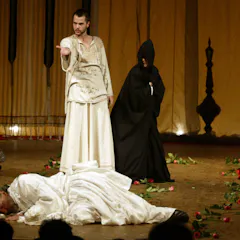
For whatever reason, objections don’t seem to crop up when directors tinker with the setting, costumes and conceptualizations of Shakespeare’s plays.
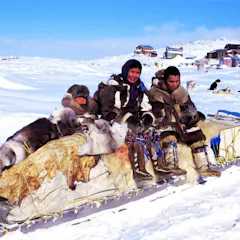
A genetic study of Inuits in Greenland has shed light on how this population has adapted to eating a high-fat diet.
Darwin’s insights into life on Earth may have revolutionised biology, but scientists sometimes get carried away. It’s not the only game in town.
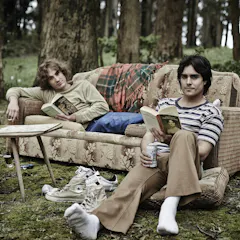
Holding the Man, the screen adaptation of Timothy Conigrave’s much-loved memoir, has seen audiences laughing, then sobbing at its devastating portrayal of AIDS in Australia. It’s an important story to tell.
According to recent research, music is an evolutionary adaptation that helps us navigate a world rife with contradictions.
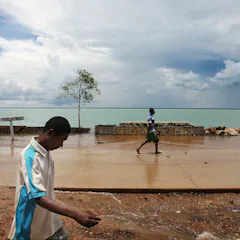
While you may have heard about the increasing threat that climate change and rising seas pose to Pacific islands — already forcing some communities to move — Australia has its own group of islands that…
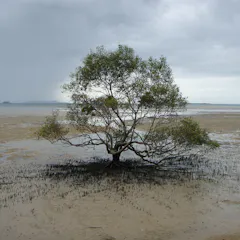
Instead of costly levees and seawalls, coastal ecosystems could offer an alternative way to protect Australia’s coastal communities from rising seas, saving money and storing carbon along the way. Sea…
Researchers from Edith Cowan University found that busy roads can be a barrier for some birds, particularly insectivores…
As the dust settles on the latest Intergovernmental Panel on Climate Change (IPCC) report on the science of climate change, the obvious question is: what do we do next? Our research, published in Nature…
Many will be relieved at today’s announcement by board members of the Climate Commission that they will be continuing their work by setting up a community-funded Climate Council. Communicating climate…
In work we published in Science today we look at two conflicting ideas on whether species can adapt to climate change. Are our ideas about extinction too catastrophic, or do we actually need to do more…
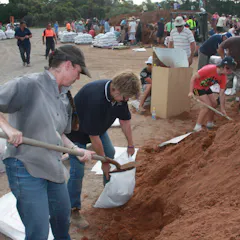
The last few years provided plenty of data to help us reform our approach to floods. With devastating flooding in Queensland and Victoria in 2011 and 2013, we should have learned a great deal about which…
Top contributors
-

Senior Lecturer in American Literature and Film, Loughborough University
-
Professorial Research Fellow, Victoria University
-
Professor of Biogeography and Spatial Ecology, UMass Amherst
-
Assistant Professor, Disaster Research Center, University of Delaware
-
Assistant Professor of Ecology and Evolution, Georgia Institute of Technology
-
ICLEI Professor of Practice - Local Government Climate Resilience, La Trobe University
-
Principal Research Scientist, University of British Columbia
-
Research professor, RMIT University
-
Casual Academic, School of Humanities and Communication Arts, Western Sydney University
-
Associate Professor of Environmental Science and Policy, University of Miami
-
Professor in Conservation Science, School of the Environment, The University of Queensland
-
Researcher in Climate and Inequality, University of the Witwatersrand
-
Pro Vice-Chancellor, Climate, Sustainability and Inequality and Director, Southern Centre for Inequality Studies, University of the Witwatersrand
-
Principal Research Fellow, Institute for Risk and Disaster Reduction, UCL
-
Dean's Professor of English and Professor of Theatre, USC Dornsife College of Letters, Arts and Sciences