
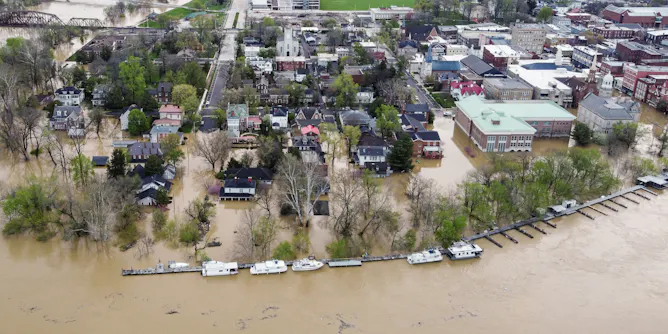
What communities and businesses really need is information they can act on, with examples of what’s worked elsewhere and why – and what fails.
Articles on Mitigation
Displaying 1 - 20 of 38 articles
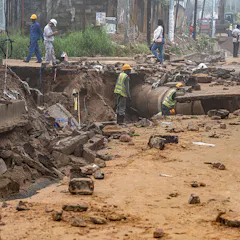
The most important thing to do is to lower the cost of capital for African countries.

Adopting a well-established strategy can help Canada avoid the dysfunctional outcomes we see repeatedly in today’s planning and assessment processes.

While we cannot stop increases in the magnitude or frequency of adverse weather, there is a lot more people can do to reduce the consequences on their way of life.
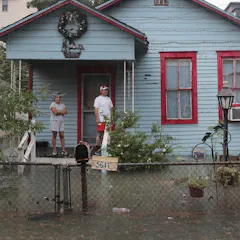
Low-income neighborhoods have the hardest time recovering from disasters without help. FEMA used to require cities to pay attention to them, but that’s changing.

The costs of an unequal global system are not reflected in the new finance goal.

Australia’s emissions-reduction efforts must continue in haste, at large scale. Real change is possible.

Andrew Bragg joins us to explain why the coalition sees migration as a major issue when it comes to housing supply.

Large parts of Appalachia’s forests, once owned by coal companies, now make money for investors by storing carbon. But the results bring few jobs or sizable investments for residents.
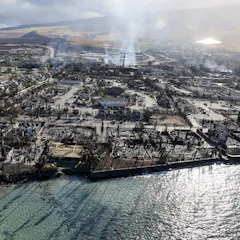
Fed Chair Jerome Powell bristles at talk of managing climate change, but the damage it is doing the US economy is hard to ignore, as the latest National Climate Assessment shows.

Already, climate change plays out in all parts of the world. Every further increment of warming will bring rapidly escalating hazards, including more intense heatwaves and heavier rainfall.
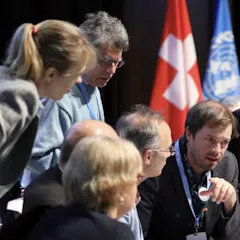
A child born now is likely to suffer, on average, three to four times as many climate extreme events in their lifetime as their grandparents did.

Indonesia government has a nationwide seismic hazard map but without an operational map for seismic mitigation

Heading into COP27, those at the sharp end of climate change are seeking a better deal.

COP conferences broadly provide a platform for the negotiation of international climate change agreements.

Emission of greenhouse gases is on the rise, an indication that the worst lies ahead.
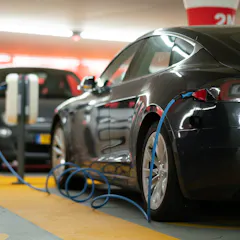
A new international report on climate change finds rapid changes could cut emissions from transportation by 80% to 90%. Three behavior change trends could bring big improvements.
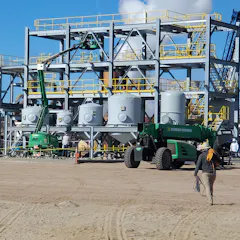
Lithium is essential for batteries that power electric vehicles and store energy from solar and wind farms. A new U.S. source could provide 10 times more lithium than the country uses today.
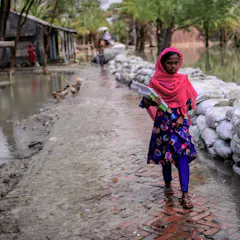
The damage from storms, droughts and sea level rise is in the news almost daily. Some money is flowing to help poor countries, but what isn’t clear is how much impact the funds are having.
The financial outcome of COP26 is a glass half full, but it’s not far from a failure.
Top contributors
-

Senior Lecturer Sustainable Design, Lancaster University
-
Professor of Forest and Natural Resource Policy, Colorado State University
-
Emeritus Professor Department of Mechanical Engineering, Monash University
-
Master of University House and Professor of Forestry, Australian National University
-
Manager Centre for Applied Risk Management (UARM) and Associate Professor Risk Management, North-West University
-
Professor Emeritus of Organizational Behavior, University of Virginia
-
Senior Industry Fellow, Environment and Planning, RMIT University
-
Assistant Professor of Law, Georgia State University
-
Assistant Professor of Commerce, University of Virginia
-
Researcher in Environmental Engineering & Technology Policy, Massachusetts Institute of Technology (MIT)
-
Adjunct Associate Professor, Monash University
-
Sr. Associate Vice President for Research and Research Professor, University of Oregon
-
Professor of Organisational Studies, University of Sydney
-
Researcher in Climate and Inequality, University of the Witwatersrand
-
Mission Lead Towards Net Zero, CSIRO