

Although the government has identified a real problem, its heavy-handed regulation would create unnecessary red tape for universities and exclude students who should get a second chance.
Articles on Higher education funding
Displaying 21 - 40 of 215 articles

Australia’s higher education sector needs significant reform to remove the perverse incentives that have made universities dependent on revenue from international students.

Vice-chancellors from three South African universities unpack how the COVID-19 pandemic could alter the country’s higher education sector.
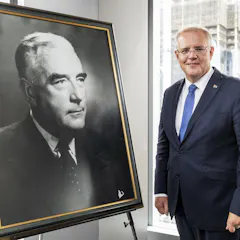
Developments in the 80s set the parameters for much of the political discourse around the humanities since.

Experts predict today’s graduates will have several different careers throughout their working life. The government’s university changes seem ignorant of this.

Travel bans, a recession and the government’s university reform package will leave an estimated $4.7 billion gap in research funding that needs filling to maintain our current output.

The reduced rate of funding to universities (of up to 17%), per place, for national priority courses sends perverse messages to universities.

The implications of the government’s announcement are about more than incentivising the career trajectories of students. They are a direct assault on the premise of universities.

The government has more than doubled the cost of humanities degrees to encourage ‘job-ready’ graduates. But on what evidence?

The education minister has outlined reforms to higher education funding aimed at producing ‘job ready graduates’. But his announcements don’t seem completely in line with the data.
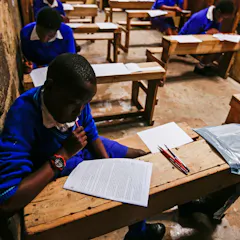
At the current rate, technical and vocational education and training will overtake the university budget in the next five to 10 years

Nigeria’s higher education system is the biggest on the continent but it lags behind on research output.
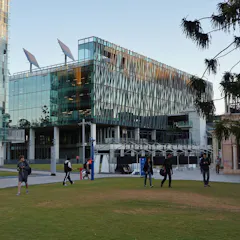
With a budget surplus in sight, it makes no sense to cut funding from Australia’s research capacity.

In order to regain public confidence, universities must take steps to show citizens that investments in higher education are well-spent, an education professor and university professor argue.

Australian tertiary education policy and funding debates are better served by domestic data.

Labor has promised to review the tertiary education sector if elected next year. There are some major issues, and some examples from abroad they should consider.

The benefits of university are clear and measurable, but we can do more with constructive reform.

For universities in Australia to get the most out of philanthropic donations, they need to develop persuasive cases for giving, and work with staff, communities and donors towards shared goals.

Funding debates dominated most education policy talks in 2017, but discussions look to be extending past the dollar value in 2018 with a number of high profile reports due for release.
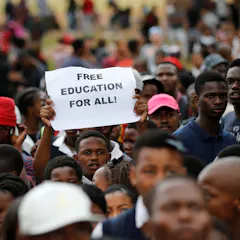
In many respects, President Jacob Zuma’s free higher education proposal in South Africa is the worst kind of populism.
Top contributors
-

Professor of Higher Education Policy, Monash University
-
Adjunct Professor, Department of Leadership, Higher and Adult Education, OISE, University of Toronto
-
Associate Professor, Melbourne Centre for the Study of Higher Education, The University of Melbourne
-
Honorary Senior Fellow, Melbourne School of Psychological Sciences, The University of Melbourne
-
Professorial Fellow, University of Canberra
-
Associate Professor & Academic Director, Widening Participation, La Trobe University
-
Senior Research Fellow, Curtin University
-
Honorary Professorial Fellow, Melbourne CSHE, The University of Melbourne
-
Professor of International Higher Education, UCL
-
Adjunct Associate Professor in History, University of New England
-
Vice-Chancellor, Deakin University
-
Lecturer, UCL
-
Vice-Chancellor, Southern Cross University
-
Professor of Vocational and Higher Education, University of Birmingham
-
Executive Director, IRU, La Trobe University