

Demand for research grants has far exceeded supply, with success rates for grant applications falling to record lows.
Articles on Higher education funding
Displaying 61 - 80 of 215 articles
Barnaby Joyce found his political future in doubt this week, with the gunshot announcement from Tony Windsor that he would try to ride back into his old seat of New England.
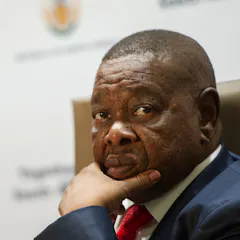
Higher education has done as well as could have been expected from the 2016 Budget, given South Africa’s current economic circumstances.
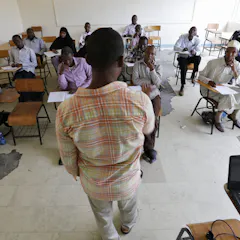
Kenya’s authorities are trying to deal with declining standards at the country’s public and private universities. This will require a strengthened regulatory framework and hard work from institutions.
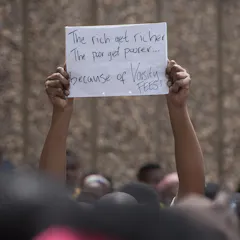
If higher education is made “free” for all, the whole society ends up paying more. That’s deeply unjust in already unequal societies, such as those in Africa.
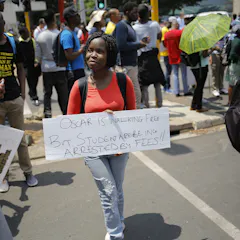
It shouldn’t be up to universities or the government alone to fund students who qualify for tertiary education but can’t afford it. A perpetual bond system could be the answer.
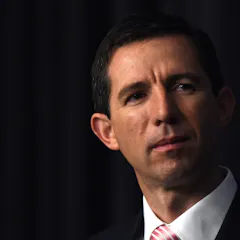
Michelle Grattan speaks with Simon Birmingham about his negotiations for a new higher education package, efforts to crack down on rorting in the vocational educational sector and the government's overhaul of the childcare system.

Welsh and Scottish students get more support than English and Northern Irish ones.
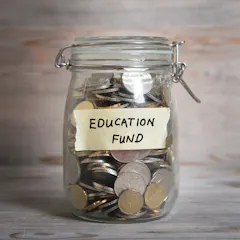
Being up front about what public investment goes towards in higher education is an important step for providing greater clarity for students.

The decline in government investment in higher education and the ever-increasing reliance on fees has made universities more like private for-profit corporations.
Some of Italy’s private universities may have a solution to South Africa’s tertiary fee crisis: a sliding scale of fees based on household income.
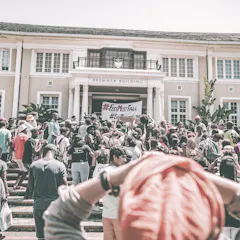
Students and academics are fed up with the situation at South Africa’s universities. One way to improve conditions is for universities to be run as institutions of learning – not big businesses.
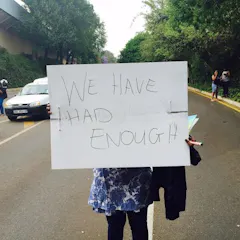
South Africa’s higher education sector is dramatically underfunded. Polite conversations between vice-chancellors and the government have failed. It’s time the voices of student activists was heard.
Higher education policy development should involve learning from the Abbott government’s mistakes and other counties where university reform has been successfully achieved.
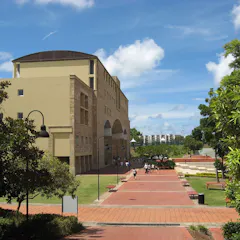
Many point out that in 2011 Australia’s public funding of universities ranked thirty-third out of the thirty-four OECD member countries. However the story is not so simple.
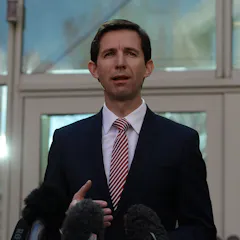
New Education Minister Simon Birmingham says the Turnbull government will abandon plans to deregulate university fees in time for 2016.
Labor has released a higher education policy intended to restart a discussion stalled by the failure of the Coalition’s deregulation package to pass the Senate. What is the point of the promised funding guarantee?
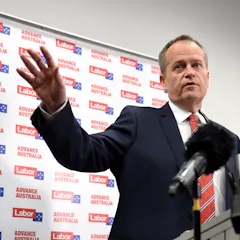
The opposition’s statement today rules out a number of the current government’s policies. Deregulation, as they’ve said before, but also plans to expand the demand-driven system.

Currently universities collaborate with one another and with other sectors in myriad ways, greater competition through deregulation could discourage such collaborations.
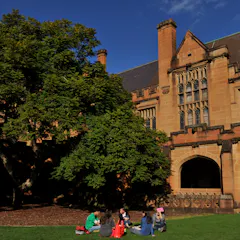
What are some of the consequences for reduced and declining government funding for Australia’s university sector?
Top contributors
-

Professor of Higher Education Policy, Monash University
-
Adjunct Professor, Department of Leadership, Higher and Adult Education, OISE, University of Toronto
-
Associate Professor, Melbourne Centre for the Study of Higher Education, The University of Melbourne
-
Honorary Senior Fellow, Melbourne School of Psychological Sciences, The University of Melbourne
-
Professorial Fellow, University of Canberra
-
Associate Professor & Academic Director, Widening Participation, La Trobe University
-
Senior Research Fellow, Curtin University
-
Honorary Professorial Fellow, Melbourne CSHE, The University of Melbourne
-
Professor of International Higher Education, UCL
-
Adjunct Associate Professor in History, University of New England
-
Vice-Chancellor, Deakin University
-
Lecturer, UCL
-
Vice-Chancellor, Southern Cross University
-
Professor of Vocational and Higher Education, University of Birmingham
-
Executive Director, IRU, La Trobe University