

Danger arises when law enforcement believes that AI models are retrieving certainties rather than generating likelihoods.
Science + Tech – Articles, Analysis, Opinion
Displaying 201 - 225 of 4773 articles

Hemp-derived THC products are federally legal, for now. A chemist describes the different THC forms these products can contain and the legal restrictions placed on them.
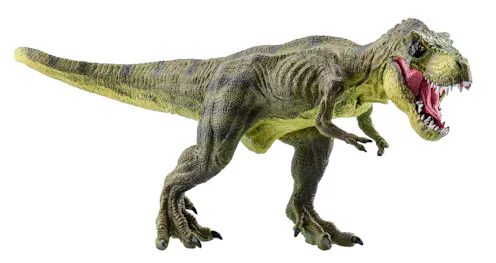
If humans had the same arm proportions as a T. rex, a 6-foot-tall person would have arms about 11 inches long.

Thoreau’s work as a pioneering physical scientist is almost invisible in popular culture, according to a geologist and Thoreau historian.

Young people don’t all contribute in the same way, and understanding the broader picture is the starting point for adults who want to support them.
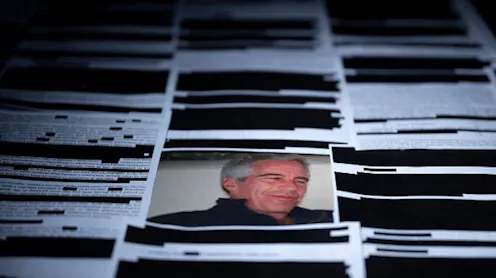
People have created their own online platforms to probe the millions of Epstein file documents, fostering new conspiracies that link to older ones like QAnon.

Repeating harmful ideas online, or regularly making fresh accusations, keeps hate groups alive.
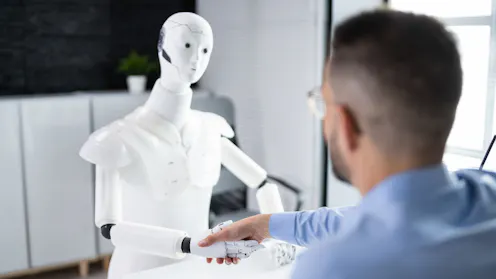
A slew of companies have announced plans to add AI agents to their workforces. Employees can take steps to handle the changes.
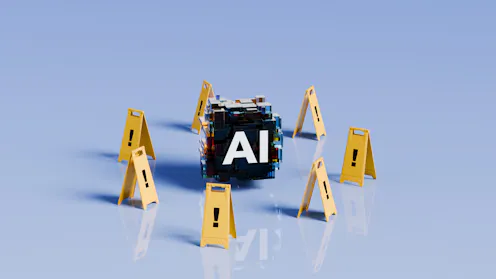
Once powerful AI models are released, it’s nearly impossible to keep them from being misused. Minimizing the risk means making safety the top priority in developing the systems.

Pollen, algae, insects, radiolarians – each unique microfossil holds clues to how Earth has changed over millions of years. Combining AI with digital scanners helps researchers piece it all together.

Hollywood loves a character who has the perfect total recall of a photographic memory. But this idea is a fantasy. It’s not how memory works – for good reason.

An expert in traumatic brain injuries explains why you need to protect your noggin.

Mythos’ dramatic hacking abilities are as much a reflection of the precarious state of digital defenses as a revolutionary tech breakthrough.
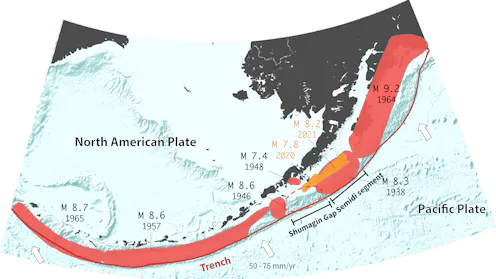
Understanding why some faults creep rather than sticking and causing massive earthquakes is important for gauging the future risk of both earthquakes and tsunamis.
Epigenetic aging clocks allow scientists to study how populations age. They aren’t intended for individuals to make health decisions.

Data centers need powerful chips, while smartphones need chips that are energy efficient. A supply chain scholar explains why chipmakers’ focus on the former comes at the expense of the latter.

Eating fiber can prevent a number of health issues, and you might need to eat more than you think.
Advances in genetic engineering have enabled researchers to seek ways to program new life. But has synthetic biology actually changed medicine and the environment, nearly two decades on?

Astronauts report feeling profoundly awestruck when they go to space, an anthropologist reports. This experience shapes their perspectives even back on Earth.

Each study adds a piece to the puzzle of scientific knowledge. But any one study on its own doesn’t tell you all that much.
The Trump administration fired the entire board that oversees the National Science Foundation, raising an age-old question about the separation of science and state.
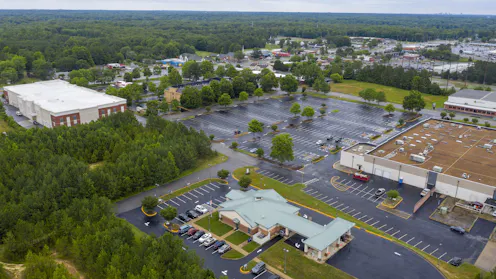
Geofencing warrants round up the location data of everyone in a specific place and time, whether or not they had any connection to a crime – a test of the Fourth Amendment in the digital age.

You can change a stolen password or credit card, but you can’t reset your face when your biometric data is breached.
Combining AI with quantum computing could enable doctors and researchers to analyze the human body at an unprecedented molecular level, unlocking breakthroughs in personalized medicine. Yet significant quantum technology hurdles remain before this vision becomes reality.

Discoveries of molecules in space that suggest extraterrestrial life are exciting, but they need to be taken with a grain of salt – an astrochemist explains why.