

Your hands aren’t just accessories to your words. They’re one of the most powerful tools you have to make your ideas resonate.
Science + Tech – Articles, Analysis, Opinion
Displaying 426 - 450 of 4773 articles
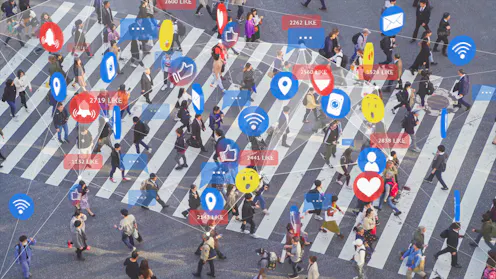
A privacy researcher breaks down how your phone reveals your location, how that data is collected and sold, and how the government gets ahold of it – by simply buying it.
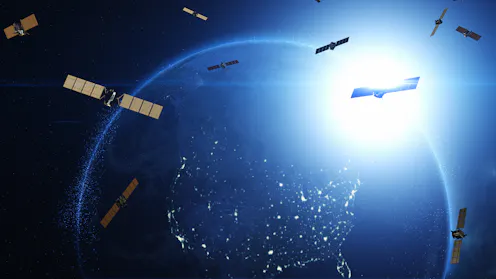
Google’s Project Suncatcher would need sophisticated collision avoidance capabilities to navigate a junk-filled landscape.

Conspiracy thinking, supernatural beliefs and pseudoscience can seem impervious to evidence. An anthropologist suggests the opposite: Extraordinary beliefs may be supported by an individual’s experience.
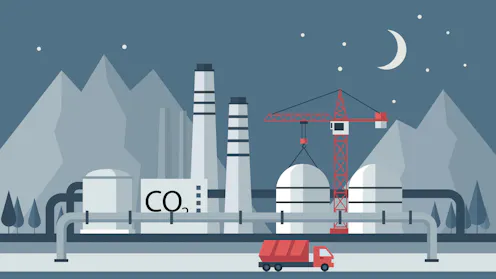
To reduce emissions put into the atmosphere, Google is using carbon capture and sequestration. But not all CCS projects are the same.

Bacteria living in your mouth get to work as soon as you take your first bite or sip of something sweet. Consuming your sugar more strategically can help keep cavities at bay.

Although some high-speed rail has been built in the northeastern US, the rest of the country has almost none.

Many different types of stress can trigger a headache. Luckily, there are treatments that can help stop your head from pounding.
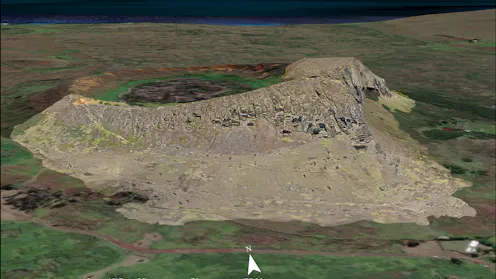
The mysteries of Easter Island, subjects of speculation for centuries, yield to scientific inquiry.
Researchers design studies that might disprove what’s called their null hypothesis – the opposite of the claim they’re interested in exploring.

Naloxone can reverse an overdose in minutes, but exactly how it does this at the molecular level has previously been unclear.
ChatGPT has dramatically altered how people retrieve information, muscling aside Google search as the first stop on the hunt for answers.

Urban digital twins pull together tremendous amounts of data to realistically model cities, but they’ve been missing a critical ingredient: people.

Is an organism a sum of its parts, or should they be considered as a whole? New research on ferns shows how the way scientists understand evolution affects how they study life.
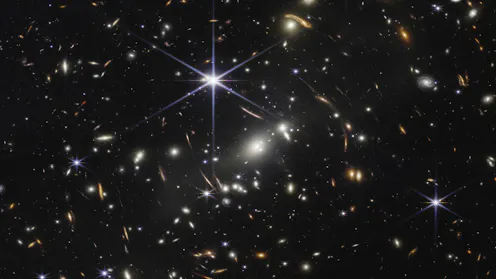
Some unique ‘stars’ might be fueled by dark matter annihilation.
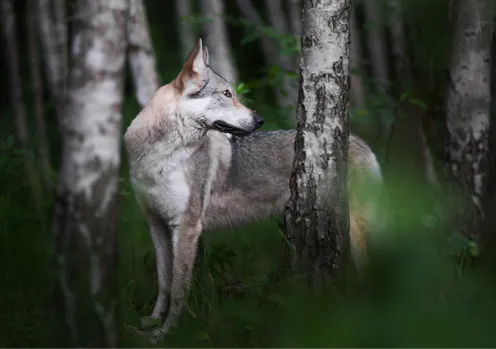
Today’s wolves and dogs share a common ancestor. But a deeper look at their genes reveals that interbreeding since dogs were domesticated 20,000 years ago hasn’t been as rare as scientists assumed.

Resilience is often presented as feats of bravery and endurance. But everyday practices like journaling, drafting a text or even writing a to-do list are manifestations of a capacity to adapt.
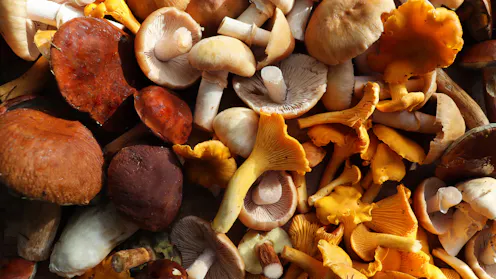
Two ethnobiologists at Penn State surveyed over 800 mushroom harvesters in the mid-Atlantic region to understand what they’re hunting and why.

A subset of AI called reinforcement learning is helping scientists improve nuclear fuel technology, which they could use to power spacecraft and rockets.
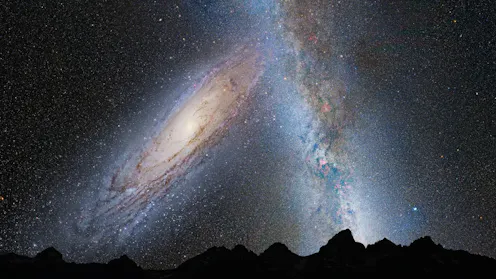
Will the universe keep existing forever? An astrophysicist explains how scientists aren’t entirely sure, but they can make predictions.
People are increasingly using AI chatbots for emotional and psychological support. Now, companies are using it to support employees – raising a host of issues.
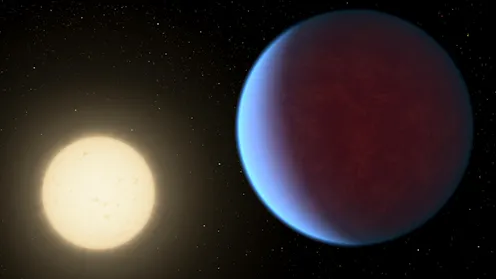
Searching for life on other planets requires more than just measuring their distances from their stars. A future NASA telescope may help search for potentially habitable worlds.

Doing the mental work of connecting the dots across multiple web queries appears to help people understand the material better compared to an AI summary.

Pecans are a truly American nut: They grew on George Washington’s estate, and they flew to space on an Apollo mission.

Academic freedom grew strongly after World War II, with greater university funding, protections and autonomy, yet global data now shows a decline.