
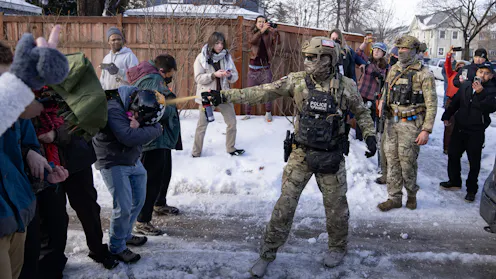
Federal immigration agents tend to receive less training on how to properly deploy crowd-control weapons, research finds.
Science + Tech – Articles, Analysis, Opinion
Displaying 351 - 375 of 4773 articles

Women have moved from mapmakers using their bodies to depict maps to being leaders shaping the field of cartography.
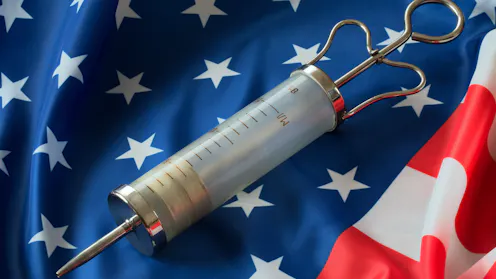
Priming people to watch out for political deepfakes helps them question the AI-generated videos.

Armed with new tools that reveal patterns of connection between brain areas, researchers are gaining clearer insights into how the brain regulates behavior.

Social inequalities emerge in every human society. New research into how these hierarchies form suggests ‘prestige psychology’ – the tendency to defer to expertise – is at the root.
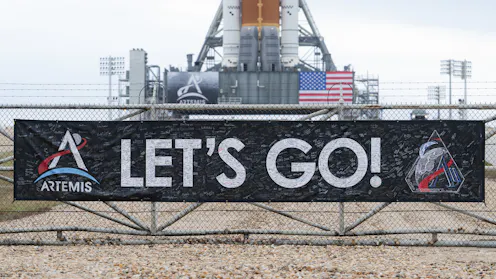
Several robotic spacecraft orbiting the Moon can take detailed pictures of its surface, so why send people around the Moon? A planetary geologist explains the benefits.
3D printing makes it easier for engineers to design cheap, lightweight materials that reflect patterns found in nature.

Watching, modeling and even playing winter sports help students internalize physics concepts, including acceleration, momentum and friction.
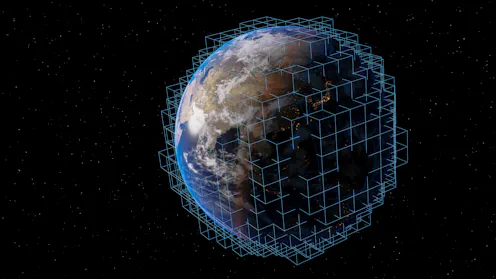
Here’s why some people believe we’re living in a computer simulation of reality – like a giant video game in which we’re all the characters.
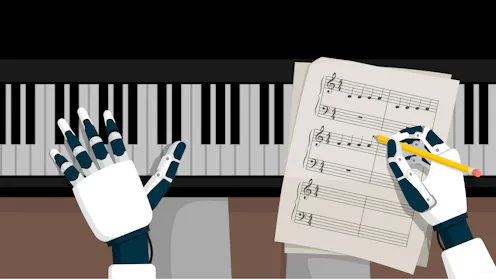
AI is already in much of the music you hear. It can be as mundane as a production tool or as deceptive as a fake recording artist – and a whole lot in between.

Smartphone video, ICE-tracking apps and 3D-printed whistles have been emblematic of the protests in Minneapolis. Social movements have long latched onto and been catalyzed by new technologies.

Aerial lidar raises ethical questions because it can collect data remotely without the knowledge or consent of Indigenous and descendant populations that are on the ground.

Detroiters are hospitalized for asthma four times more often than Michigan residents overall. A proactive approach to care can improve symptom management.
Your feet can send a lot of sensory information to your brain. But whether you believe that your footwear is affecting your cognition may matter more than what shoes you wear.
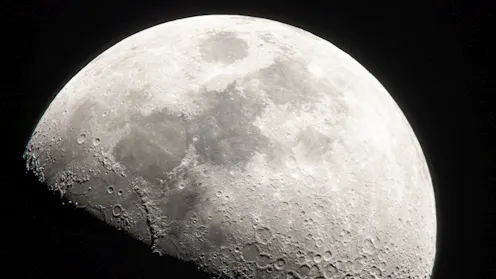
Today, there aren’t just two countries competing to get to the Moon. More countries have space programs, and private industry plays a larger role.

Groundhogs predict spring with the same accuracy as flipping a coin. But they’re vital to their ecosystems, feasting through summer to store enough fat to last through their winter hibernation.

Seashells are the skeletons of sea creatures – and they’re older than you might think.
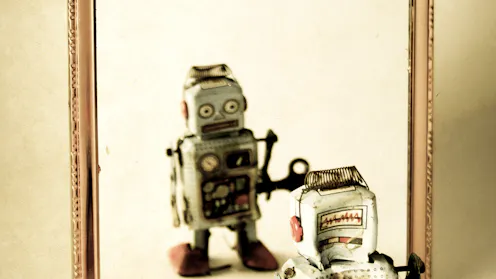
What if an AI system could recognize when it’s confused or when to think more carefully? Researchers are working to give large language models these metacognitive abilities.

As businesses race to adopt AI, you might worry that the experience and expertise you’ve built up has become a lot less valuable. But you still have more control over your future than you think.

A bit of understanding – plus effort to regulate yourself and give compassionate feedback – can shift a stuck relationship into something more bearable, perhaps even meaningful.

Expertise comes with training, experience and accreditation. And expert consensus is the best guide modern democracies have for making decisions about complicated challenges.

The US used a cyberattack to turn off power in Caracas during the raid to seize Maduro. The US grid is also vulnerable to this kind of attack.

Federal agents have pepper-sprayed, tackled and detained people recording their actions. If you post your recordings of agents, you also risk the feds tracking you and those around you.
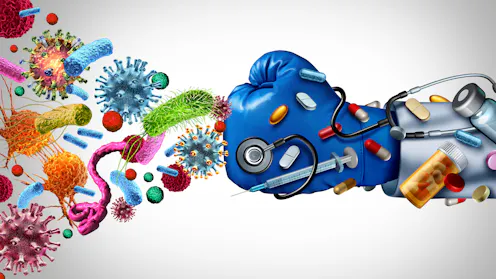
Antibiotics transformed health care for the better, but their diminishing effectiveness may soon be its undoing. Researchers are studying ways to fight back against resistance.
While AI can streamline certain parts of the scientific process, a philosopher argues that it cannot replace human expertise and collaboration.