

Reading stories with young children lays the foundation for language and literacy development.
Articles on Young people
Displaying 81 - 100 of 583 articles

Despite high suicide risk, most teens can identify reasons to live, from family bonds to small future dreams – offering hope for prevention.

Food, clothes and familiar locations in Korea are rendered with surprising precision.

It is not realistic to suggest that the answer to modern difficulties lies in restricting technology or framing time outdoors as a replacement.

For young people living in seaside towns year-round, there’s little to do – and youth services are crumbling.
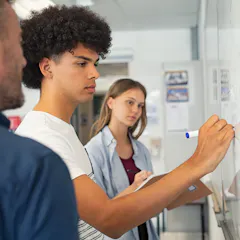
Many courses at university include mathematical or quantitative elements but do not require A-level maths for entry.

Fewer than six in ten young Europeans believe that democracy is the best form of government

It’s worth looking closely at what money teaches children, and what it is we want them to learn.

When you’re doing your best to work from home with the kids around, it’s pretty difficult to monitor what they are doing on the tablet or TV.

The National Park Service is not just focused on helping people enjoy the outdoors, but also on conserving wild places.

Most of the learning we do is informal.
Loneliness is more than a mental health issue.

There are gender and class expectations of who takes the lead in climate action.

New research reveals people aged under 35 are more likely to believe conspiracy theories due to political alienation and low self-esteem.

Caring for grandchildren is closely linked to, and varies with, gender norms and socioeconomic status.
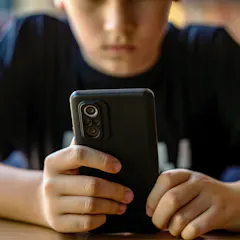
Teenagers may think that misinformation is limited to certain kinds of content.

Changing the law opens space for a wider conversation about where young people sit in British society.

Sex and relationships education should create a safe space for open discussion.
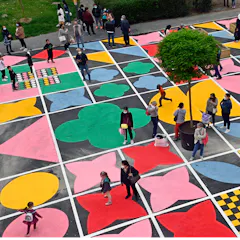
Play should be promoted in cities to bolster children’s right to play anywhere.
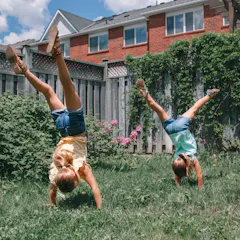
Autonomy, confidence and competence were stronger predictors of wellbeing than more traditional measures like deprivation or even total time spent being active.
Top contributors
-

Professor of Education Policy and Practice, Youth Studies, Monash University
-
Professor of IT Ethics and Digital Rights, Bournemouth University
-
Professor of Political Sociology, Institute for Culture and Society, Western Sydney University
-
Lecturer in Government, Jeff Bleich Centre for Democracy and Disruptive Technologies, Flinders University
-
Associate Professor in Criminology, University of Surrey
-
Lecturer, RMIT University
-
Associate Professor in Law, Australian National University
-
Professor, Digital Media Research Centre, Queensland University of Technology
-
Research Officer at Medical School, Swansea University
-
Rosalind Hollis Professor of Education for Social Justice, University of Hull
-
Research Fellow, The University of Melbourne
-
Professor of Information Sciences & Director, Social Change Enabling Impact Platform, RMIT University
-
Senior Lecturer in Sociology, University of Newcastle
-
Chief Policy Fellow, University of Leeds
-
Professor of Adolescent Health, Co-Head of the General Practice Clinical School, University of Sydney