
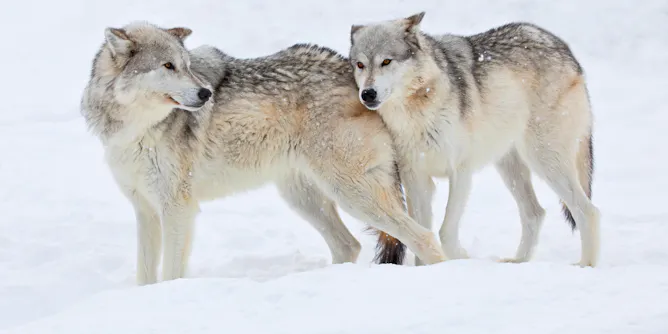
Yellowstone’s reintroduced wolves have become a famous conservation success story, but the reality is far messier.
Articles on Yellowstone National Park
Displaying 1 - 20 of 21 articles

Debate over turning public national park land into private profit dates back more than a century.

Africa’s wildlife laws still follow a 1933 colonial conservation model that excludes communities and fails to protect wildlife. It’s time to do away with it.
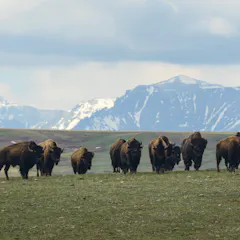
Approximately 400,000 bison roam the North American landscape today, of which nearly 90% are considered livestock.

Current laws that deem species safe from extinction ignore their ecological role, geographic range and genetic diversity, as well as their relationships with people.

The National Park Service is not just focused on helping people enjoy the outdoors, but also on conserving wild places.

Debate over turning public national park land into private profit dates back more than a century.
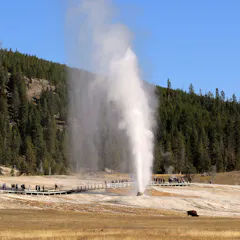
Native American groups were aware of the region’s dramatic features. Since the national park’s creation, other faiths have also been inspired by its beauty, from Christians to New Age groups.
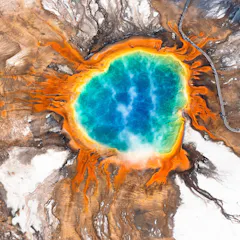
The experiment involved custom-building a small chamber that simulated hot spring environments on early Earth.
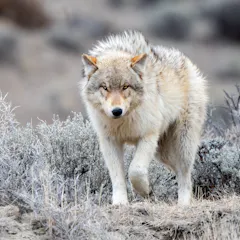
At one time, perhaps as many as 2 million gray wolves roamed the North American continent. But now those numbers are down to a few thousand.
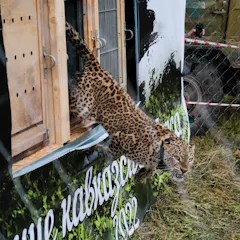
New research studies the factors that determine whether large carnivore reintroductions will be a success.
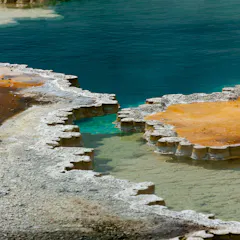
When it comes to cleaning up land contaminated by toxic waste, we can follow nature’s example before humans populated the earth.
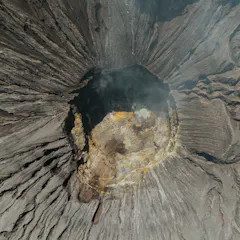
Drones can be used to collect gas samples from active volcanoes, where it is too dangerous for researchers. This data can be then used to predict the frequency and severity of eruptions.
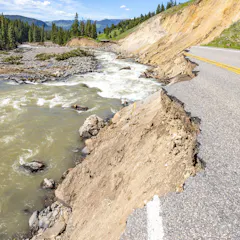
Extreme downpours brought deadly flooding to the Appalachian region, just a few weeks after the destructive Yellowstone River flood.
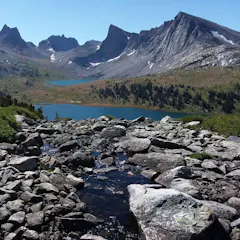
The area’s iconic national parks are home to grizzlies, elk and mountain snowfall that feeds some of the country’s most important rivers. A new report show the changes underway as temperatures rise.
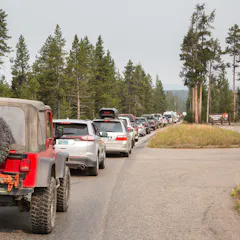
It’s hard to preserve national parks “unimpaired,” as US law directs, when they’re overrun with tourists who stray off paths, strew trash and harass wildlife. A parks scholar calls for crowd control.

Huge fires roared through Yellowstone National Park in the summer of 1988, scorching one-third of the park. Since then the park has been a valuable lab for studying how forests recover from fires.
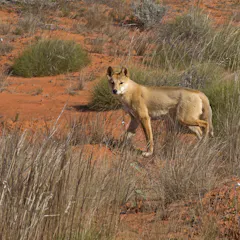
The notion of using dingoes to protect Australia’s wildlife is based on wolves in the US, but research cast doubts on the link.
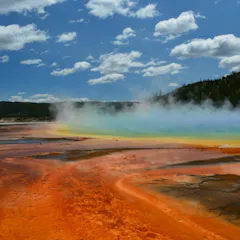
The vast majority of the bacteria that surround us are not free-floating but prefer to band together in cooperative communities called biofilms. How do biofilms form and cooperate?
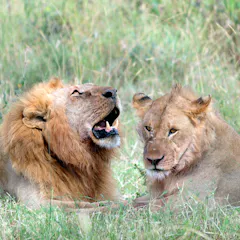
Kudu and buffalo altered their activity when lions and spotted hyena were reintroduced into the areas where these species lived.
Top contributors
-

Associate Professor of History, Colorado State University
-
Post Doctoral Fellow Zoology and the Centre for African Conservation Ecology, Nelson Mandela University
-
Associate professor, University of New England
-
Professor, Zoology & Director: Centre for African Conservation Ecology, Nelson Mandela University
-
Faculty Environment Studies and Sustainability & Regenerative Design, Prescott College
-
Professor of Ecology, University of Wisconsin-Madison
-
Professor of Biological Sciences, Binghamton University, State University of New York
-
Adjunct Associate Professor in Landscape Ecology, University of New England
-
Professor of Paleoclimatology and Paleoecology, University of Wyoming
-
Professor of Environmental Studies and Faculty in Ecology and Evolutionary Biology, University of Colorado Boulder
-
Professor of Geology and Petroleum Geology, University of Aberdeen
-
Research assistant, University of Oxford
-
PhD candidate in Earth Sciences, McGill University
-
Assistant Professor of Civil and Environmental Engineering, Colorado State University
-
PhD Candidate in Prebiotic Chemistry, UNSW