
Digital media shutdowns in Africa will lead to higher economic costs and greater public outrage.
Articles on X (formerly Twitter)
Displaying 261 - 280 of 760 articles
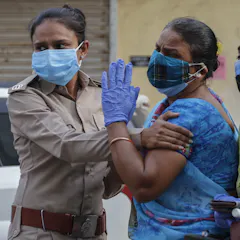
As India’s COVID crisis deepens, the government is taking a harder line with any social media content it finds objectionable.

Tech companies’ use of dual-class share structures to keep control in the hands of founders and other insiders gives a handful of people power over enormous swaths of American life.

After an Indian politician disparaged a woman for her lack of morals because she was wearing ripped jeans, an online protest erupted, reviving the original protest-culture of the ripped jean.
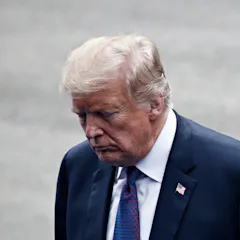
If it hosts the same violent rhetoric that saw Parler forced offline, Trump’s platform may be a short-lived adventure.
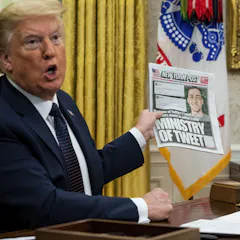
When social media platforms banned Donald Trump they acknowledged that sometimes social good is more important than shareholder profits.
Canada needs to think carefully about our approach to regulating online harm. Rather than going it alone and taking aim at social media companies, Canada should work with other democracies.
Indonesian gay communities dispel stigmas by using four strategies on social media.

People appear to victim-blame celebrities for the abuse they suffer on Twitter.

News organizations are in low repute. To enhance their credibility, they’ve encouraged interaction between their journalists and audience members. Is that the best way to build the public’s trust?
Cable providers like Comcast carry Fox News and other channels that feed conspiracy theories and lies into Americans’ homes.

Social media platform Clubhouse is a buzzy Silicon Valley darling, but its core attribute – audio chat – is unlikely to be a flash in the pan.
Google, Facebook, TikTok and Twitter have all agreed to a voluntary code of conduct targeting misinformation. But the only real commitment is to appear as though they’re taking action.
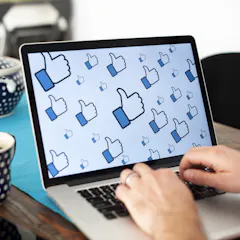
Misinformation isn’t an inevitable product of social media. Proven techniques can help tech companies clean up their acts.

The 45th president of the United States used a specific technique to tell different versions of the very same story, of a nation under threat and a man working to save it.
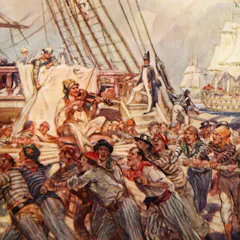
Crews sang the songs to ease the fears, anxieties and loneliness of daily life on merchant ships.

Encrypted messaging services like Telegram provide virtual dark corners where far-right extremists can recruit, organize and plan unhindered.
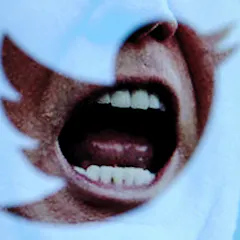
It’s concerning that tech executives can exercise so much power over who can use their platforms. But the alternative – government intervention – could be much worse.
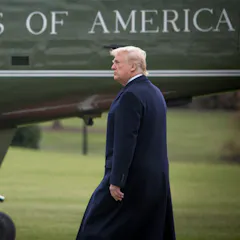
Analysis shows how Trump and Twitter spread QAnon extremism from the US to Europe, and how hard it will be to undo the damage.
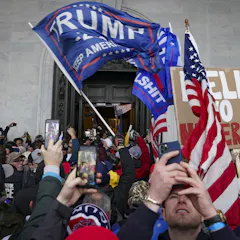
Apple, Twitter and other tech companies were able to unilaterally shut down much of Trump’s communication infrastructure. That’s a lot of power.
Top contributors
-

Professor, Digital Media Research Centre, Queensland University of Technology
-
Professor of Information Systems, Michigan State University
-
Associate Professor in Digital Media, Queensland University of Technology
-
Director of UWA Centre for Software Practice, The University of Western Australia
-
Postdoctoral Research Fellow, Queensland University of Technology
-
Associate Dean International, University of Chester
-
Professor of Digital Communication, Director of QUT Digital Media Research Centre, Queensland University of Technology
-
Assistant Data Analyst, Queensland University of Technology
-
Associate Vice President for Entrepreneurship and Innovation, Clemson University
-
Senior Lecturer in Marketing, University of Hull
-
Professor of Informatics and Computer Science, Indiana University
-
Associate Professor of Communication and Media Studies, Pace University
-
Adjunct Senior Lecturer, Applied Ethics and CyberSecurity, Griffith University
-
Professor of Strategic Management, Warwick Business School, University of Warwick
-
Professor of Media Industries, University of Nottingham