
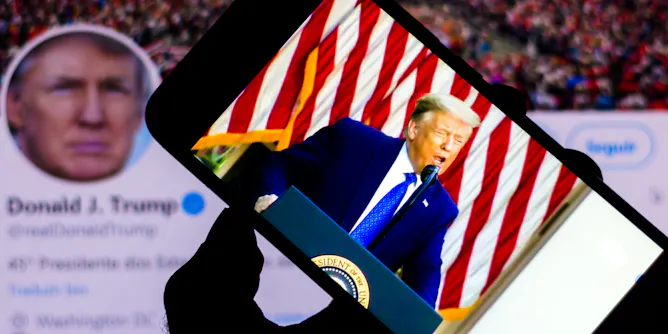
Our new study presents the first empirical evidence that President Trump’s tweets systematically divert attention away from topics that are potentially harmful to him.
Articles on X (formerly Twitter)
Displaying 301 - 320 of 760 articles

Every election triggers distress for some people. Here are some ways to possibly cope.
The major social media firms have taken a largely piecemeal and fractured approach to managing the problem.
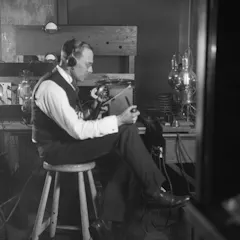
For centuries, people largely read politicians’ words. But with the advent of radio, the ability of politicians to engage and entertain became crucial components of their candidacies.

False premises, fear-based reasoning and mob thinking are baked into the platform, allowing misinformation to thrive.

Twitter bots amplify conspiracy theories, including the so-called ‘collective delusion’ that is QAnon, making them appear more popular and able to reach more real humans.
Will Facebook and Twitter be able to counter the tsunami of misinformation that could affect the election result? It’s unlikely.
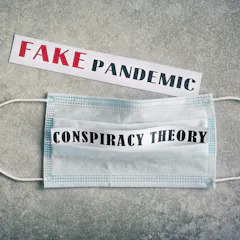
It’s not just bots which spread misinformation on social media.

Despite same-sex relations being criminal, social media is a space to come out and speak back to homophobia for the Nigerian tweeters in the study.
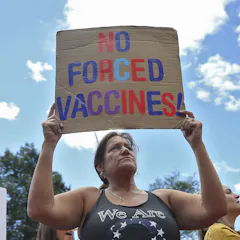
From 2017 to 2019, Twitter users in the United States saw many tweets related to vaccination but only rarely encountered anti-vaccine content and almost never saw content from bots.
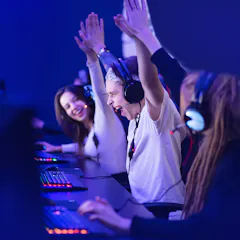
Esports is becoming a goldmine for betting companies. New research shows how their online ads are reeling in children.

Whether on Twitter or Tumblr, Facebook or Reddit, people use many strategies to express their sexual selves.
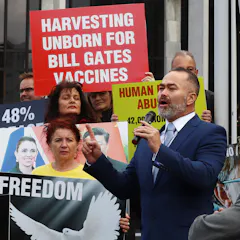
Using the law - or changing it - to stop the spread of dangerous disinformation should be a last resort.

We’re supposed to suppress feelings of envy. But what if the kind spurred by school shutdowns, frontline work and cramped apartments are worth exploring – and acting upon?

An app that young people use to share videos of themselves dancing might seem like a silly diversion, but it’s become a powerhouse social media platform.

Small groups of fringe activists pushing online disinformation are a growing threat to Australian democracy.
Russian-affiliated Twitter accounts changed what they posted about, and used both text and images in ways that shed light on how these information warriors work.

Research that measures the public mood based on Twitter posts shows that it’s currently at its lowest point in a decade. One exception: when people visit parks and green spaces.

Grime artist is among many who don’t seem to see anti-Jewish views as racism.

Research shows one in five Australian women experience degrading content online. This is not ‘harmless’ or ‘normal’.
Top contributors
-

Professor, Digital Media Research Centre, Queensland University of Technology
-
Professor of Information Systems, Michigan State University
-
Associate Professor in Digital Media, Queensland University of Technology
-
Director of UWA Centre for Software Practice, The University of Western Australia
-
Postdoctoral Research Fellow, Queensland University of Technology
-
Associate Dean International, University of Chester
-
Professor of Digital Communication, Director of QUT Digital Media Research Centre, Queensland University of Technology
-
Assistant Data Analyst, Queensland University of Technology
-
Associate Vice President for Entrepreneurship and Innovation, Clemson University
-
Senior Lecturer in Marketing, University of Hull
-
Professor of Informatics and Computer Science, Indiana University
-
Associate Professor of Communication and Media Studies, Pace University
-
Adjunct Senior Lecturer, Applied Ethics and CyberSecurity, Griffith University
-
Professor of Strategic Management, Warwick Business School, University of Warwick
-
Professor of Media Industries, University of Nottingham