
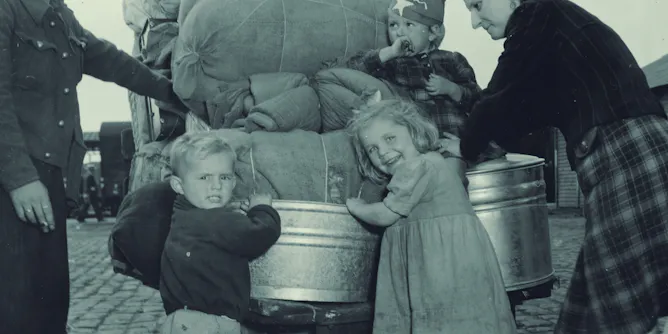
In her latest book, historian Sheila Fitzpatrick tells the story of millions of displaced people and international efforts to relocate them.
Articles on World War II
Displaying 81 - 100 of 657 articles
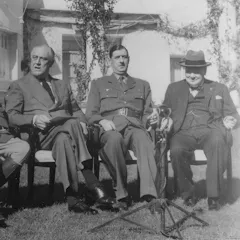
Back in 1940, FDR wasn’t convinced that de Gaulle could be an effective leader in exile. It turns out he was wrong.
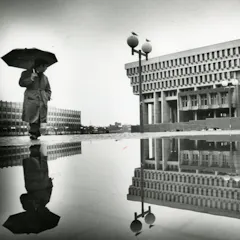
Its staggering forms made monuments out of ordinary places frequented by ordinary people.
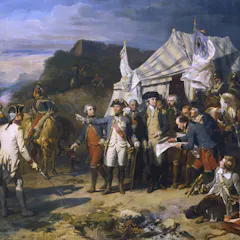
Why should a country want or need allies? President Donald Trump and his followers seem to disdain the idea. So did George Washington.

Donald Trump’s measures ending government diversity efforts are part of a much broader effort to reverse civil rights gains for all Americans. It’s not the first time such a backlash has happened.

The second world war marked a turning point in the history of childhood. To train young people to build peace, authorities reinvested in schools and introduced new pedagogies.
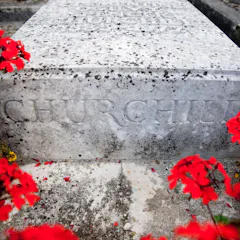
Packed with newspaper clippings, drawings and handwritten reflections, WI community scrapbooks provide a glimpse into how mourning unfolded across rural England.

Bauhaus architects like Walter Gropius and Mies van der Rohe fled Nazi Germany, but not all of them went to the US.

Hateful language used to demonize particular groups of people had been used long before the era of Donald Trump, including by the Nazis.

The liberation of Auschwitz is being commemorated in the shadow of rising antisemitism in Australia and globally.

Although concentration camp survivors followed different trajectories and displayed different levels of resilience, four main survivor profiles emerge.

Trump’s incoming administration could create certain risks for Germany, including putting more pressure on its weak economy.

The US government locked up nearly 126,000 Japanese Americans from 1942 to 1945, but never kept comprehensive records of all the people subjected to this unjustified incarceration.
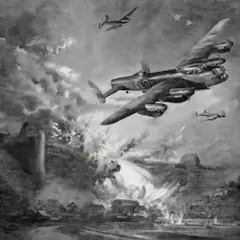
Precision bombing cost the lives of too many aircrew to be sustainable.

As their structures break down, the wrecks could release toxic substances into the environment.

The Alien Enemies Act, first approved in the late 1700s, was last used during World War II to identify particular foreign nationals living in the US.
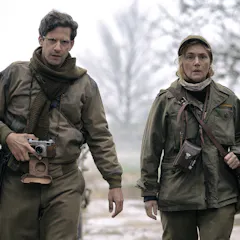
Photographer Lee Miller’s experience at Dachau, depicted in the film Lee, reminds us of the importance of photojournalists in war zones today.
On May 15, 1938, Chaim Manne, his wife Leonora and their young son tried to escape Nazi Austria by gassing themselves. Leonora succeeded. Chaim’s ordeal was just beginning.
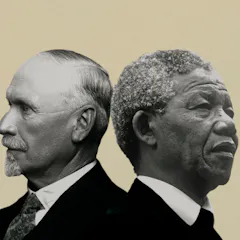
Whereas Jan Smuts was to be largely forgotten after his defeat in South Africa’s 1948 election, Nelson Mandela became an international icon.
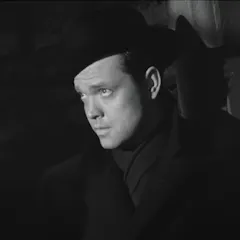
Director Carol Reed and writer Graham Greene were seduced by the enigmatic rubble-strewn city and harnessed its damaged post-war state to heighten the dark atmosphere of the story.
Top contributors
-

Principal of South College, Durham University
-
Reader in Modern Political History, Loughborough University
-
Senior Lecturer in Public History, Leeds Beckett University
-
Principal Lecturer in History, Manchester Metropolitan University
-
Senior Research Fellow, University of Southampton
-
Professor of International Security, University of Birmingham
-
Professor, Russian and East European History, University of Alberta
-
Professor Emeritus in Contemporary German History, Nottingham Trent University
-
Extraordinary Professor, Department of Political Sciences, University of Pretoria
-
Professor of Post-Soviet Cultural History and Film, Queen Mary University of London
-
Quondam Fellow of All Souls College, University of Oxford
-
Professor in Communication Studies, McMaster University
-
Professor Emeritus of Modern European History, University of Essex
-
Associate Professor of History, UNSW
-
Director, Vice-Chancellor's Centre of Public Ideas (CoPI) and Donald Horne Professor of History and Public Ideas, University of Canberra