

For residents who can’t afford to move, rising lot rents can mean losing everything.
Articles on World War II
Displaying 41 - 60 of 657 articles
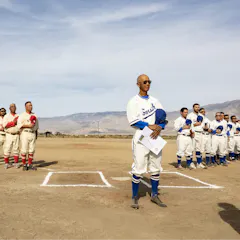
80 years after Japanese Americans were imprisoned at the Manzanar Relocation Center, descendants are returning to play the sport that gave prisoners hope and a sense of normalcy.
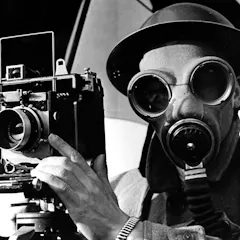
The biggest Lee Miller show since 2007, this new exhibition tells her complex story through 250 modern and vintage prints, including previously unseen images.

From the Salem witch trials to McCarthyism and Charlie Kirk’s killing, an exaggerated fear of a particular group has resulted in repression from liberals and conservatives.
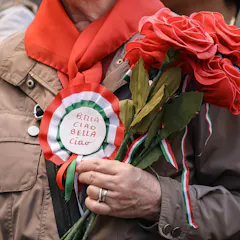
Bella Ciao is a traditional Italian folk song known for its association with the anti-fascist resistance in Italy during the second world war.
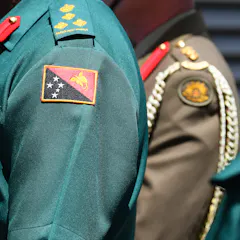
Papua New Guinea has played a pivotal role in some key moments in Australian history- including Federation.

The presence of two portraits by German artist Otto Dix in Canadian museum collections is difficult to explain outside of the context of Nazi occupation and spoliation.
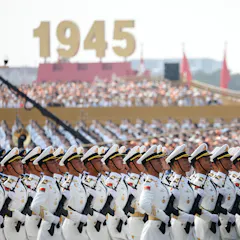
Historian Meredith Oyen explains how disagreements over the history of the second world war and who fought the Japanese are central to tensions between China and Taiwan. Listen on The Conversation Weekly podcast.

Japan surrendered to the Chinese nationalist army in September 1945. But since then, Beijing has played up the role of communist fighters.
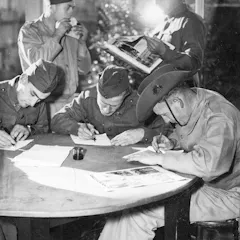
Loneliness is a common emotion in letters written by Australian service personnel and their loved ones.

Toxic remnants of war can damage ecosystems and communities long after the fighting stops.
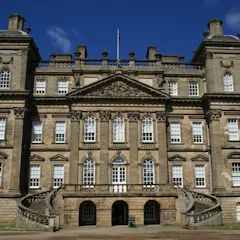
The history of Duff House in northeastern Scotland serves as a reminder that not all country homes in the British Isles faced the same 20th-century fate.
West Germany’s inability to mourn was deemed a ‘silent catastrophe’ by the late, great W.G. Sebald. His early critical writings appear in a book of the same name.
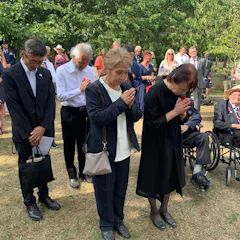
Commemoration is also about confronting the complex legacy of Japan’s role in the second world war.

A series of lectures on decolonisation sheds new light on contemporary conflicts.
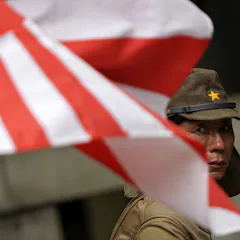
On the 80th anniversary of its surrender, Japan battles waning support for pacifism.
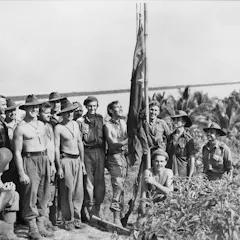
A new national survey shows the second world war dominates Australians’ understanding of their military history, but knowledge is limited to the Pacific War.
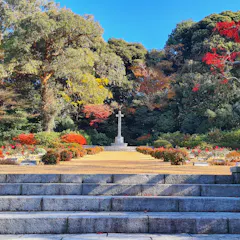
At the Yokohama War Cemetery, the first steps towards Australia and Japan’s reconciliation were made through design.

Eighty years ago, this remarkable event showed a rare glimpse of humanity on both sides of a bitter conflict.
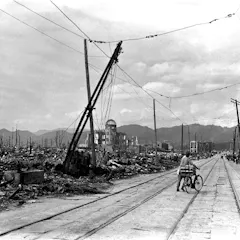
In August 1945, atomic bombs were dropped on the Japanese cities of Hiroshima and Nagasaki. Ever since, survivors have struggled with discrimination as well as illness.
Top contributors
-

Principal of South College, Durham University
-
Reader in Modern Political History, Loughborough University
-
Senior Lecturer in Public History, Leeds Beckett University
-
Principal Lecturer in History, Manchester Metropolitan University
-
Senior Research Fellow, University of Southampton
-
Professor of International Security, University of Birmingham
-
Professor, Russian and East European History, University of Alberta
-
Professor Emeritus in Contemporary German History, Nottingham Trent University
-
Extraordinary Professor, Department of Political Sciences, University of Pretoria
-
Professor of Post-Soviet Cultural History and Film, Queen Mary University of London
-
Quondam Fellow of All Souls College, University of Oxford
-
Professor in Communication Studies, McMaster University
-
Professor Emeritus of Modern European History, University of Essex
-
Associate Professor of History, UNSW
-
Director, Vice-Chancellor's Centre of Public Ideas (CoPI) and Donald Horne Professor of History and Public Ideas, University of Canberra