

The destruction of war graves in Gaza has rightly received global attention. But this isn’t the first time Commonwealth war dead have been dragged into conflicts.
Articles on World War II
Displaying 21 - 40 of 657 articles
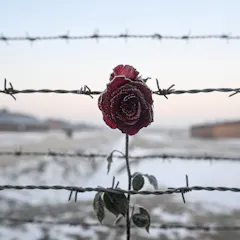
On International Holocaust Remembrance Day, it’s timely to reflect on how the liberation of the camps was reported at the time – and how it changed journalism.

The claim that national security can justify territorial acquisition marks a sharp break from the principles the US championed after World War II.
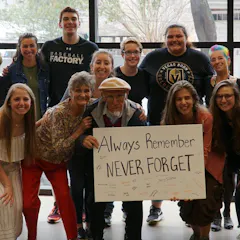
Students respond to history that feels local and personal. There are ways to do that even as Holocaust survivors pass away, one professor writes.
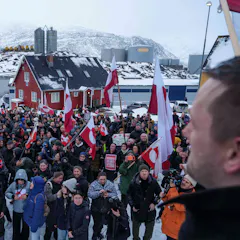
A 1951 defense agreement between the United States and Denmark allows the US to build military installations on Greenland to protect the region.
The US government used to have American farmers’ backs, but that support has been dwindling for decades. New subsidies signal big changes for farmers.
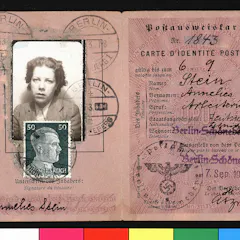
Some women adopted non-Jewish identities to support the resistance. For most, though, it was simply a strategy for survival – one with constant risk of exposure and execution.
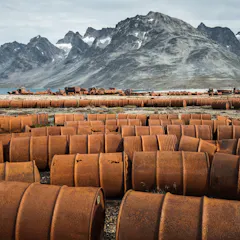
History also shows that many of the fanciful engineering ideas for Greenland failed because they misjudged the island’s harsh climate and dynamic ice sheet.
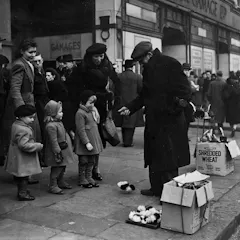
‘Most of us can be happy, if not extravagantly merry this Christmas. Most of us, but not all.’
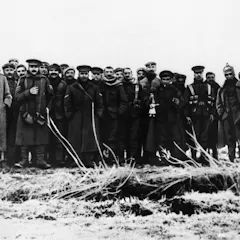
World leaders like to talk up peace at Christmastime. But alongside the tales of seasonal breaks in fighting are incidents of adversaries taking advantage of the season.
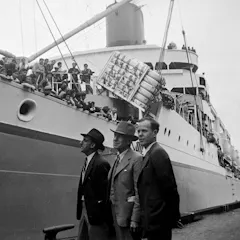
Canada’s expulsion of thousands of Japanese Canadians 80 years ago offers lessons in a world of sharpening borders, insecurity and talk of who does and does not belong in a national community.
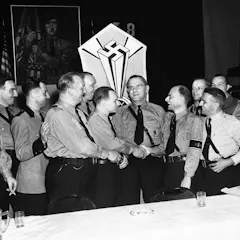
Although thousands of Americans embraced fascist ideas during the interwar years, a new study examines why the US has had little appetite to remember that past.
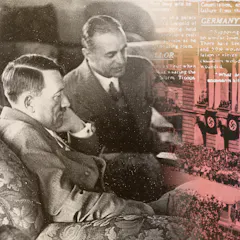
In the 1930s, many foreign correspondents refused to cover Germany. Instead, George Ward Price got close to Hitler – and was rebuked by Churchill.
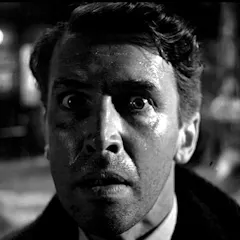
Frank Capra’s dark vision of corruption and greed highlights both the dangers of concentrated power and the quiet effectiveness of collective action.
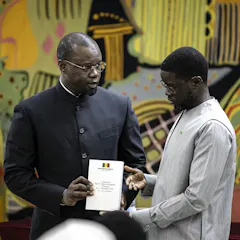
A recent report focuses on the death toll and on the burial site of the victims, stressing the importance of telling their stories.
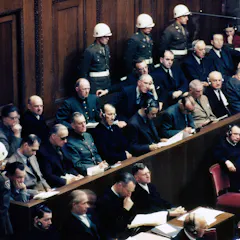
The new film highlights how the tribunal broke ground – and where it fell short – raising enduring questions about complicity, morality and whether humanity can ever truly judge its worst crimes.
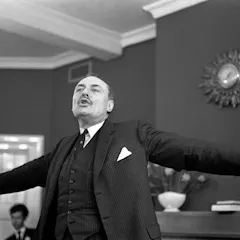
When the language of racism lost scientific legitimacy, it changed shape and began targeting cultures instead.

Who defeated the Nazis and ended World War II? It’s a matter of disputed historical memory.
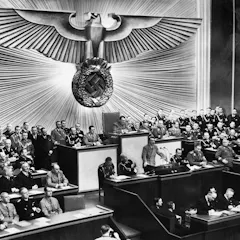
At the end of World War II, many Nazi war criminals fled to Australia. A new book tells the stories of the investigators who tried to bring them to justice.

Mamdani’s child care plans could set an example for other policymakers to follow, as Democratic and Republican voters say child care costs are a major problem.
Top contributors
-

Principal of South College, Durham University
-
Reader in Modern Political History, Loughborough University
-
Senior Lecturer in Public History, Leeds Beckett University
-
Principal Lecturer in History, Manchester Metropolitan University
-
Senior Research Fellow, University of Southampton
-
Professor of International Security, University of Birmingham
-
Professor, Russian and East European History, University of Alberta
-
Professor Emeritus in Contemporary German History, Nottingham Trent University
-
Extraordinary Professor, Department of Political Sciences, University of Pretoria
-
Professor of Post-Soviet Cultural History and Film, Queen Mary University of London
-
Quondam Fellow of All Souls College, University of Oxford
-
Professor in Communication Studies, McMaster University
-
Professor Emeritus of Modern European History, University of Essex
-
Associate Professor of History, UNSW
-
Director, Vice-Chancellor's Centre of Public Ideas (CoPI) and Donald Horne Professor of History and Public Ideas, University of Canberra