

In this new world of hybrid work, managers need to create working conditions that build and maintain interpersonal connections, while allowing for both high productivity and superior job satisfaction.
Articles on Workplace culture
Displaying 41 - 60 of 117 articles

If organizations truly want to retain diverse employees and have them be successful, they need to make consistent and sustained efforts to support inclusion.
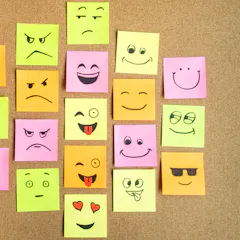
It’s important that employers and employees understand sympathy, empathy and compassion, and consider these emotions’ roles in both job performance and employee relations.

For a long time, arts organisations retained staff attracted to the ‘romance of being creative’. That’s no longer enough.

It’s clear the current workplace health and safety framework isn’t stopping people from getting bullied. It’s time to treat bullying as a public health issue and address the problem more effectively.

Managers can play a key role in helping refugee employees thrive in their new workplaces, instead of robbing them of their autonomy.

Stay connected but switch off too. Working from home requires a delicate balance to protect your wellbeing and get the job done. Here are some tips.

While a workplace fatality is a great tragedy, an even greater tragedy is not learning from it.

A focus on raw intellectual talent may unintentionally create a cutthroat workplace culture. New research suggests women’s preference to avoid that environment may contribute to gender gaps in some fields.

An increasing number of workers are demanding a more human-centric work environment, with space to express trust and vulnerability.
The male-dominated makeup of the industry partners who are meant to lead the commercialisation of research could undermine the work towards gender equity in Australian universities.

Organizations can reduce some of the negative effects of the COVID-19 pandemic. Providing customizable support measures can improve employees’ work commitment and well-being.

Elite employers have created an atmosphere where workers constantly seek to be as busy as possible. Families are often the first casualty of this culture.

It’s time to make caring doctors the norm, not the exception.

A new study finds that while there have been improvements in the way victim-survivors are treated at work, there is still much to be done.

Experts agree there is no one-size-fits-all model for hybrid work.

New research on giving in a business setting could offer insights into human interactions and critical lessons for organizations looking to build a more collaborative culture.

Research shows even human resources students who have experienced sexual harassment in the workplace would be unlikely to report it. So how do company’s make real change?

UK chancellor Rishi Sunak has warned that young people’s career chances could suffer without returning to the office. But lockdown has bigger lessons for workplaces.

Instead of focusing solely on what managers do, management and business education needs to provide students with people skills. Here’s how the arts can help.
Top contributors
-

Program Director & Associate Professor Master of Psychology Health and Wellness & Master of Industrial-Organizational Psychology, Adler University
-
Assistant Professor of Psychology, Western Washington University
-
Professor, Business and Management, Queensland University of Technology
-
Professor of Law, University of Oregon
-
Professor of Sociology, Rice University
-
Chair of Entrepreneurship, Wheaton College (Illinois)
-
Assistant Professor of Psychology, Villanova University
-
Assistant Professor of Psychology and Human Resource Development, Villanova University
-
Professor of Economics and Political Economy, University of Leeds
-
Associate Professor of Organisational Behaviour, Bond Business School, Bond University
-
Professor of Management, Western Washington University
-
Senior Lecturer in Organisation, Work and Technology, Lancaster University
-
Professor of Organisation Studies, University of Bristol
-
Assistant Professor of History of Behavioral Science, The Ohio State University
-
Director of Slang and New Language Archive, Faculty of Arts and Humanities, King's College London