

Behind the allure of sun-soaked getaways lies a hidden risk of worker exploitation and modern slavery.
Articles on worker exploitation
Displaying all articles

Employers who rip off young workers are more likely to be fined or face jail under new laws introduced in January. But a new study finds more needs to be done.

Job hunting can be stressful but the process can be eased by following some simple steps that land you a suitable, properly remunerated gig.

Existing theories of workplace precarity often leave out the dimension of sexual harrassment. My research uncovered just how big a problem that is, in a wide range of workplaces.
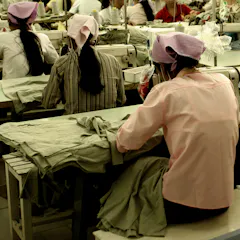
Labour’s Modern Slavery Reporting Bill would require businesses to act if they suspect worker exploitation in their operations or supply chains. But will the National-led government support it?

With an eye to Kant’s work, a philosopher and a sociologist argue that the Uber project robs drivers of their dignity.

The Nixon review has made 30 recommendations to improve Australia’s visa system. The government has pledged to act to improve compliance resources, in particular.

With the TV writers and actors strikes leaving networks with little scripted content, the fall 2023 lineup will be saturated with low-cost reality TV shows like ‘The Voice.’

Our research found Australia’s visa system continues to harm migrants once they’ve experienced exploitation. Survivors described being left destitute and desperate without access to services.

An investigation has revealed that French tech firms, seeking to create an AI “à la française”, have turned to one of the country’s former colonies, Madagascar, for low-cost labour.

In an important step for an industry that has been accused of exploitative working conditions for decades, video game workers in Edmonton recently voted to unionize for the first time in Canada.

Exploitation flourishes because regulators do not routinely detect or punish labour law noncompliance.

Defining skill shortage by lists of occupations is inflexible for a rapidly changing labour market. Australia needs a different approach to organise its temporary skilled migration programs.
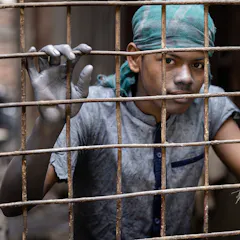
How responsible are we for the slavery that is directly connected to our consumer choices and what can we do to reduce it?

The food we eat and the products we use should not contribute to human misery. While companies hold some blame, so do consumers who avoid dealing with the consequences of their purchasing decisions.

Our ‘Tony Stark’ image of tech moguls is obscuring the talent and toil of ordinary workers, and inflating the egos of the bosses.
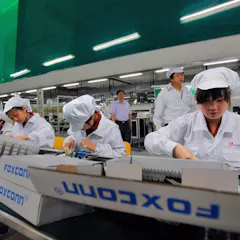
The company’s value exceeds the GDP of many countries, but Apple has human rights, ethical and environmental problems to match in its vast supply chain.

Wage theft and exploitation are rampant in certain industries. Certifying those that commit to fair work conditions could be key to fixing the problem.
Top contributors
-

Associate Professor, University of Sydney Business School, University of Sydney
-
Associate Professor in Public Policy and Political Science, University of Sydney
-
Affiliate Researcher, Work and Organisational Studies, University of Sydney
-
Associate Professor UTS Centre for Business and Social Innovation, University of Technology Sydney
-
Amo Matua–Executive Dean, Faculty of Law, University of Canterbury
-
Associate Professor, UNSW
-
Sociologie du numérique, Télécom Paris – Institut Mines-Télécom
-
Professor of Sociology, University of Texas at Arlington
-
Professor of Industrial Engineering & Assistant Vice-President, International, Toronto Metropolitan University
-
Doctoral Researcher, Social Sustainability in Tourism, University of Tasmania
-
Associate Professor in Accounting, University of Tasmania
-
Senior Lecturer in Accounting, University of Tasmania
-
Lecturer in Marketing, University of Tasmania
-
Associate Professor, Department of Management and Marketing, The University of Melbourne
-
Professor of Organisation Studies, University of Bristol