

Women who have moved to Australia, particularly from traumatic settings, are particularly at risk of gendered violence. Here’s what our research found helps them to speak up.
Articles on Disadvantage and institutions series
Displaying 1 - 20 of 53 articles

For Australia’s artists, the cost of living crisis is also a wellbeing and art making crisis. And the effects of this will reach us all.

Our research unearthed new insights on how the Australian media leaves key groups – particularly women and those struggling financially – behind when covering society’s big issues.

Music can provide incarcerated youth with opportunities to build confidence, engage with learning, develop social skills, and and redefine themselves from young offenders to young artists.
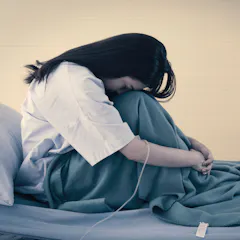
Australians are more likely to receive treatment against their will if they are born overseas, speak a language other than English or are unemployed.

Government bodies and community organisations have tried to tackle the problem of violence against women in marketing campaigns. Have they worked?

So much of day to day life is not powered by technology, but what happens if you’ve been behind bars for years? It’s time prisoners better prepared inmates for life once they’ve served their time.

Students with disability are experts in themselves and their needs. But we found they are often not consulted by their teachers about what helps them at school.

Research on streaming maths classes shows we need to think much more carefully about this very common practice.

My recent study looked at the inequalities rural and regional young classical musicians face which are unknown to their city-based counterparts.

Unlike the traditional method of comparing Indigenous students with non-Indigenous students, a new approach compares Indigenous students with their Indigenous peers.

Many people are suffering due to cost-of-living pressures but have they impacted sports participation rates in Australia?

With a series of high-profile cases in the news, parole is back in the spotlight. Let’s unpack some of the most common misconceptions about what parole really means.
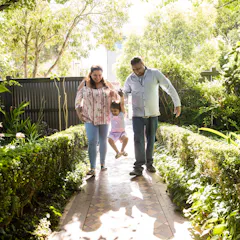
Just over half of Aboriginal and Torres Strait Islander children in out-of-home care live with a kinship carer. Targets aim to increase this proportion. But what is kinship care?

Tools used in the criminal justice system predict the risk of crime – but the scores are based on factors completely out of our control.

This is both a result of social inequality, and an issue that could widen disparities further.

Receiving visitors while behind bars was a raft of benefits, but people have reported many barriers. It must be made easier to help drive down recidivism rates.

We uncovered some significant and often devastating insights into how young Australians – particularly those from disadvantaged backgrounds – have experienced the ‘push’ towards university.

Politicians talk about how they want to see more Indigenous graduates but we don’t often hear from Indigenous students about their experiences. New research talks to four young Indigenous men.

This is a problem for everyone. Research shows mental health intervention and engagement helps reduce offending among people with serious mental illness who commit offences.
Top contributors
-

Scientia Professor and ARC Laureate Fellow, Kaldor Centre for International Refugee Law, UNSW
-
Lecturer in Criminal Justice and Sociology, Adelaide University
-
Associate Professor in Inclusive Education and Arts Education, Australian Catholic University
-
Professor and Director, Kaldor Centre for International Refugee Law, UNSW Law & Justice, UNSW
-
Anti-slavery researcher and practitioner, Adelaide University
-
Professor, University of Technology Sydney
-
Associate Professor of Education, Charles Sturt University
-
Associate Professor and Associate Dean Research and Innovation, School Education and Community Wellbeing, Torrens University Australia
-
Senior Lecturer in Social Work and Policy Studies, University of Sydney
-
Senior Lecturer in Literacy, Australian Catholic University
-
Alan Morris is a Friend of The Conversation.
Professor, Institute for Public Policy and Governance, University of Technology Sydney
-
Lecturer in School of Social Sciences, Western Sydney University
-
Research Fellow, University of Wollongong
-
Senior research fellow, UNSW
-
Adjunct Associate Professor, Menzies Centre for Health Policy and Economics, University of Sydney