

A dedicated court could help fill a gap for workers seeking justice, but the design will matter.
Articles on Underpayment
Displaying all articles

Researchers found pervasive worker underpayment in Australia, with two-thirds of temporary visa holders paid less than they were legally owed.

For workers still being deliberately underpaid, it’s vital to ensure these laws are actually working.

Employers who rip off young workers are more likely to be fined or face jail under new laws introduced in January. But a new study finds more needs to be done.

Job hunting can be stressful but the process can be eased by following some simple steps that land you a suitable, properly remunerated gig.

Migrant workers who get labour claims ‘certified’ will now be allowed to stay and pursue them. But significantly, it’s not only the government that will be able to certify these claims.

The ‘small claims’ court process is supposed to help workers pursue unpaid wages and entitlements without needing a lawyer. But the system isn’t working for migrants.

Last year, the workplace cop fined employers just $4 million for underpaying workers. The Tax Office collected $3 billion in penalties from people who didn’t pay their tax.

Exploitation flourishes because regulators do not routinely detect or punish labour law noncompliance.
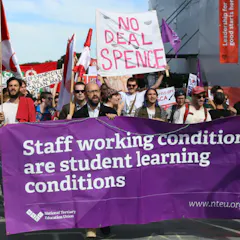
More than a dozen Australian universities have been publicly accused of underpaying staff. Some have paid millions in backpay after audits. And a big factor in wage theft is the rise of casualisation.

Research suggests harsher civil or criminal penalties will not automatically lead to greater compliance by employers with workplace laws.

Three-quarters of teenagers in our survey experienced exploitation, bullying, harassment or some other form of abuse in their first job.

The Modern Slavery Bill presents an opportunity for companies to take seriously their obligation to identify, track and monitor potential problems in their operations and supply chain.

That the Fair Work Ombudsman brought a case against Foodora suggests its workers are most likely to be classified as employees. This could dissuade other platforms from offering similar benefits.
Top contributors
-

Associate Professor of Law, University of Technology Sydney
-
Associate Professor, UNSW
-
Associate Professor, Director of the Centre for Employment and Labour Relations Law, The University of Melbourne
-
Senior Lecturer, Management and Organisations, The University of Western Australia
-
Director, Postgraduate and Continuing Education (Criminology), Griffith University
-
Lecturer in Criminology and Criminal Justice, Griffith University
-
Program Director, Housing and Economic Security, Grattan Institute
-
Research associate, Grattan Institute
-
Professor of Law and Justice and Director of the Australian Human Rights Institute, UNSW
-
Senior Lecturer, Management and Organisations, UWA Business School, The University of Western Australia
-
Deputy Program Director, Migration and Labour Markets, Grattan Institute
-
Pro Vice-Chancellor Academic Advancement & Diversity, The University of Western Australia
-
Career Services Manager (Education), University of Sydney
-
Associate Dean (Research), Melbourne Law School, The University of Melbourne
-
Research Fellow, The University of Melbourne