

New research shows supportive supervisors may help protect employees’ psychological well-being, but meaningful support requires workplaces that can adapt to changing needs.
Articles on Working conditions
Displaying 1 - 20 of 58 articles

Climate change leading to extreme weather events is making life uncomfortable for many UK workers. A new survey reveals the depth of the problem.

The language of burnout turns up in agricultural records from more than 200 years ago, long before the term entered popular use.

Even at the best of times, most seafarers face extremely difficult working conditions, while contending with geopolitical crises and unpredictable trade cycles.

An unprecedented occupational health study on takeaway delivery workers in France reveals shocking working conditions amid Europe-wide debate on their entitlement to standard employee rights.

Behind the allure of sun-soaked getaways lies a hidden risk of worker exploitation and modern slavery.

Canadian universities must take action to ensure decent work for garment factory workers who make their students’ hoodies. They can do this by affiliating with the Worker Rights Consortium.

Health Minister Simeon Brown claimed striking doctors are ‘crossing an ethical line’. But disruption can be ethical when public welfare is at stake.
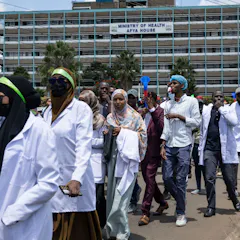
Doctors are demanding the implementation of a 2017 agreement to improve working conditions.

Unions are arcing up about cabin crew being filmed without consent during flights. Some airlines have brought in new rules aimed at curbing the practice.
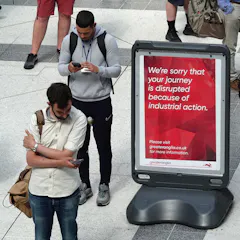
It’s been a big year for industrial action but what’s in store for 2024?

With an eye to Kant’s work, a philosopher and a sociologist argue that the Uber project robs drivers of their dignity.

Paid domestic work has a low status in South Africa. The labour of domestic workers is often undervalued and unrecognised.

Reality TV workers may not need their own union but they could benefit from joining existing unions serving the creative industries.

Should companies offer tailored timetables and workplaces on the basis of our different bodies, or are universal solutions, such as the four-day week, the way forward?

Enforcement of labour market regulation among small businesses such as hand car washes and nail salons is too complicated.

A new study suggests disclosure laws to prevent forced labour in the clothing industry are a form of window dressing designed to ease the conscience of consumers rather than protecting workers.
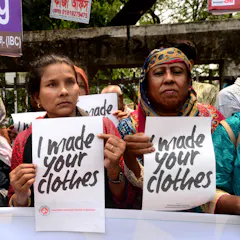
Ten years after the collapse at Rana Plaza in Bangladesh, the garment industry’s deadliest disaster, reforms are incomplete. The opaqueness of today’s complex supply chain is part of the problem.

Most farmworkers were not even aware that the farm they worked on was Fairtrade certified.

The pandemic affected working women in several spheres of life.
Top contributors
-

Associate Professor UTS Centre for Business and Social Innovation, University of Technology Sydney
-
Sociology Lecturer, University of Johannesburg
-
Professor Emeritus, School of Labour Studies, McMaster University
-
Senior Lecturer in Human Resource Management, University of Portsmouth
-
Senior Lecturer in Occupational Psychology, University of Sussex Business School, University of Sussex
-
Professor of Management, University of Bristol
-
EngD student, UCL
-
PhD Candidate in Law and Sexuality, University of Sunderland
-
Associate professor, Dalla Lana School of Public Health, University of Toronto
-
Reader (Associate Professor) in Information Systems, School of Business and Management, Royal Holloway, University of London
-
Professor of Leadership and Director of Sustainable Value Creation, Melbourne Business School
-
Associate professor, University of Sydney
-
Visiting Researcher, Universidade de Coimbra
-
Professor of Media Sociology, Director, Glasgow University Media Group, University of Glasgow
-
Professor of Health Policy and Management, York University, Canada