

Medicaid improves access to care for low-wage workers who cannot survive on bare-bone benefits offered by their employers.
Articles on Work requirements
Displaying all articles

Past experience suggests that adding work requirements to Medicaid will strip health services from millions of American without increasing employment.

When Arkansas tried to make Medicaid contingent on meeting work requirements, 18,000 low-income Arkansans lost their health insurance, but few of them got jobs.

The U.S. and Canada both have different approaches when it comes to work conditions and income assistance programs.

People who have experienced domestic violence can have trouble finding and keeping jobs because of physical injuries and their abusers’ efforts to sabotage their employment.

Congress passed and the president signed the deal just days before the US was expected to default on its debt.

The deal would raise the ceiling for two years, cap some federal spending and impose new work requirements on certain federal benefits. It still needs the blessing of Congress.

Republicans are pressing for policy changes based on a misconception that hardly anyone who gets help buying groceries with Supplemental Nutrition Assistance Program benefits is employed.
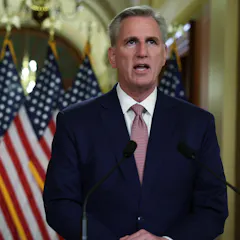
Adults insured by Medicaid who are 19 to 55 years old and don’t have children or other dependents would need to spend 80 hours a month doing paid work, job training or community service.

A team of economists looked at what happened after Supplemental Nutrition Assistance Program work requirements were reinstated in Virginia in 2013.

When asked to donate money they had earned through participating in a study, average people tended to choose the less onerous requirements rather than big ones.

In some cases, these restrictions have plunged people deeper into poverty.
Top contributors
-

Ph.D. Student in Public Policy, Harvard Kennedy School
-
Professor of Public Policy (retired), University of Virginia
-
Wayne Simpson is a Friend of The Conversation.
Professor, Department of Economics, University of Manitoba
-
Professor of Public Policy, Rutgers University
-
Part-Time Professor of Economics, The New School
-
Associate Professor of Economics, Rady School of Management, University of California, San Diego
-
Associate Professor of Public Health, The Ohio State University
-
Assistant Professor of Business Economics and Public Policy, University of Michigan
-
Research Assistant Professor of Social Work, University of Windsor, and Adjunct Professor of Social Work, Wayne State University
-
Associate Professor of Political Science, Northwestern University
-
Professor of Public Administration and Policy, American University School of Public Affairs
-
Associate Professor of Political Science, Miami University
-
Professor of History, University of Iowa
-
Associate Professor of Agriculture and Human Sciences, North Carolina State University
-
Assistant Professor of Internal Medicine, University of Michigan