

The deadline to fund the US government is fast approaching, and it will take a Congress seemingly addicted to brinkmanship to keep the government open.
Articles on Debt ceiling
Displaying 1 - 20 of 29 articles
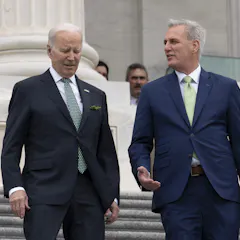
Compromises, no matter how horrible, have long been used to solve seemingly intractable political problems – but at a cost.
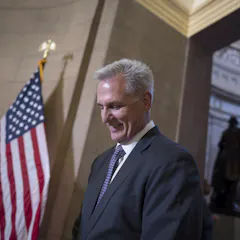
Congress passed and the president signed the deal just days before the US was expected to default on its debt.

African governments have more influence on China-funded projects than mainstream narratives acknowledge.

Biden believes these sorts of compromises help restore trust and optimism about the US government actually being capable of responsible governing.

Republicans are pressing for policy changes based on a misconception that hardly anyone who gets help buying groceries with Supplemental Nutrition Assistance Program benefits is employed.

The Treasury has been taking extraordinary measures to delay a default, but these measures could fail as early as June 1.

Research shows that leaders who can embrace competing demands and focus on the long term are more likely to succeed.
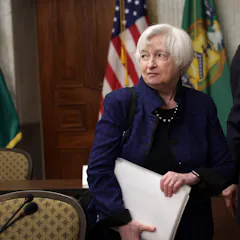
If the US fails to increase its debt ceiling by June 1, it could be forced into an embarrassing – and hugely costly – default on its obligations.

A team of economists looked at what happened after Supplemental Nutrition Assistance Program work requirements were reinstated in Virginia in 2013.
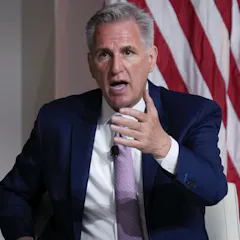
House Speaker Kevin McCarthy agreed to raise the debt ceiling – and avoid an unprecedented US default – but only if Democrats agree to freeze spending and agree to several other demands.

William Ruto is determined to reduce public debt by collecting more taxes to pay for what the country needs.

The US spent $232 billion paying interest on the national debt in the first quarter of 2023 as the Fed jacked up borrowing costs.

Despite all the limitations his concessions place on his speakership, House Speaker Kevin McCarthy still has a lot of power.
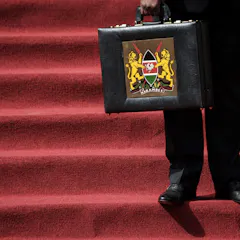
Njuguna Ndung'u has the experience that suits Ruto’s bottom-up economics but lacks the political gravitas to appease voters.

There’s a gap between Kenya’s public spending and its revenue. If the country owes more than it can repay, citizens will suffer.
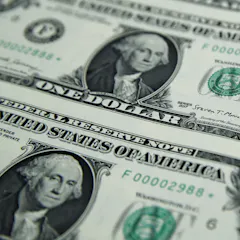
An economist explains why defaulting on the national debt would result in economic crisis.

The US debt ceiling is a form of self-delusion: a limit imposed on a borrower by the borrower itself. Australia had one until the Coalition and the Green us, abolished it.

Republicans and Democrats have negotiated a draft deal that may avert a financial crisis, but why does the US have a debt ceiling in the first place?
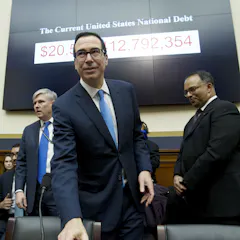
The US hit the debt ceiling in March and is expected to run out of ways to get around the new $22 trillion limit by September. An economist explains why the ceiling is a dysfunctional relic.
Top contributors
-

Part-Time Professor of Economics, The New School
-
Deputy Chair of Business Administration, Touro University
-
Distinguished Fellow in Law and Government, Dickinson Law, Penn State
-
Assistant Professor, Miller Center, University of Virginia, and US Studies Centre, University of Sydney
-
Daniel Patrick Moynihan Senior Lecturer in Public Policy and Public Finance, Harvard Kennedy School
-
Professorial Fellow, University of Canberra
-
Professor, Faculty of Business and Management Sciences, University of Nairobi
-
Ph.D. Student in Public Policy, Harvard Kennedy School
-
Post-doctoral Researcher, Tongji University
-
Election Analyst (Psephologist) at The Conversation; and Honorary Associate, School of Mathematics and Statistics, The University of Melbourne
-
Professor Emeritus of Economics and BB&T Scholar, Clemson University
-
Associate professor, Finance, University of the Witwatersrand
-
Professor of Public Policy (retired), University of Virginia
-
Scientia Professor of Economics, UNSW
-
Director of Research, US Studies Centre, University of Sydney