

Medicaid enrollment surged during the pandemic, then tumbled during the Great Unwinding – reflecting how paperwork and state policy determine who keeps health coverage.
Articles on Medicaid work requirements
Displaying all articles

As the battle for health care plays out in Washington, the shutdown itself could also make it harder for Americans to get the care they need.

The measure enables broad tax cuts that disproportionately favor wealthy households while forcing its costs on the most economically vulnerable Americans.

All told, more than 16 million Americans could become uninsured, reversing major progress seen since the Affordable Care Act’s passage in 2010.

Past experience suggests that adding work requirements to Medicaid will strip health services from millions of American without increasing employment.

The U.S. and Canada both have different approaches when it comes to work conditions and income assistance programs.
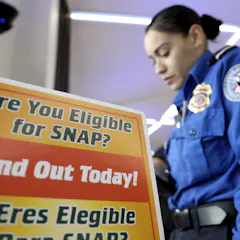
When asked to donate money they had earned through participating in a study, average people tended to choose the less onerous requirements rather than big ones.
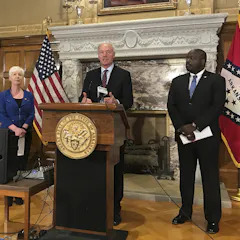
In the wake of a judge’s ruling that Medicaid work requirements in two states are not legal, questions remain. The most pressing ones are about how to help low-income people, not punish them.

In some cases, these restrictions have plunged people deeper into poverty.

Republicans have sought to limit Medicaid, and a key component of those efforts is requiring that those who receive Medicaid benefits work. But many already do, and others can’t, a scholar explains.

Voters listed health care as one of their biggest concerns in the midterm elections. Were their concerns addressed? The results are mixed.

Calls for work requirements for Medicaid recipients ignore the fact that many already do work. A Harvard doctor points out the problems in trying to help only the ‘deserving’ poor.
Top contributors
-

Associate Professor of Public Health, The Ohio State University
-
Associate Professor of Agriculture and Human Sciences, North Carolina State University
-
Associate Professor of Economics, Rady School of Management, University of California, San Diego
-
Wayne Simpson is a Friend of The Conversation.
Professor, Department of Economics, University of Manitoba
-
Professor of History, University of Iowa
-
Professor Emerita of Law, Vanderbilt University
-
General Internist, Instructor of Medicine, Harvard University
-
Associate Professor of Health Policy and Management, Indiana University