
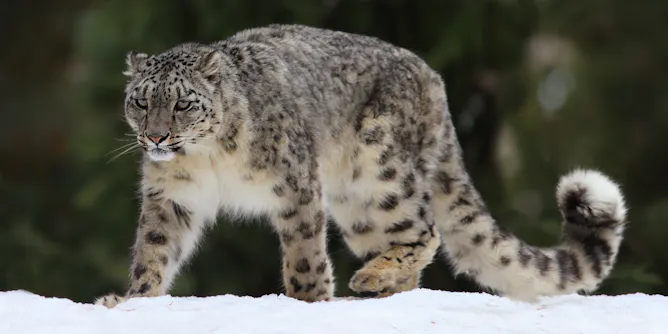
Conservationists have to search rough terrain and thousands of automated photographs to find the elusive cats. Artificial intelligence can help them work more accurately and more efficiently.
Articles on Wildlife tracking
Displaying all articles
Footprints, droppings, diggings and other signs left behind by animals reveal a lot to a skilled observer. Indigenous knowledge feeds into one of Australia’s largest wildlife monitoring endeavours.
Platypuses are drowning in Australian waterways, tangled in fishing line and trapped in closed nets meant for freshwater crayfish or yabbies. But we can fix this.
The largest ever giraffe tracking study shows how these massive animals are responding to human pressures across many different habitats throughout Africa.
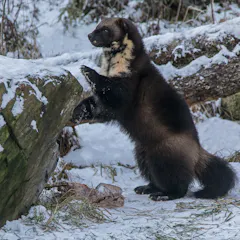
The key to protecting wolverines around the world is to reduce trapping, minimize predator control pressures, and to protect and connect large blocks of intact habitat they need to survive.

As scientists frantically try to find drugs to slow COVID-19’s spread, citizen science offers an opportunity for all of us to get involved.

Nuisance-biting and mosquito-borne disease are ongoing concerns for health authorities. But an effective citizen science program is now showing how all of us can help beat the bite of mozzies.

Remote cameras used to track wildlife in Australia could pose a privacy risk, especially if the images they capture fall into the wrong hands.

Batteries that can self-sustain are needed for long-term animal tracking as well as shipping and logistics.
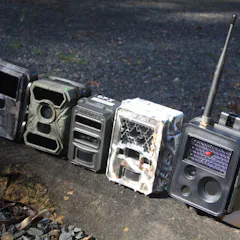
One of the problems with using automatic cameras to track wildlife is that people keep stealing them. And they go to great efforts to do so. But why?
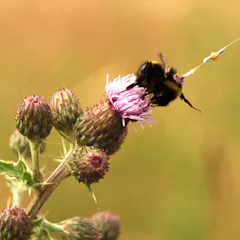
Tracking the flight of the bumblebee teaches us how they use plants – and how we can help them.

Bird feathers can tell us a lot about their owners and the places they visit.
Top contributors
-

Adjunct Lecturer Practical Ecology, Science and Technology, School of Environmental and Rural Science, University of New England
-
Professor of Distributed Systems & Chair in Applied Data Sciences, Queensland University of Technology
-
Research Fellow in Science Communication, UNSW
-
Adjunct Professor; Head, Applied Conservation Macro Ecology Lab, University of Victoria
-
Postdoctoral Researcher, Queen Mary University of London
-
PhD candidate, software engineer, University of New England
-
Joint Research Fellow, Centre for Ecosystem Science, UNSW and Australia Nuclear Science Technology Organisation, UNSW
-
Susan and Isaac Wakil Professor of Healthy Ageing, University of Sydney
-
Associate Professor of Precision Agriculture Systems, Flinders University
-
Dean Students, College of Health, Adelaide University
-
Lecturer in Human Geography, University of Sydney
-
PhD Candidate, Western Sydney University
-
Senior Lecturer in Spatial Agricultural and Environmental Sciences, University of Sydney
-
Research Fellow at the University of Sydney, University of Sydney
-
Research Scientist, CSIRO