

You may have never consciously noticed a match cut before, yet this simple editing technique completely transforms how we experience a film.
Articles on Cameras
Displaying 1 - 20 of 39 articles
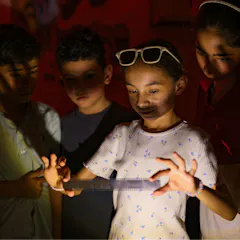
Armed with rolls of film, some young people are opting out of their algorithmic feeds in favor of experiencing life in ways that feel more deliberate, personal and tangible.
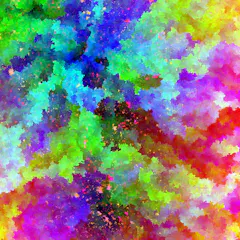
A photographer describes how your phone camera flattens and dulls the colors in photos – and how to regain an appreciation for the wide spectrum of colors.
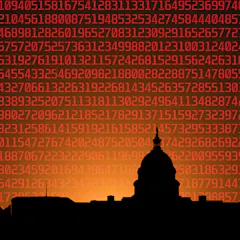
To augment information about you that it collects directly, the US Government is buying less-regulated information harvested by cameras, cellphones and apps and sold on the commercial data market.
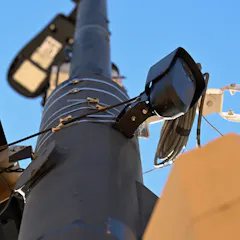
What began as a tool to identify threats to national security is becoming a surveillance infrastructure that can be used to track everyone.

The humble ‘broken image’ icon has a rich backstory – one connected to early web design, camera culture and our timeless urge to find meaning in the landscape.

An information systems expert explains why fairness and transparency are key to introducing new AI-driven enforcement technologies to the public.
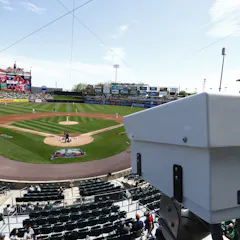
Technological advances that lead to fairer, more accurate calls are often seen as triumphs. But new technology doesn’t mean perfect precision – nor does it necessarily create a better fan experience.

In the mid-19th century, photographs with ghostlike figures became collectible amusements thanks to the invention of the stereoscope – a device that created three-dimensional optical illusions.

Due to conflicts over music rights and the high cost of adapting the show to HD, the series had become overshadowed by its spiritual successor, ‘The Wire.’

Police can reconstruct someone’s movements for days or weeks at a time, without any court oversight.

Phone cameras are an example of what’s called computational photography. Digital tools built into these cameras can enhance your images in real time.
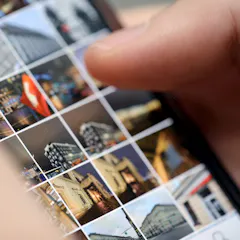
I identified six dimensions which will impact the quality of photographs. Here’s what I learnt – and what you can apply to your own photos.

Mothers are smudged out and poorly cloaked beneath drapes in these 19th century portraits. But these photos are not so much relics of shoddy photography than an ode to childhood.
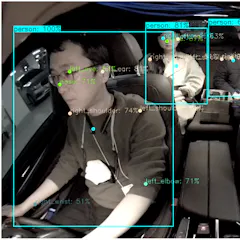
Your car’s safety technology takes you into account. But a lot of that technology helps car companies collect data about you. Researchers are working on closing the gap between safety and privacy.
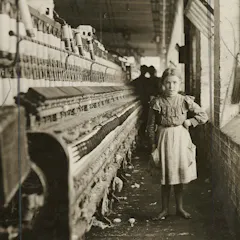
While Lewis Hine’s early-20th century photographs of working children compelled Congress to limit or ban child labor, the US Department of Labor is now under fire for failing to enforce these laws.
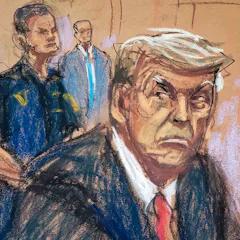
Whereas ‘the camera sees everything, but captures nothing,’ courtroom artists can channel the emotional highs and lows of a trial through a single image.

As we approach the 20th anniversary of the invasion of Iraq, it is important to reflect on the use of war footage in media and the ethical questions around the use of footage depicting human death.

Smartphone cameras tend to be more advanced than their clunky, point-and-shoot predecessors. But the allure of cameras from the early 2000s reflects a broader search for meaning.

Data from camera traps around the world provide a strong case to support the designation of protected wilderness areas.
Top contributors
-

Senior Lecturer, University of Southern Queensland
-
Adjunct Lecturer Practical Ecology, Science and Technology, School of Environmental and Rural Science, University of New England
-
Professor of English, Macalester College
-
Lecturer in Design and Media Arts, University of California, Los Angeles; California Institute of the Arts
-
Professor of Quantum Technologies, University of Glasgow
-
Professor of Social Science, Cardiff University
-
Head of School of Engineering and Physical Sciences, Heriot-Watt University
-
Associate Professor of Precision Agriculture Systems, Flinders University
-
Professor of Screen Media, King's College London
-
Visiting Professor of Film, Brown University
-
Ph.D. Candidate in English, The University of Texas at Austin
-
Associate Professor, UNSW Art & Design, UNSW
-
Distinguished Professor of Optometry, Indiana University
-
Assistant Professor of Economics, Case Western Reserve University
-
PhD, University of Cape Town