
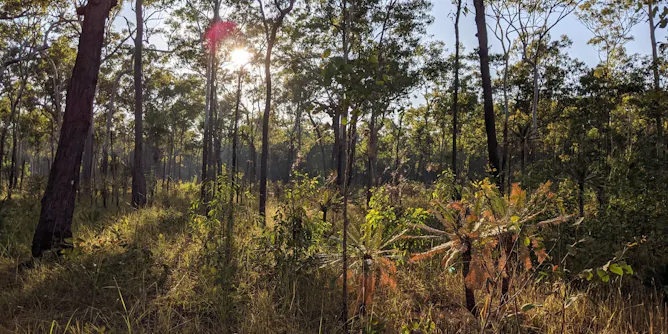
New research examines the reasons for the decline of small mammals in Australia’s tropical savannas and identifies the most effective practical solutions.
Articles on Camera traps
Displaying all articles
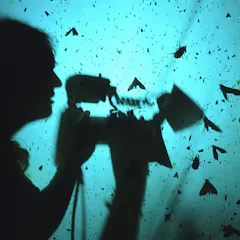
Miller moths migrate through the state every summer and are sometimes considered to be a pest.

The UN ‘30 by 30’ biodiversity strategy aims to set aside 30% of land as protected areas. New research shows these areas do support biodiversity, but big parks also increase it outside their borders.

Small mammals in northern Australia have been rapidly vanishing for the last 30 years, and scientists weren’t sure why. Now, a major new study found feral livestock are largely to blame.
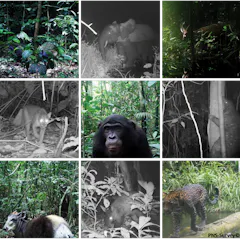
A new method of using camera traps has brought good and bad news for conservationists.
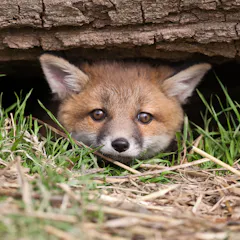
Camera traps allow citizen scientists to peek into the hidden lives of Britain’s mammals.
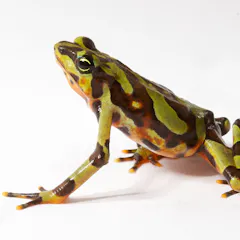
A look at new research published in 2018 on fossa, deepsea corals and tropical frogs developing resistance to a deadly fungus.
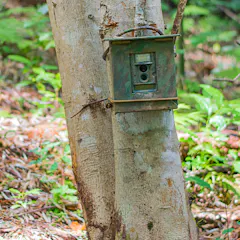
Conservation surveillance can generate fear and anger among local people.

Remote cameras used to track wildlife in Australia could pose a privacy risk, especially if the images they capture fall into the wrong hands.
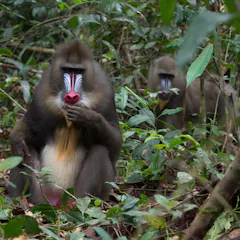
Camera traps in the Batéké Plateau National Park in Gabon are showing some interesting finds.
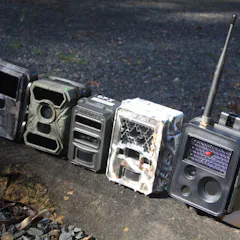
One of the problems with using automatic cameras to track wildlife is that people keep stealing them. And they go to great efforts to do so. But why?

Sometimes the best way to deal with mountains of data is to turn to the public for help. That’s what Snapshot Serengeti did to classify millions of photos from savanna camera traps in Tanzania.
Top contributors
-

Adjunct Lecturer Practical Ecology, Science and Technology, School of Environmental and Rural Science, University of New England
-
Professor of Conservation Biology, Charles Darwin University
-
Research Adjunct in Conservation Ecology, Research Institute for the Environment and Livelihoods, Charles Darwin University
-
Postdoc with the Elephant Listening Project at BRP, Cornell University
-
Postdoctoral Fellow - Ecology and Citizen Science, University of Oxford
-
Moran Professor of Conservation and Development, University of Cambridge
-
PhD candidate, software engineer, University of New England
-
PhD Researcher in Conservation Biology, Liverpool John Moores University
-
Leverhulme Early Career Fellow, Centre for Sustainable Forests and Landscapes, University of Edinburgh
-
PhD Researcher in Wildlife Conservation, Durham University
-
Associate Professor, Liverpool John Moores University
-
Professor of Ecology, Charles Darwin University
-
Honorary Research Fellow, The University of Melbourne
-
Research Fellow, Institute of Biodiversity and Environmental Conservation, Universiti Malaysia Sarawak; Associate Professor and John Craighead Endowed Chair of Conservation, University of Montana
-
University Fellow in Biodiversity, Charles Darwin University