
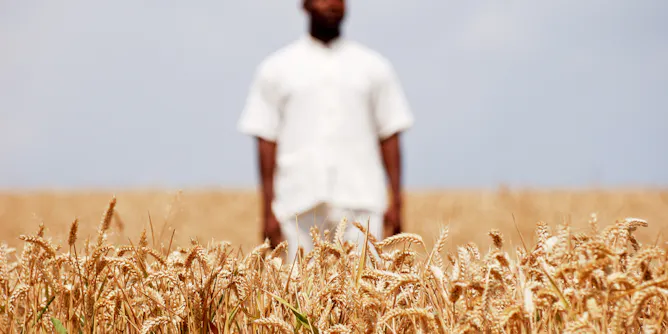
The sourcing of wheat has factored into the political and strategic decisions and security of many countries.
Articles on Wheat
Displaying 21 - 40 of 63 articles
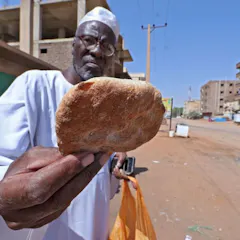
Wheat and bread play a central role for food security and political stability in Sudan.
Ukraine and Russia account for around 12% of the global market in food calories.
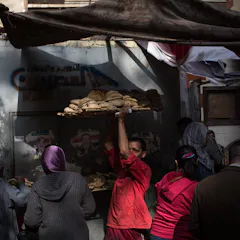
Viewed from Cairo, the war in Ukraine poses an existential threat to something Egyptians can’t do without: abundant, cheap bread.
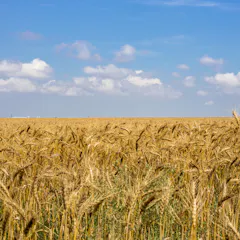
Ukraine was becoming increasingly linked with the global economy. Russia’s invasion puts its progress at risk.
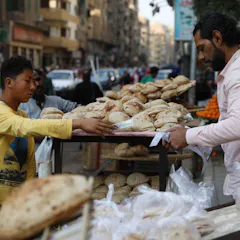
Egypt is already feeling the impact of the war, which has led to recent cancellation of tenders due to lack of offers, in particular from Ukraine and Russia.

Wheat accounts for about 20% of human calorie consumption, and Russia and Ukraine are both major exporters. The war could hit household food supplies in countries as far apart as Egypt and Indonesia.
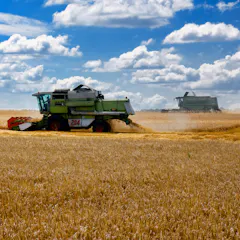
The Russian invasion of Ukraine will have global impacts far beyond the region directly involved in the fighting. Food prices will increase, and the effects will be felt by the most vulnerable.

In the short term, the war is causing energy prices to soar and prompting fears of famine in some countries. In the long term, it could remake the modern global supply chain.
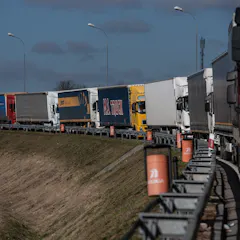
Everything from food to metals are facing major upheaval.
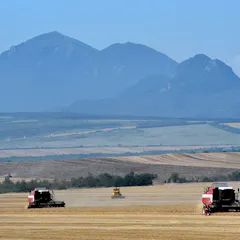
Every agricultural role-player is keeping an eye on the developments in the Black Sea region.
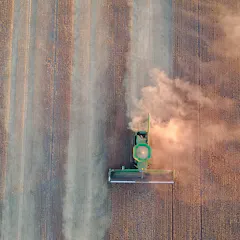
Australia is one of the world’s top exporters of grain. Producing it at lower emissions is crucial for global climate action.

People with conditions such as celiac disease must follow a gluten-free diet to manage symptoms and health. But avoiding gluten is difficult, costly and linked to nutrition issues and quality of life.

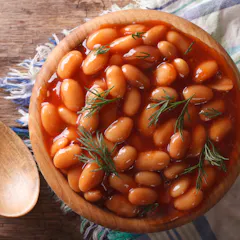
A dietitian breaks down everything you need to know about this viral meat substitute.
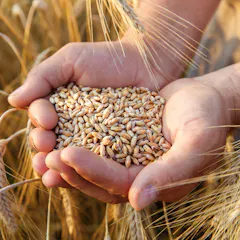
Wholegrains provide us with important protein, fat, vitamins, and minerals.
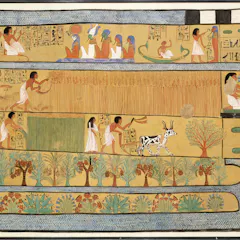
What ancient crop genomes can tell us about our history.

Australian wheat growers need to boost yields to stay competitive in the face of climate change. They could do this by sowing earlier, but need new varieties of wheat to help them do it.
Today’s production of more, better food from the same amount land means that tomorrow’s population may not go hungry.

Many of the crop plants that feed us waste 20 percent of their energy, especially in hot weather. Plant geneticists prove that capturing this energy could boost crop yields by up to 40 percent.
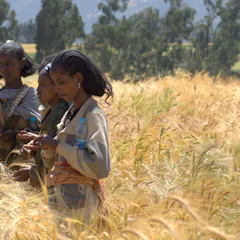
More action is needed to increase soil organic matter for the sake of improved nutrition.
Top contributors
-

Senior Fellow, Department of Agricultural Economics, Stellenbosch University
-
Senior Research Fellow, International Food Policy Research Institute (IFPRI)
-
Senior Research Fellow, International Food Policy Research Institute (IFPRI)
-
Senior Research Fellow, International Food Policy Research Institute (IFPRI)
-
PhD student in Plant Biology, University of Sheffield
-
Director: Research Support and Management, Nelson Mandela University
-
PhD, Political Economy, Macquarie University
-
Senior Principal Research Scientist, Farming Systems, CSIRO
-
Lecturer, University of Essex
-
Cropping Systems Modeller, CSIRO
-
Dean and Professor, College of Agriculture & Bioresources, University of Saskatchewan
-
Science Director, Biosecurity Flagship, CSIRO
-
CSIRO Fellow, CSIRO
-
Lecturer in Dietetics, Swinburne University of Technology
-
Associate Professor of Agricultural Economics, Colorado State University