
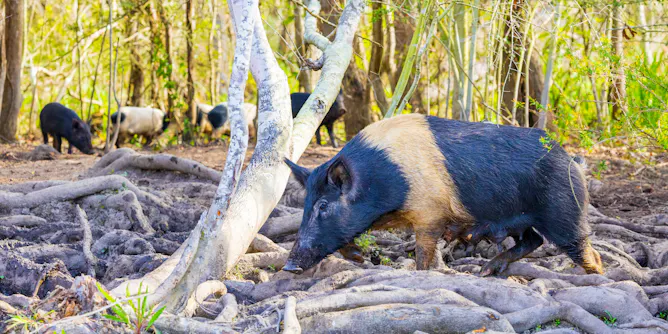
Teaming groups of private landowners with federal efforts yielded measurable success, at least in terms of defending cornfields.
Articles on Corn
Displaying 1 - 20 of 31 articles
When huge companies assert their patents, smaller businesses and public plant breeders are dissuaded from conducting research that might not be illegal at all.
Fertilizer is more expensive and in shorter supply. Without the right amounts of fertilizer at specific times, yields drop, food prices increase and food shortages result.
Farm bills – famously complex legislative and spending balances between farm subsidies, food assistance, conservation and more – have tended to be passed about every five years since 1933.

When Fusarium graminearum infects wheat, it can pose a risk to humans, animals and agriculture.
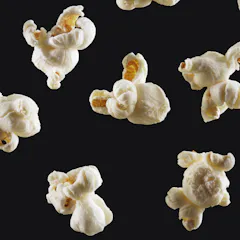
Corn has its roots in Mexico about 9,000 years ago.

The bourbon industry has been booming in recent years, but what sets all the different types of bourbon apart?
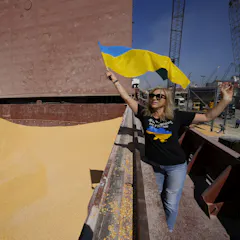
Russia’s move, which it followed by bombing the key port city of Odesa and threatening to attack any ship sailing for Ukraine, sent global food prices skyrocketing.

If greenhouse gas emissions continue at a high rate, breadbaskets of Europe and North America will see a 50% chance of a flash drought each year by the end of this century.
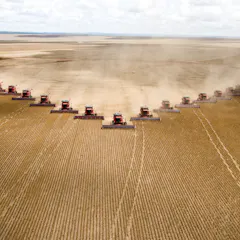
A new study finds that by 2030, less than one-third of the world’s major crop harvests will go directly to feed people.
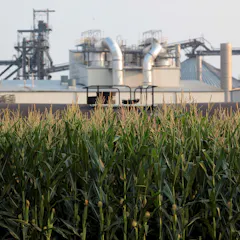
Allowing the sale of gasoline that’s 15% ethanol year-round won’t have much impact on gas prices, but recent research shows that growing corn for fuel affects the climate – for the worse.
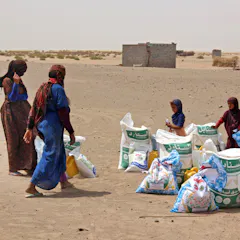
Grain and fertilizer shortages, higher shipping costs and a strong dollar are all pushing food prices up and increasing hunger in dozens of vulnerable countries.
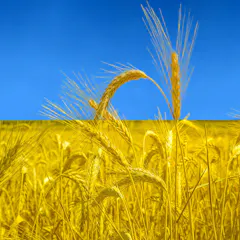
Ukraine and Russia account for around 12% of the global market in food calories.

Wheat accounts for about 20% of human calorie consumption, and Russia and Ukraine are both major exporters. The war could hit household food supplies in countries as far apart as Egypt and Indonesia.

Studies suggest that seeds coated with neonicotinoid insecticides may harm nontarget insects, mammals and birds. In response, states are starting to restrict use of these products.
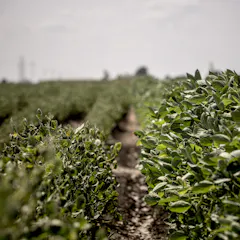
Farmers are stuck in a chemical war against weeds, which have developed resistance to many widely used herbicides. Seed companies’ answer – using more varied herbicides – is causing new problems.
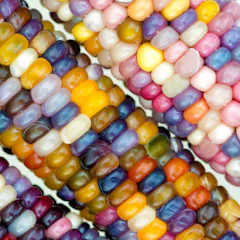
A historian argues for conservation strategies that embrace creativity and diverse farming methods.
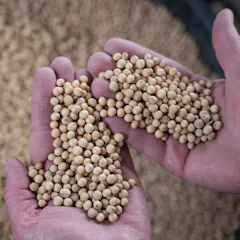
There’s a new label on many US food products – here’s what it means and who pushed to add it.
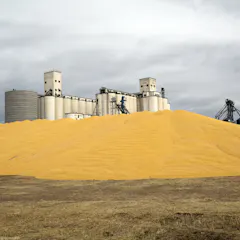
The US has required motor fuels to contain 10% biofuels since 2005. As this program nears a key milestone in 2022, farm advocates want to expand it while critics want to pare it back or repeal it.
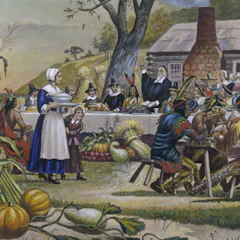
The communion between Native Americans and the Pilgrims makes for a compelling narrative. But it masks the suspicions and brewing violence that were far more representative of the era.
Top contributors
-

Professor of Entomology and Extension Specialist, Penn State
-
Executive Director, Swette Center for Sustainable Food Systems, Arizona State University
-
Professor, University of Minnesota
-
Professor of Horticultural Sciences and Plant Molecular and Cellular Biology, University of Florida
-
Distinguished visiting professor, University of Glasgow
-
Professor in Practice on Environmental Innovation, School of Social and Environmental Sustainability, University of Glasgow, UK, National University of Singapore
-
Professor Emeritus of Environment and Sustainability, University of Michigan
-
Professor of Agricultural and Resource Economics, University of California, Davis
-
Associate Professor of Economics, University of Sydney
-
Assistant Professor of Ecology, Evolution and Organismal Biology, Iowa State University
-
Professor of Chemistry and Biochemistry, Miami University
-
Lecturer in Food Industry Management, Nottingham Trent University
-
Professor of Economics, South Dakota State University
-
Research Fellow, Tegemeo Institute, Egerton University
-
Professor and Researcher, Drug Policy Program, Social Sciences Faculty, Universidad Central de Chile