
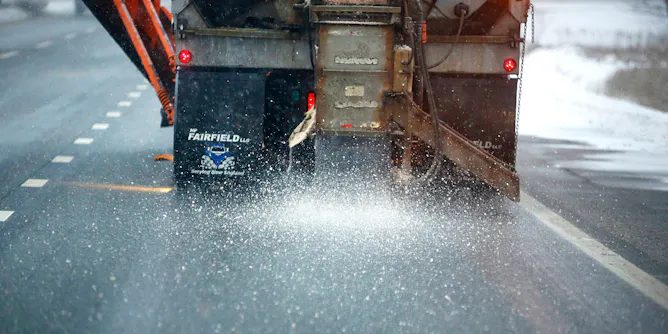
Wastewater from Pennsylvania’s oil and gas wells is salty and radioactive, and doesn’t suppress dust. Two researchers explain why it keeps ending up on rural roads.
Articles on Wells
Displaying all articles
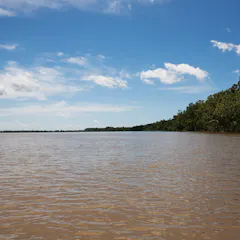
Brazil holds 12% of the world’s freshwater reserves and yet growing water insecurity reveals some of the country’s deepest sanitation inequalities, which are particularly relevant to Marajó, its largest coastal island.

The Earth’s own heat can be brought up from underground and used as a source of energy that emits almost no greenhouse gases and can operate 24/7 almost anywhere on the planet.
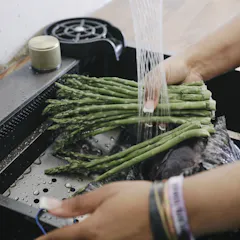
Providing information about risks and easy-to-use test strips made people more likely to check their water quality. But there’s not much support for people whose water turns out to be tainted.
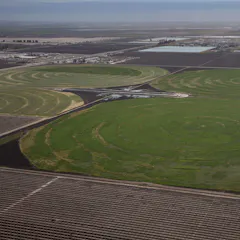
Rapid and accelerating groundwater level declines are widespread in dry climates where groundwater is used for irrigation. But some communities have found ways to turn things around.
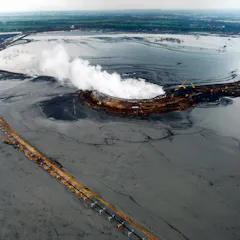
When mud, fluids and gases erupt at the Earth’s surface, they hint at what’s happening underground, allowing scientists to build a more comprehensive 3D view of what’s going on inside our planet.
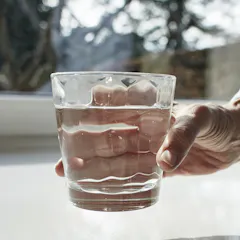
As surface water diminishes in the Western US, people are drilling deeper wells – and tapping into older groundwater that can take thousands of years to replenish naturally.
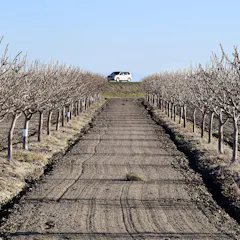
The US has one of the highest groundwater use rates in the world. When wells run dry, households may opt to conserve water, find new sources or sell and move.
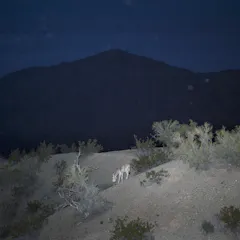
Incredibly, once the wells dried up some became nurseries for the germination and establishment of wetland trees.
Top contributors
-

Associate Professor of Environmental Studies, University of California, Santa Barbara
-
Associate Professor of Water Resources, University of California, Santa Barbara
-
Postdoctoral Fellow, Harvard University
-
Postdoctoral Fellow in Ecology, University of Alberta
-
Professor of Hydrogeology, UCL
-
Senior Research Scientist at Bureau of Economic Geology, The University of Texas at Austin
-
Socio-Environmental Professor and Researcher , Universidade Federal do Pará (UFPA); Université de Montpellier
-
Associate Professor and Director, Centre for Compassionate Conservation, University of Technology Sydney
-
Future Fellow in Ecology, Queensland University of Technology
-
Professor of Environmental Engineering, Penn State
-
Associate Professor of Economics and C. William Swank Chair in Urban-Rural Policy, The Ohio State University
-
Associate Professor of Environmental Engineering, Penn State
-
Assistant Professor | Department of Geosciences, University of Arkansas
-
Assistant Professor of Energy and Petroleum Engineering, University of North Dakota
-
Assistant Scientist in Marine Chemistry and Geochemistry, Woods Hole Oceanographic Institution