
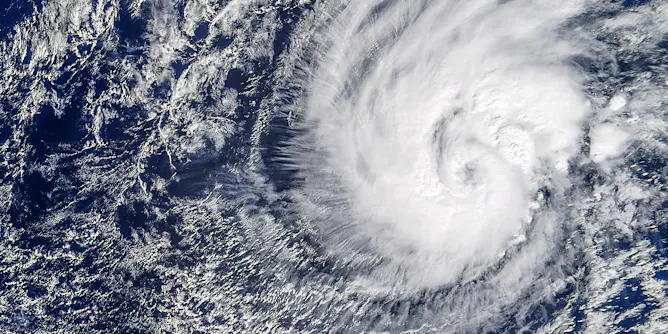
January hurricanes are rare events, but two have already formed this month. Atmospheric scientist Adam Sobel explains the conditions that generated Pali and Alex.
Articles on Weather forecasting
Displaying 101 - 120 of 141 articles

Are you dreaming of a festive win at the bookies? Here are your chances.
Climate models are complicated - and necessarily so if they are to recreate our complex world. But a new, simpler climate model aims to take some of the mystery out of the art of climate modelling.
One of the world’s top weather forecasting services just lost a major contract.
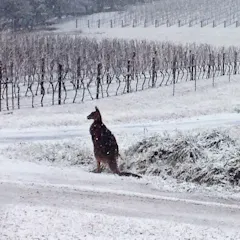
Moaning about weather forecasts is almost an Australian national pastime. But weather predictions have improved a lot, and with a new satellite and supercomputer, they are about to get even more reliable.
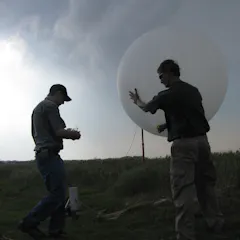
Climate models have been criticised because observations could not find the predicted “hot spot” of strong warming in the troposphere. But analyses now show that the tropospheric hot spot is indeed real.
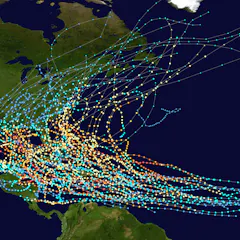
We’re no longer caught off guard when hurricanes make landfall, the way people were into the early 1900s. Better communications, measurements and observations all feed into better forecasts and more warning.

Forecasting successes can breed complacency in the general public. But all hurricane damage isn’t necessarily contained within the “cone of uncertainty.”
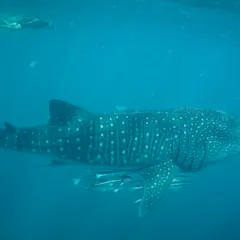
While eastern Australia trembles in the face of an El Niño, Western Australia’s oceans could finally see relief from devastating marine heatwaves.
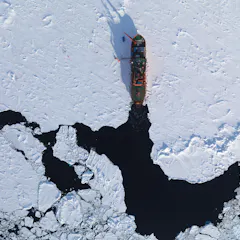
Antarctica’s sea ice is changing in ways that scientists didn’t predict, and is now causing headaches for Antarctic stations.

El Niño is officially on, and comparing it to previous events suggests it could be big one, perhaps leading to record-breaking temperatures.
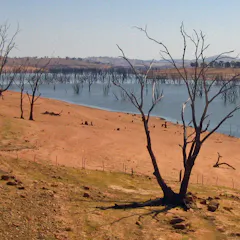
El Niño is officially here according to the Bureau of Meteorology.
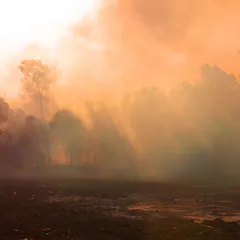
This last year we were preparing for an El Niño. But then it all just fizzled out. So what happened? And could this be the year?
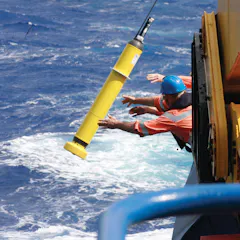
In 1985, when CSIRO’s marine labs were launched, a seven-day weather forecast was little better than chance. Now, thanks to advances in our understanding of the oceans, our predictions are far better.
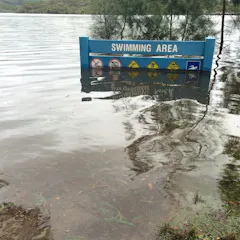
Extreme rainfall in Sydney is increasing - but only in summer, potentially leading to more flash floods in the city.
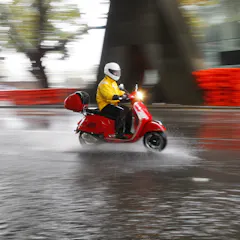
The recent wild weather that lashed New South Wales has been described as ‘once-in-a-century’. But how often does it really happen?
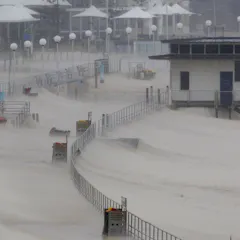
What causes the wild weather that’s hit Sydney and central New South Wales over the past 24 hours?

For a long time climate models have forecast increasing rainfall in tropics. Now we know part of the reason: clumpy thunderstorms.
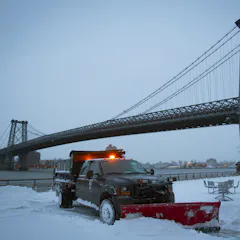
“Snowmageddon” was predicted – three feet of snow, blizzards whipped up by high winds, a freeze of the whole transport system. What New York got was “snowperbole”. Yes, it snowed, but not as badly as predicted…
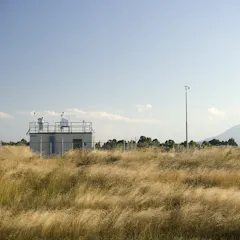
The federal government’s new “Technical Advisory Forum” on weather data, announced by parliamentary environment secretary Bob Baldwin last week, will “review and provide advice on Australia’s official…
Top contributors
-

Professor of Atmospheric Science and Colorado State Climatologist, Colorado State University
-
Regius Professor of Meteorology and Climate Science, University of Reading
-
Professor of Practice in Meteorology, Professor of International Affairs & Director Center for Solutions to Weather and Climate Risk, Penn State
-
Adjunct Professor (Practice) in the School of Earth, Atmosphere and Environment, Monash University
-
Professor of Physical Geography, University of the Witwatersrand
-
Professor of Climate Change Impacts, Newcastle University
-
Distinguished Professor of Meteorology, Penn State
-
ARC Future Fellow and Associate Professor in Climate Science, ARC Centre of Excellence for 21st Century Weather, The University of Melbourne
-
Professor in Tourism Geography, University of Johannesburg
-
Professor emeritus, The University of Melbourne
-
Professor emeritus, School of Earth, Atmosphere and Environment, Monash University
-
Senior Meteorologist, Australian Bureau of Meteorology
-
Senior Research Associate, UNSW
-
Principal Research Scientist, CSIRO
-
Researcher, Agricultural Research Council