
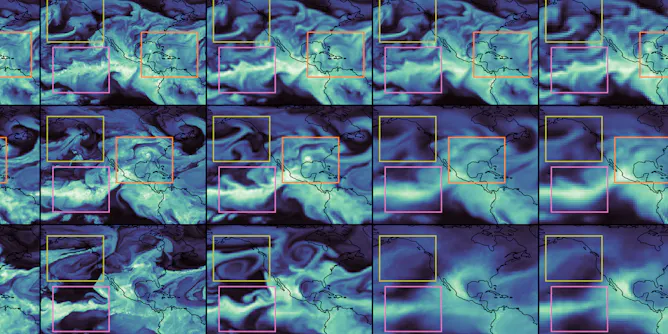
By combining traditional weather modelling with machine learning, a new model promises to make high-quality forecasts much cheaper to produce.
Articles on Weather forecasting
Displaying 21 - 40 of 141 articles

Weather forecasting is improving at a great rate, even though climate change could be making it tougher.
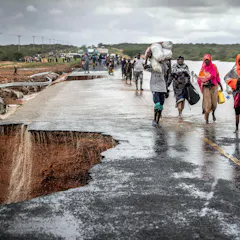
Projections show that there’ll be Indian Ocean dipoles in the future – and that means more rainy days, and more extreme rainfall.

A deadly hurricane developed in just 12 hours.

More than 800 lives were lost in the Royal Charter storm but it also led to improvements in weather forecasting.

Local communities need to be warned more clearly and effectively if there is a threat of a storm surge and of coastal flooding.

Three economists looked at years of temperature and death data and calculated the costs when forecasts miss the mark.
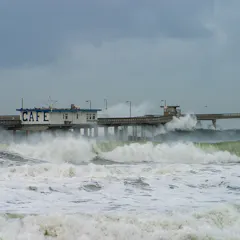
An El Niño weather-warming phase is underway in the Pacific – but what does this mean for the weather in Europe?
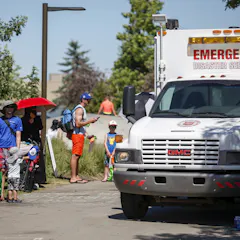
The 2021 Pacific Northwest heatwave outstripped even the most severe climate prections. A new study simulated 45,000 years of weather at Seattle Tacoma airport to try and figure out why.

Turbulence strong enough to pose an injury risk could be set to double or triple in frequency in the future.

If greenhouse gas emissions continue at a high rate, breadbaskets of Europe and North America will see a 50% chance of a flash drought each year by the end of this century.
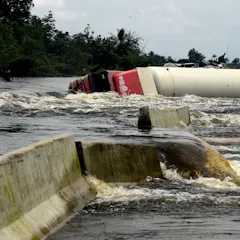
Nigeria is expected to experience severe flooding this year. With proper planning and management its impact may not be so devastating.
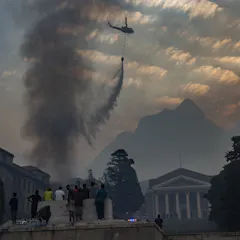
Autumn extreme fire weather around Cape Town in South Africa has become 90% more likely in a warmer world.

Researchers are turning to computer models, drones and other methods to improve tornado forecasting.

Machine learning may not seem to have much connection with wildlife, but it’s starting to play a central role in bird conservation.
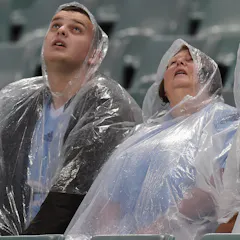
Not all La Niñas are wet, nor El Niños dry – especially if you live in Sydney. So here’s how to interpret what an El Niño forecast means for you.
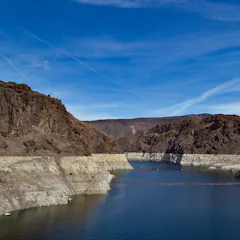
Unprecedented droughts leave the subsurface drier than usual, affecting water supply in subsequent years.
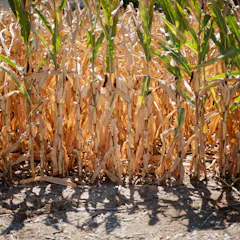
Flash droughts can develop within a few weeks, causing water shortages, damaging crops and worsening fire risks.

High humidity, terrain and wind make rain forecasting particularly tricky in the tropics.

The Met Office issued its heatwave warning six days before the mercury peaked – potentially saving many lives.
Top contributors
-

Professor of Atmospheric Science and Colorado State Climatologist, Colorado State University
-
Regius Professor of Meteorology and Climate Science, University of Reading
-
Professor of Practice in Meteorology, Professor of International Affairs & Director Center for Solutions to Weather and Climate Risk, Penn State
-
Adjunct Professor (Practice) in the School of Earth, Atmosphere and Environment, Monash University
-
Professor of Physical Geography, University of the Witwatersrand
-
Professor of Climate Change Impacts, Newcastle University
-
Distinguished Professor of Meteorology, Penn State
-
ARC Future Fellow and Associate Professor in Climate Science, ARC Centre of Excellence for 21st Century Weather, The University of Melbourne
-
Professor in Tourism Geography, University of Johannesburg
-
Professor emeritus, The University of Melbourne
-
Professor emeritus, School of Earth, Atmosphere and Environment, Monash University
-
Senior Meteorologist, Australian Bureau of Meteorology
-
Senior Research Associate, UNSW
-
Principal Research Scientist, CSIRO
-
Researcher, Agricultural Research Council