
With 17 billion internet-connected devices worldwide, AI is subtly creeping into our everyday lives – and making us more vulnerable to cyberattacks.
Articles on Wearables
Displaying 21 - 40 of 44 articles

New research explores the health potential of brief bursts of activity – and how wearables combined with machine learning can reveal health benefits of unexplored aspects of our everyday lives.
Tiny fluctuations in the time between each beat of your heart can provide clues about how much stress your body is experiencing.
Wearables and smartwatches can track your pulse – but if you’re using them to scan for irregular heart rhythms, there are some things you should know.

Researchers are developing an AI-powered device to detect asthma and COPD symptoms in real-time for faster treatment. The ‘patch’ listens to airway sounds, but filters out speech to protect privacy.

About one in five Aussies currently own a wearable fitness tracker of some kind. Yet many people doubt their effectiveness. Let’s see what the research suggests.
Hearing technologies combined with artificial intelligence can be used to enrich the learning environment.
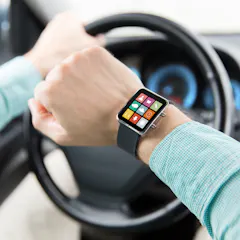
More and more people are incorporating wearable devices like smartwatches into their lives. But these wearables are a driving distraction that the public and law enforcement should be aware of.

The coronavirus pandemic has driven a lot of scientific progress in the past year. But just as some of the social changes are likely here to stay, so are some medical innovations.

Wearables already monitor our physical health – is it time for them to track our mental health too?
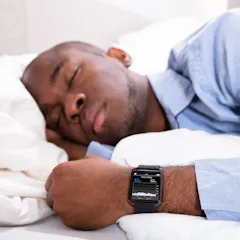
Despite the appeal of sleep trackers, they could cause unwanted anxiety for some.

Researchers are developing tattoo inks that do more than make pretty colors. Some can sense chemicals, temperature and UV radiation, setting the stage for tattoos that diagnose health problems.

Fitness information like resting heart rate collected by wearable devices can’t diagnose diseases, but it can signal when something is wrong. That can be enough to prompt a COVID-19 test.
The watchdog has voiced concerns over the proposed US$2.1 billion merger, from which both users and Australian health services could lose out.

Smartphone apps and wearable devices can tell when workers have been within six feet of each other, promising to help curb the coronavirus. But they’re not all the same when it comes to privacy.

Lightweight, flexible materials can be used to make health-monitoring wearable devices, but powering the devices is a challenge. Using fuel cells instead of batteries could make the difference.

A health informatics researcher explains why people don’t always get the ‘credit’ they think they should from using wearable fitness trackers.
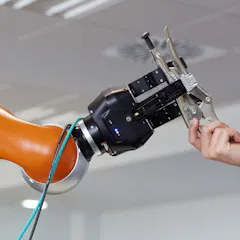
Engineers predict a time when people and robots physically interact all day long. For that to happen safely will require new soft materials that can do things like sense touch and change shape.
People are more willing to participate in fitness tracker-based insurance policies when they are in control of their participation.

Using smartphones and wearable devices to identify mental health symptoms and deliver psychotherapy will allow more people to access quality care, according to one psychiatrist.
Top contributors
-

Professor of Biomedical Engineering, University at Buffalo
-
Assistant Professor in the School of Public Health, Physiotherapy and Sports Science, University College Dublin
-
Associate Professor of Education, University of Connecticut
-
Professor of Marketing and RBC Financial Group Chair of E-Commerce, HEC Montréal
-
Professor and UNESCO/ICDE Chair in Open Educational Resources, Athabasca University
-
Assistant Professor of Medical Engineering, California Institute of Technology
-
Associate Professor, Sydney School of Public Health, University of Sydney
-
Professor of Microbiology, School of Medicine, University of Washington
-
Director, Enterprise AI and Data Analytics Hub, RMIT University
-
Associate Professor of Digital Health, Monash University
-
Associate Professor, Faculty of Law & Justice; Lead, UNSW Public Interest Law & Tech Initiative, UNSW
-
Doctoral Student in Computer Engineering, Boston University
-
Lecturer, Southern Cross University
-
PhD Researcher - Centre for Intelligent Healthcare, Coventry University
-
Reader in Cyber Security, University of Kent