

The rhythms aren’t necessarily tied to hormones, nor any other single cause.
Articles on Fitness trackers
Displaying 1 - 20 of 45 articles
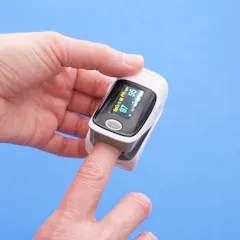
A new survey of UK adults finds most of us track our health at home, but not everyone is equally likely to benefit.

Never seem to get enough sleep? Why chasing ‘enough sleep’ to repay your ‘sleep debt’ might not be helping.
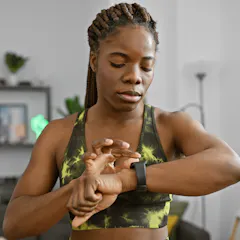
While wearables provide reassurance for some people, for others they increase health anxiety.
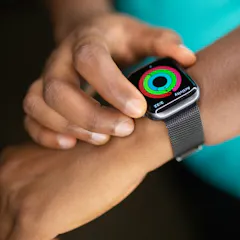
Smartwatches aren’t always as accurate as you might think. In some cases, you’d be better off listening to your body.
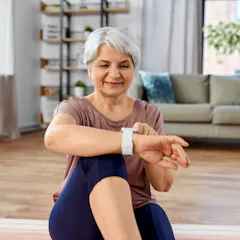
Wearables can be helpful in understanding whether the lifestyle changes you’ve made are having a measurable effect on your heart health.
Motion data is well known for improving athletic performance and rehab. Thanks to AI, it’s also turning motion into another vital sign for general health.

Your smartwatch could soon count every heartbeat you ‘spend’ each day. But would that number actually mean anything?
Our study also found that people who used a wearable fitness tracker were three times more likely to still be active a year later.

AI tools that provide information to you also gather lots of information from you and may provide it to third parties.
Our study found that tracking your exercise boosts mental wellbeing.

A new study reveals strengths and weaknesses of the gadgets we use to monitor our lives.
Tiny fluctuations in the time between each beat of your heart can provide clues about how much stress your body is experiencing.
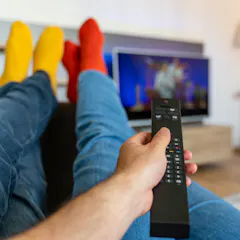
Research is revealing that fitness trackers alone can be helpful facilitators toward changing a sedentary lifestyle but don’t motivate people to increase their physical activity.

About one in five Aussies currently own a wearable fitness tracker of some kind. Yet many people doubt their effectiveness. Let’s see what the research suggests.
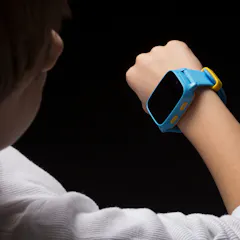
We believe fitness trackers keep us healthy, and connected toys keep children safe – but such devices are easily abused.
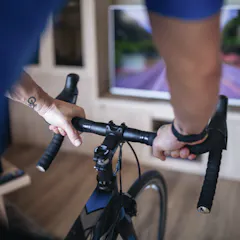
From step counters and active video games to apps for exercisers and tech-enabled gear, there are a lot of ways to combine your workouts with your digital life.

Fitness information like resting heart rate collected by wearable devices can’t diagnose diseases, but it can signal when something is wrong. That can be enough to prompt a COVID-19 test.

Training data collected by fitness trackers may be useful to predict marathon performance
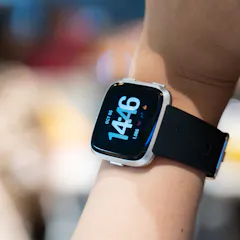
The watchdog has voiced concerns over the proposed US$2.1 billion merger, from which both users and Australian health services could lose out.
Top contributors
-

Lecturer in Applied Health Sciences, University of Aberdeen
-
Professor of Contemporary Philosophy and Literature, Brunel University of London
-
Associate professor, Queen's University, Ontario
-
Professor of Computer and Information Science, Northeastern University
-
SHARP Professor, Vitalities Lab, Centre for Social Research in Health and Social Policy Centre, and the ARC Centre of Excellence for Automated Decision-Making and Society, UNSW
-
Senior Lecturer in Sports Science, Swansea University
-
Professor of Physical Education and Health, Örebro University
-
Associate Professor of Education, University of Connecticut
-
Reader in Computer Science and Leader of Software and Systems Engineering Research, Keele University
-
PhD Researcher, Georgian Technical University
-
Professor & Director, Hub for Apple Platform Innovation (HAPI), School of Computing Technologies, RMIT University
-
Professor, Biomedical and Health Information Sciences, University of Illinois Chicago
-
Keele University
-
PhD Researcher, University of Beira Interior
-
Professorial Research Fellow: Physical Activity and Health, CQUniversity Australia