
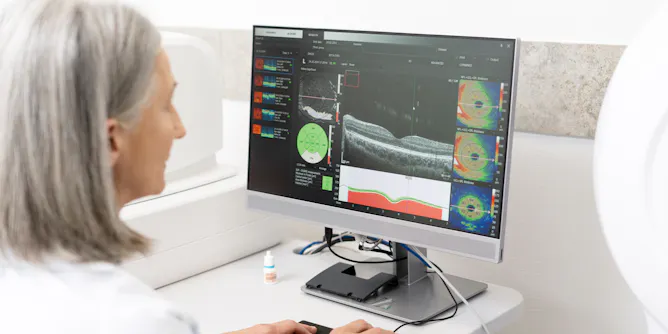
Retinal images could contain information about future cardiovascular risk, including atrial fibrillation.
Articles on Heart health
Displaying 1 - 20 of 72 articles
Consuming between 30-35g of nuts daily was linked with a 26% lower risk of hypertension.

This little-known brain disorder is currently one of the biggest challenges facing medicine where age-related diseases are concerned.

Heart symptoms can be mistaken for hormonal changes. Here is how perimenopause, heart attacks and broken heart syndrome overlap.

Researchers are investigating whether blood tests and heart scans can detect hidden heart damage during breast cancer chemotherapy.

Being fit is also associated with many cardiovascular benefits – including lower risk of cardiovascular diseases.

Heart disease isn’t just a “man’s problem”. Men and women’s bodies handle fats differently in midlife. What are the cardiovascular risk factors and is hormone therapy good for heart health?

Only 1 in 4 Americans are meeting the recommended guidelines for exercise. Here are some research-backed ways to keep moving, even when it’s hard.

Social media videos are claiming that mouthwash kills important bacteria that are linked to heart health.

As the number of people living with long COVID continues to grow, understanding its broader health consequences will be essential.

A growing body of research shows the gut microbiome may influence heart disease risk.
Wearables can be helpful in understanding whether the lifestyle changes you’ve made are having a measurable effect on your heart health.

Not all types of cholesterol are bad for you.
These drugs are shown to change the very structure and function of the heart.

You’ve probably noticed your heart rate increases after you start drinking your morning coffee. But the impact on blood pressure is more complicated.

Endurance athletes have a four times higher risk of atrial fibrillation.

New studies reveal that orange juice appears to influence thousands of genes in immune cells and improve markers linked to heart disease.

Garlic may help lower blood pressure and cholesterol and support healthier arteries.

Men needed to do roughly nine hours of exercise to see a 30% reduction in their heart disease risk – while women only needed to do around four hours.

Young adults can take basic but powerful steps to address risk factors that set the stage for heart disease.
Top contributors
-

Affiliate Scientist, KITE Research Institute, Adjunct Professor, Department of Physical Therapy, University of Toronto
-
Senior Lecturer in Chemical Pathology, University of Westminster
-
Adjunct Professor, Department of Obstetrics and Gynecology, Faculty of Medicine, Dalhousie University, Mount Saint Vincent University
-
Program Director of Nutrition and Food Sciences, Accredited Practising Dietitian, Adelaide University
-
Professor of Anatomy, Lancaster University
-
Researcher, Department of Neurobiology, Karolinska Institutet
-
Member, IMPART (Inflammation & Metabolism, Physical Ability, & Research Translation) Network, Dalhousie University
-
Laureate Professor in Nutrition and Dietetics, University of Newcastle
-
Senior lecturer, Liverpool John Moores University; University of Liverpool
-
Associate Professor of Cardiology, University of Colorado Anschutz
-
SHARP Professor, Vitalities Lab, Centre for Social Research in Health and Social Policy Centre, and the ARC Centre of Excellence for Automated Decision-Making and Society, UNSW
-
Canada Research Chair in Health Justice, University of Toronto
-
Professor Emeritus, Anesthesiology and Perioperative Medicine, Queen's University, Ontario
-
Postdoctoral Associate, Department of Mechanical and Materials Engineering, Western University
-
Chair In Nutrition And Ageing, Deakin University